Advertising helps fund Big Issue’s mission to end poverty
Books

How to create some headspace | Chris Lewis

Can you concentrate long enough to read this?

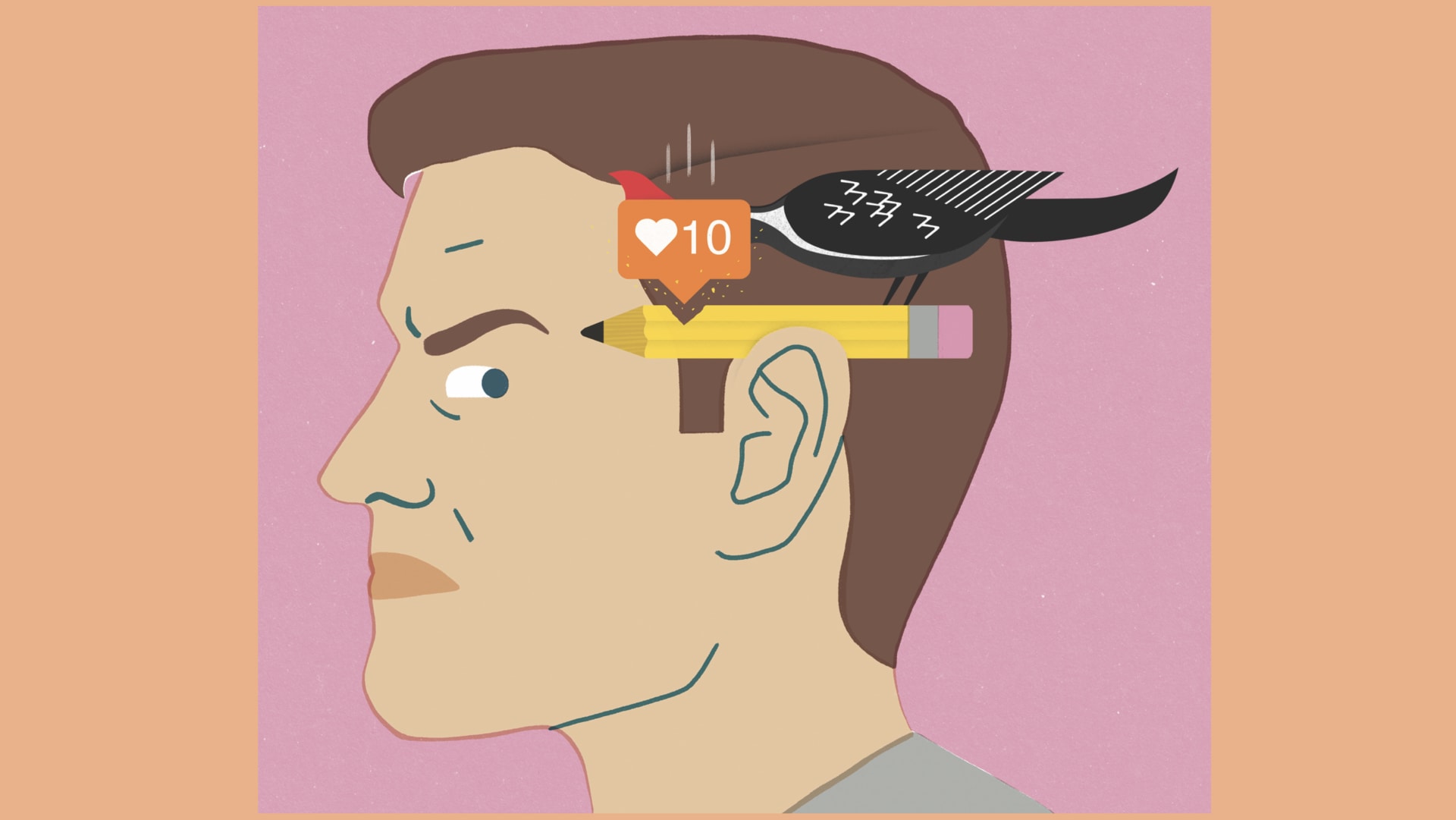
On average, we check our emails at least 20 times a day. In an eight-hour day, that’s an interruption every 20 minutes. Once you add social media notifications from Facebook, LinkedIn, Twitter, WhatsApp, Instagram etc, we’re being interrupted every few minutes. This makes us the most distracted generation ever.

These constant interruptions have an effect. They make us stressed. We seem short of time. We seem unable to complete tasks. We lose our thread. Every time we try to concentrate, we get interrupted.

Our presence is also diminished in the here and now. How many times have you seen families or couples out for a meal where they are all staring at their phones? This kills
conversation. Let’s not confuse communication with convers-ation. If you can’t converse, you can’t resolve emotional problems, manage people or negotiate. The more experience we have of this, the better we get.

Worse still, these interruptions may be damaging our own creative ability. We don’t just use this for painting or writing – our creative ability is the basis of how we solve problems.

In a survey of leaders from many different backgrounds, the response is strikingly similar. When asked where they got their best ideas, more often than not they reported their best ideas came when they were away from work, on their own and, most importantly, doing something not work-related.

It was Einstein who said: “Creativity is the residue of time wasted.” The implication here is quite clear. When we’re doing nothing we’re really doing quite a bit. Einstein also added: “If I had an hour to solve a problem I’d spend 55 minutes thinking about the problem and five minutes thinking about solutions.” It’s unlikely he would have made much progress on his problem had he been interrupted by email and social media notifications.


Advertising helps fund Big Issue’s mission to end poverty

Short-term distractions are without doubt a hindrance to our long-term, sustained creative thinking. The brain has inherent deep processing capability which continues even when we are unaware of it.

Only when we stop do these thoughts have a chance to surface and come to the attention of the conscious mind. It is our innate ability to solve problems that dictates how much of our potential we are able to attain.

No one is saying that the smartphone isn’t a great utility for mankind. It can make us more connected, more productive and more aware. However, there is a cost of accessing these benefits. Despite its simplicity, the most difficult feature to use on a smartphone remains the off switch.

Too Fast to Think by Chris Lewis (Kogan Page, £14.99) is out now. @LargeBurrito koganpage.com/tftt

Advertising helps fund Big Issue’s mission to end poverty

HELP VENDORS KEEP WORKING THROUGH THE COLD

For £36.99, help a vendor stay warm, earn an extra £520, and build a better future.
Grant, vendor

Recommended for you

View all
Palaver by Bryan Washington review: a subtle and deft look at family relationships
Review

Palaver by Bryan Washington review: a subtle and deft look at family relationships

The Cut Up by Louise Welsh review: slippery and morally dubious adventures
Fiction

The Cut Up by Louise Welsh review: slippery and morally dubious adventures

Chairman Mao was Trump but with added brains… and mango 
Books

Chairman Mao was Trump but with added brains… and mango 

Top 5 horror novels, chosen by British Fantasy Award-winning author Catriona Ward
Fiction

Top 5 horror novels, chosen by British Fantasy Award-winning author Catriona Ward