Advertising helps fund Big Issue’s mission to end poverty
Social Justice

Muhammad Yunus: “Aung San Suu Kyi has become a symbol of violence"

The founder of the Grameen Bank holds fellow Nobel Peace Prize winner to account over the Myanmar government’s actions against Rohingya Muslims

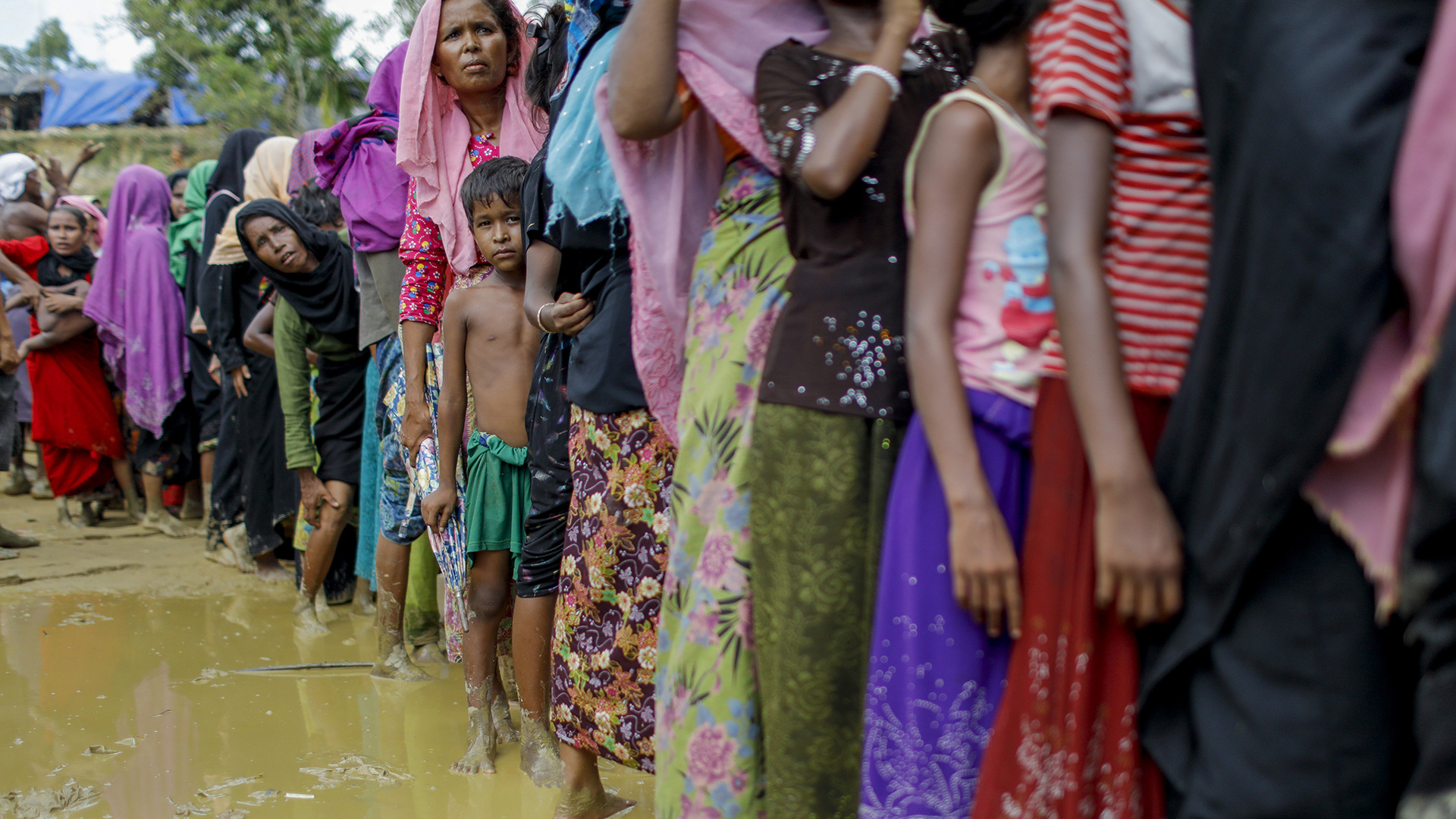
Rohingya refugees wait in line for food

Aung San Suu Kyi has “degraded the value of the Nobel Peace Prize” according to fellow Nobel laureate Professor Muhammad Yunus.

Bangladesh-born economist Yunus, who won the award in 2006 for his pioneering work in microfinance that has lifted millions out of poverty, told The Big Issue that the Myanmar leader’s actions have wrecked her reputation.

He said: “[Aung San Suu Kyi] has already degraded the value of the Nobel Peace Prize by becoming a symbol of violence and atrocity in Myanmar.

“You lost all the admiration that you used to enjoy – you stood for democracy, you stood for human rights and now you have given up everything. You have gave up democracy, you given up human rights and you became a symbol of atrocity and violence, with innocent people, women and children.

“Please go back to your old self, the person that you used to be.”

Last month, Yunus joined a team of Nobel Prize winners, including Archbishop Desmond Tutu and Malala Yousafzai, in writing an open letter to the UN urging them to intervene in the ongoing humanitarian crisis, which has forced over half a million Rohingya Muslims to flee the country.


Advertising helps fund Big Issue’s mission to end poverty

Speaking about the letter he said: “We want to waken her up. Either you can be the incarnation of peace, as you used to be, or [you can] tell people that that was the wrong image of me, this is the real image, so then we are clear and not mistaken about who you are.

“We want to stop this violence and make sure people can go home safely.”

The most brutal thing any government can do to its own citizens

Professor Yunus also told The Big Issue: “I hope the UN Security Council will take immediate action to make sure Myanmar is forced to take back their people and give them full dignity and full citizenship. They are innocent people caught in the crazy idea of ethnic cleansing, throwing them out of the country for no fault of their own.

Keep reading the journalism that powers our mission

Register free to continue and learn more about the stories, campaigns and the support we provide, helping people facing poverty across the UK.

“They were not only born in the country but they have been there for generations. And now suddenly someone takes their citizenship away. That is the most brutal thing any government can do to its own citizens.”

Read more from Professor Yunus in an upcoming edition of The Big Issue.

Our 2020 Impact Report

The Big Issue has given more than £1 million support to Big Issue vendors struggling due to the lockdown restrictions. To mark the significant milestone, we have published an impact report, documenting the seismic shift the organisation has undergone in the past 12 months.

View Report
Advertising helps fund Big Issue’s mission to end poverty

Do you know how Big Issue 'really' works?

Watch this simple explanation.

Recommended for you

View all
It has taken years to regulate bailiffs. Stopping intimidation is as important as recovering debt
a hand holding a bill with past due stamped on it
Vikki Brownridge

It has taken years to regulate bailiffs. Stopping intimidation is as important as recovering debt

Labour is facing calls to means-test disability benefit PIP. Here's why it would push up poverty
Andy Burnham
Disability benefits

Labour is facing calls to means-test disability benefit PIP. Here's why it would push up poverty

Why music megastar Bryan Adams became a Big Issue Ambassador: 'Big kudos for everything you do'
Bryan Adams
Big Issue 35

Why music megastar Bryan Adams became a Big Issue Ambassador: 'Big kudos for everything you do'

Big Issue at 35: How prime ministers have supported Big Issue vendors
Big Issue 35

Big Issue at 35: How prime ministers have supported Big Issue vendors