Advertising helps fund Big Issue’s mission to end poverty
News

Fresh fight for UK’s first drug consumption room

After a top Scottish judge warned of legal hurdles, the Glasgow health board has vowed to continue the fight for the country’s ‘fix rooms’

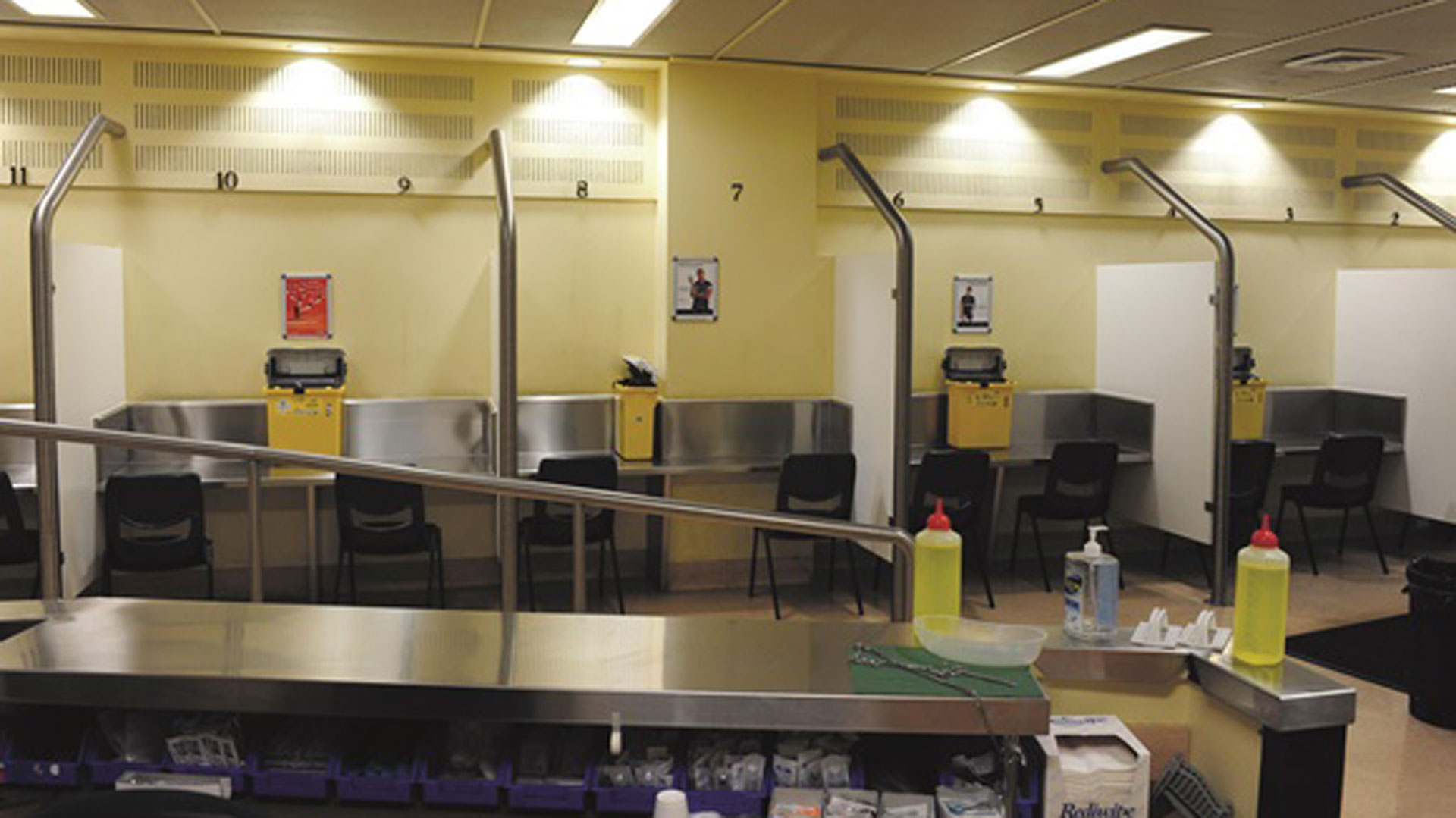
The Glasgow Health and Social Care Partnership (HSCP) will continue to fight for the UK’s first Safer Drugs Consumption Facility despite legal barriers.

The space would allow people to inject drugs, such as heroin, under medical supervision.

The board’s proposal was approved by Glasgow’s Integrated Joint Board last year, but was blocked when the Lord Advocate, Scotland’s senior law officer, stated that no exemption from the Misuse of Drugs Act 1971 could be made.

Their proposals also include a Heroin-Assisted Treatment (HAT) service, where medical-grade heroin would be prescribed to a small number of people as well as operating a needle exchange and could be opened under current laws. Amid debate about consumption facilities, the board is pressing ahead with plans to deliver the facility in the city centre.

It is important to stress that HAT will only partially address the issues

Current estimates suggest there are around 500 people who inject drugs in public places in Glasgow city centre. The majority are individuals experiencing homelessness, mental health issues, recent imprisonment and poverty.

Susanne Millar, Glasgow City HSCP Chief Officer for Strategy, Planning and Commissioning, said: “This public injecting group has high rates of hospital admissions, incarceration and homelessness.


Advertising helps fund Big Issue’s mission to end poverty

“Conventional treatment and services have not been as effective as we would want in reducing health risks and the resulting costs.

“Our ultimate goal is for drug users to recover from their addiction and remain drug free.

“However, some of our service users have had a number of failed attempts at quitting Heroin. Evidence from other countries has shown HAT to be effective and it is important to keep people as safe as possible while using this service.

“It is important to stress that HAT will only partially address the issues identified in the Health Needs Assessment as it is designed for a very small subset of the target population.

“Ongoing dialogue with the Scottish Government has agreed that a SDCF would enable much more harm reduction and engagement work with the at-risk group.”

Alison Thewliss, MP for Glasgow Central, whose constituency the facility would be set up in, has backed the plan and said it would save lives.

She stated: “I can attest to the fact that Glasgow has a growing problem with respect to public injecting; my constituency office often receives reports of needles and other drug paraphernalia being discarded in public places.”.

Drug deaths in Glasgow remain high with 157 occurring in the city in 2015. Heroin was the cause or contributing factor in 73 of these deaths.

A plan to pilot consumption rooms in Brighton was scrapped in 2014.

Advertising helps fund Big Issue’s mission to end poverty

Do you know how Big Issue 'really' works?

Watch this simple explanation.

Recommended for you

View all
Local elections 2026: Why the Green Party's gains offer hope despite Reform's rise
Zack Polanski
Ravishaan Rahel Muthiah

Local elections 2026: Why the Green Party's gains offer hope despite Reform's rise

David Attenborough by Chris Packham: 'I don’t think he has an earthly equal' 
David Attenborough
Centenary

David Attenborough by Chris Packham: 'I don’t think he has an earthly equal' 

Five ways David Attenborough changed the world
David Attenborough with a gorilla in Rwanda as part of his 1979 Life on Earth series
Activism

Five ways David Attenborough changed the world

How the Sociability app puts accessibility on the map to help disabled people break down barriers
People in wheelchairs at a post-Naidex social event organised by Sociability
Accessibility

How the Sociability app puts accessibility on the map to help disabled people break down barriers