Advertising helps fund Big Issue’s mission to end poverty
Housing

Hundreds of homeless people are risking death by sleeping in bins

Waste company says staff live in fear of accidentally killing homeless people sleeping rough inside bins

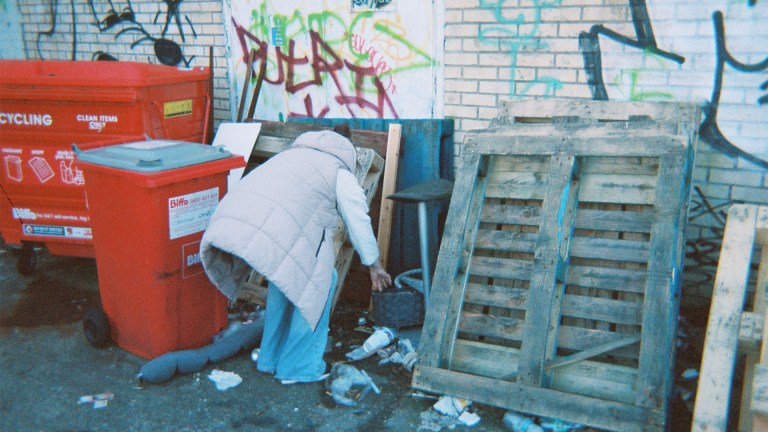
Hundreds of homeless people across Britain are risking their lives each night by sleeping in large bins, according to a national waste management company.

Many refuse collectors now fear they might accidentally kill someone sleeping in a commercial wheeled bin as they attempt to stay warm for the night.

“It’s terrifying for our staff to find somebody lurking inside on their early morning rounds, and they constantly worry if they’ve ever accidentally killed somebody,” said Mark Hall of Business Waste.

“It’s not just the homeless,” he added. “There are also drunks sleeping off a session on their way home, and even drug addicts. There is a genuine danger that the person inside might be too soundly asleep when the refuse truck comes.”

Although the company did not provided a total figure, Hall is “certain” there at least several hundred people sleeping in bins on any given night. In 2016, commercial waste company Biffa said it had discovered 175 people over the course of a single year, only a small proportion of the number of rough sleepers who may be using the bins as makeshift dwellings.

Watch the Pride special collection.

Our LGBTQ+ film playlist offers a new and interesting angle on LGBTQ+ love and struggle – giving an international overview by taking us inside some of the most and least sexually liberated countries in the world.  

Sign Up Now

A rise in rough sleeping and an increase in the number of dry waste bins set aside for recycled cardboard and plastic have been cited as reasons why the problem may be growing.


Advertising helps fund Big Issue’s mission to end poverty

Containers can be lifted up to six metres high before rubbish is tipped into the lorry compactors. And any accident can be deadly. According to the Environmental Across the UK, 11 people have been killed since the end of 2010 because of sleeping in bins.

One of these days we’re gonna miss one, and I don’t like to think about that.

Matthew, a bin operator for Business Waste said early morning discoveries are now typical in his trade. “We have a rough sleeper jump out of a bin on us at least a couple of times a week. It’s got to the point that you know which bins to expect them to leap out from. It’s really sad and a bit unsettling.”

His colleague Janie added: “It always gives me a heart attack when it happens. One of these days we’re gonna miss one, and I don’t like to think about that.”

Police are searching a landfill site in Milton, near Cambridge, for missing RAF gunner Corrie McKeague. The airman is thought to have ended up in a bin on his way home from a night out, after a lorry was discovered to have been carrying a heavier load than originally thought.

Advertising helps fund Big Issue’s mission to end poverty

Do you know how Big Issue 'really' works?

Watch this simple explanation.

Recommended for you

View all
New homeless village offers 'brilliant solution' that organisers want to bring to a town near you
Social Bite co-founder Josh Littlejohn on the steps of one of the modular homes at the new Harriet Gardens village
Homelessness

New homeless village offers 'brilliant solution' that organisers want to bring to a town near you

Half a million empty homes are 'hiding in plain sight'. Here's how to unlock them
Stock image of a row of houses
Housing

Half a million empty homes are 'hiding in plain sight'. Here's how to unlock them

Homeless young people 'left to sleep rough' after councils failed to assess their needs
Stock image of a homeless woman
homelessness

Homeless young people 'left to sleep rough' after councils failed to assess their needs

Coroners are increasingly pointing to the housing crisis in their reports – but can it save lives?
protesters hold up a placard calling for leaders to axe the bedroom tax
Homelessness

Coroners are increasingly pointing to the housing crisis in their reports – but can it save lives?