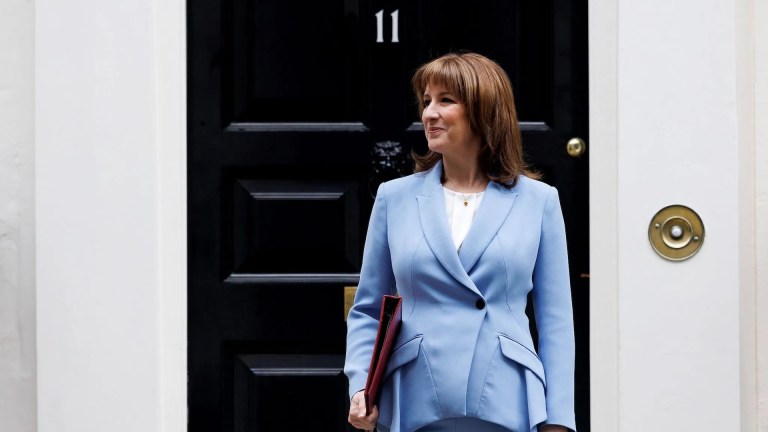
Labour’s Darren Jones, the current chief secretary to the prime minister, was second in command at the Treasury while it drove through cuts to winter fuel payments and housing benefit for private renters – by freezing the local housing allowance (LHA) so it doesn’t rise with rent inflation – and demanded the Department for Work and Pensions (DWP) make sweeping cuts to disability benefits.
While helping push this agenda of cutting benefits for some of the poorest people in the country, Jones claimed £39,428.38 in taxpayer-funded rent expenses in 2024/25 – plus £2,747.70 in hotel bills while he moved from one London flat renting at £2,600 a month to another one renting at £3,750 a month.
IPSA has yet to publish rent claims for 2025/26, but if Jones claims £3,750 a month for the whole financial year, his annual total will hit £45,000. By comparison, data from the Office for National Statistics (ONS) suggests his Bristol North West constituents are on average paid around £32,000 a year.
Read more:
Jones’ Labour colleague Jonathan Reynolds recently moved from the role of business secretary to a new job as chief whip. Should the government press ahead with plans for further benefit cuts – such as raising the minimum age to claim the disability element of universal credit to 22 – his role will be to persuade Labour MPs to vote for them.
In 2024/25 he claimed £38,500 in London rent expenses – £3,500 a month. His average Stalybridge and Hyde constituent is paid £31,000 a year according to the ONS.
Advertising helps fund Big Issue’s mission to end poverty
MPs are using taxpayer money to shield themselves from the very crisis they’ve helped create
“It’s shocking that senior MPs who’ve backed or defended real-terms cuts to housing benefits are at the same time claiming tens of thousands of pounds in rent from the public purse,” Anny Cullum, political officer at tenants’ union ACORN, told Big Issue.
“While ordinary people are skipping meals or living in damp, insecure homes because housing support doesn’t even cover half their rent, these MPs are using taxpayer money to shield themselves from the very crisis they’ve helped create.
“If they had to live on the same frozen housing allowance as their constituents, they’d see how impossible it is to make ends meet. Instead of protecting their own comfort, MPs should be fighting for rent controls, fair benefits and decent affordable homes for everyone.”
Jones grew up in poverty. Reynolds went to a comprehensive school and further education college. None of that can be said about Robert Jenrick. The shadow justice secretary, who lost the Tory leadership election to Kemi Badenoch and is tipped to replace her, went to private school and the University of Cambridge, and is now reportedly a millionaire with a London home reputedly worth £2.6 million.
But despite his comparatively vast wealth, he billed the taxpayer £24,587.67 in 2024/25 in rent expenses – £2,200 a month, rising to £2,250 over the course of the year. That’s less than some of the London rents MPs claim – but Jenrick’s claim is for his constituency home in Newark, Nottinghamshire.
His £2,250 monthly claim is 77% higher than the average privately rented four-bed home in the Newark and Sherwood local authority area, which comes in at £1,265 a month according to ONS data.
Advertising helps fund Big Issue’s mission to end poverty
Meanwhile, Jenrick called for benefit cuts and tougher benefit sanctions during his leadership campaign last year, and has more recently backed keeping the two-child limit, one of the biggest drivers of child poverty of any current policy.
Badenoch herself also claims rent expenses for her constituency home, in north-west Essex. In 2024/25 she billed the taxpayer £2,700 a month, or £31,652.88 for the year after a small adjustment. As Tory leader she has claimed it is too easy to claim benefits, and called for foreign nationals to be barred from receiving disability benefit.
“Our welfare system is being exploited by a whole bunch of people, both British and non-British, who should not be claiming benefits,” she said last summer, before later calling for restrictions on Motability claims.
Then there’s Conservative Party chairman Kevin Hollinrake. A businessman with a background in estate agents and lettings, he co-owns five rental properties in York and used to live in the 15th century Crayke Castle before selling it for £2m.
He nevertheless puts his £2,440.83 monthly London rent on taxpayer-funded expenses, worth £29,290 a year – just above the average pay of his Thirsk and Malton constituents.
Last month Hollinrake asked welfare minister Torsten Bell on X: “You don’t think this is a national welfare crisis and urgently needs cuts?”
Advertising helps fund Big Issue’s mission to end poverty
In September he implied that Reform UK couldn’t be trusted to cut benefit spending because they get too much support from disabled people.
“Reform’s spending pledges exceed £140 billion per annum, that’s on top of the £150bn deficit in 2025,” he posted on Facebook. “Now they say they’ll balance the books in part through welfare cuts. Really?”
He noted that “An Opinium poll (Mar 2025) found Reform led among disabled voters (29% vs Labour’s 20%)” and that “Reform tends to poll strongest in areas with higher benefit receipt”, before concluding: “They would lose their reputation for being the party of the ‘working’ class if they go there. The @Conservatives are the only party that will live within our means and not bankrupt this country.”
A spokesperson for Hollinrake said: “The amount claimed [in rent expenses] is substantially below the market rate for Westminster and is lower than that claimed by some Labour cabinet ministers. The Conservatives are the only party with a real plan to reform the welfare system, taking a compassionate approach that supports those who genuinely need it whilst getting people back into work and tackling the spiralling benefits bill – so our country lives within its means.”
Shadow defence secretary James Cartlidge has called for cuts to welfare spending in order to fund the armed forces. He claimed £33,663.61 in taxpayer-funded rent expenses for his Westminster home in 2024/25: £2,816.67 a month. His South Suffolk constituents earn around £30,000 a year on average.
Not all MPs register high rent expense claims. Welfare secretary Pat McFadden and his predecessor Liz Kendall register relatively low claims, while the likes of home secretary Shabana Mahmood, shadow chancellor Mel Stride and shadow welfare secretary Helen Whately claim less than £2,000 a month. Sir Keir Starmer and Rachel Reeves do not claim rent expenses by virtue of their Downing Street addresses.
Advertising helps fund Big Issue’s mission to end poverty
Reform UK’s two most senior figures, Nigel Farage and Richard Tice, don’t claim rent expenses, while recent defector Danny Kruger stopped claiming rent expenses at the start of this year. Sarah Pochin, who won the Runcorn by-election this spring, has not yet had any expenses claims published.
But Reform’s welfare spokesman Lee Anderson, who repeatedly calls for benefit clampdowns and described Britain as a “food bank for the world”, claims more in taxpayer-funded hotel bills than any other MP in England, and the second most of any MP in the UK.
Continental breakfast included
Anderson, whose combined income from being an MP and working for GB News is nearly £200,000 a year, nevertheless claimed £22,571.82 in London hotel bills on expenses in 2024/25. Comparisons with other MPs is difficult because of the high turnover brought by the general election midway through the financial year, but measuring hotel expense claims between September 2024 and April 2025 – the most recent figures published – shows that Anderson’s hotel expenses during that period, were the highest of any MP in England and the second-highest in the entire UK.
IPSA allows MPs to claim up to £230 a night for hotel stays in London, up to the £31,840 annual limit, as long as they are not also claiming rent.
“The political class, Tory, Lib Dem and Labour, have broken the post-Second World War social contract and detached themselves from millions of people in this country,” said Mark Harrison of Disabled People Against Cuts (DPAC).
“This Labour government serve the interests of a small elite of rich people and corporations who they are enriching, while they pass legislation which restrict rights and impoverish the people that elected them. Their eyewatering expenses claims are just a symptom of this con which is facilitating a widespread disillusionment in politics.
Advertising helps fund Big Issue’s mission to end poverty
“Disabled people have been singled out for the harshest treatment and are on the receiving end of this permanent austerity. This has led to unnecessary suffering and early deaths as benefits, social care, mental health, housing continue to be cut.
“Labour are facilitating Farage and his Trumpian vision for the UK. This is extremely worrying for the whole population in general and disabled people in particular. We showed in the rebellion against the PIP cuts that we will not accept this situation and put Starmer and Co on notice that we will fight them all the way.”
Other than Hollinrake, none of the MPs named in this article responded to a request for comment.
Chaminda Jayanetti is journalist focusing on politics and public services.
Do you have a story to tell or opinions to share about this? Get in touch and tell us more.
Change a vendor’s life this Christmas.
Advertising helps fund Big Issue’s mission to end poverty
Buy from your local Big Issue vendor every week – or support online with a vendor support kit or a subscription – and help people work their way out of poverty with dignity.