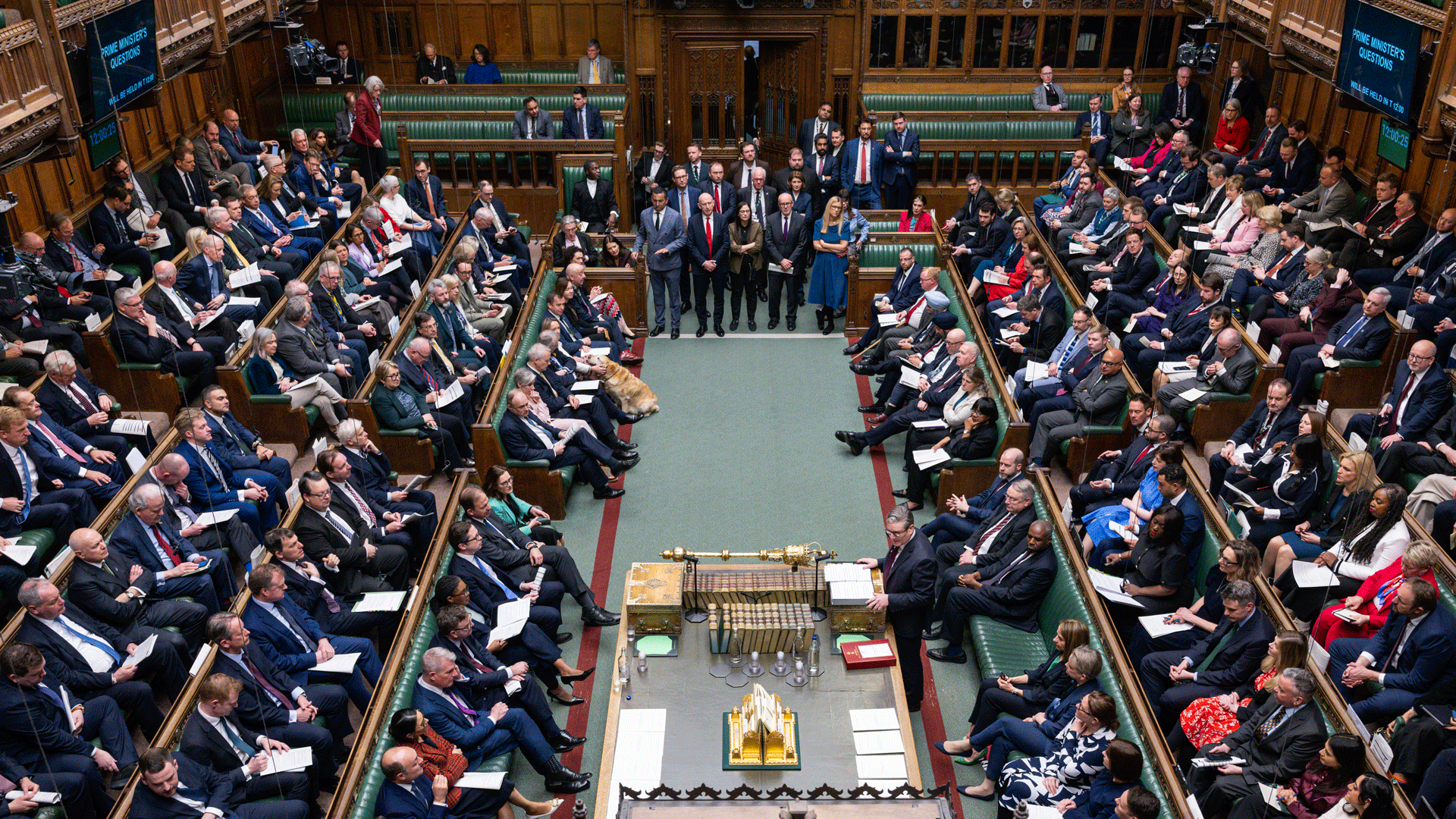
Last September, we launched our plan for a House of Campaigns. This is a new chamber in parliament that would give representative and campaigning groups a bespoke presence in Westminster.
Despite the huge number of people who join and support Britain’s campaigning organisations, they often struggle to win the hearing that they deserve.
At present, voices can be raised and issues put in front of decision makers through the parliamentary e-petition system. If an e-petition receives more than 100,000 signatures it will be considered for debate in the House of Commons. In the 10 years since the parliamentary e-petitions website was launched, 382 such debates have taken place. These debates can be a useful way to put pressure on the government. A small number of e-petitions have even led to changes in the law.
Get the latest news and insight into how the Big Issue magazine is made by signing up for the Inside Big Issue newsletter
Many more, however, sink without trace. There have also been some flippant petitions that undermine the credibility of the system itself. As we pointed out when we launched, the fact that MPs have not chosen to debate the subject matter of a given e-petition means that parliamentarians may not be familiar with the issue and may not be able to present the arguments in the most powerful way. It would often be better to allow campaigners to make their own case, in their own words. That would be the next logical step for the e-petition system.
The current petition system was never intended to be the end point. When he introduced the reform that allowed for petitions to be debated by MPs, Sir George Young (then the leader of the House of Commons and now championing participatory democracy from the House of Lords) said that this reform was “a step towards a more accessible and transparent” parliament. At the same time, however, he warned against the danger of parliament becoming “complacent”.