Advertising helps fund Big Issue’s mission to end poverty
Opinion

Prison leavers are being neglected due to lack of digital skills. It's time for change

The Digital Poverty Alliance is calling for more support for prison leavers to give them the digital skills they thrive in the workplace and in society

prison

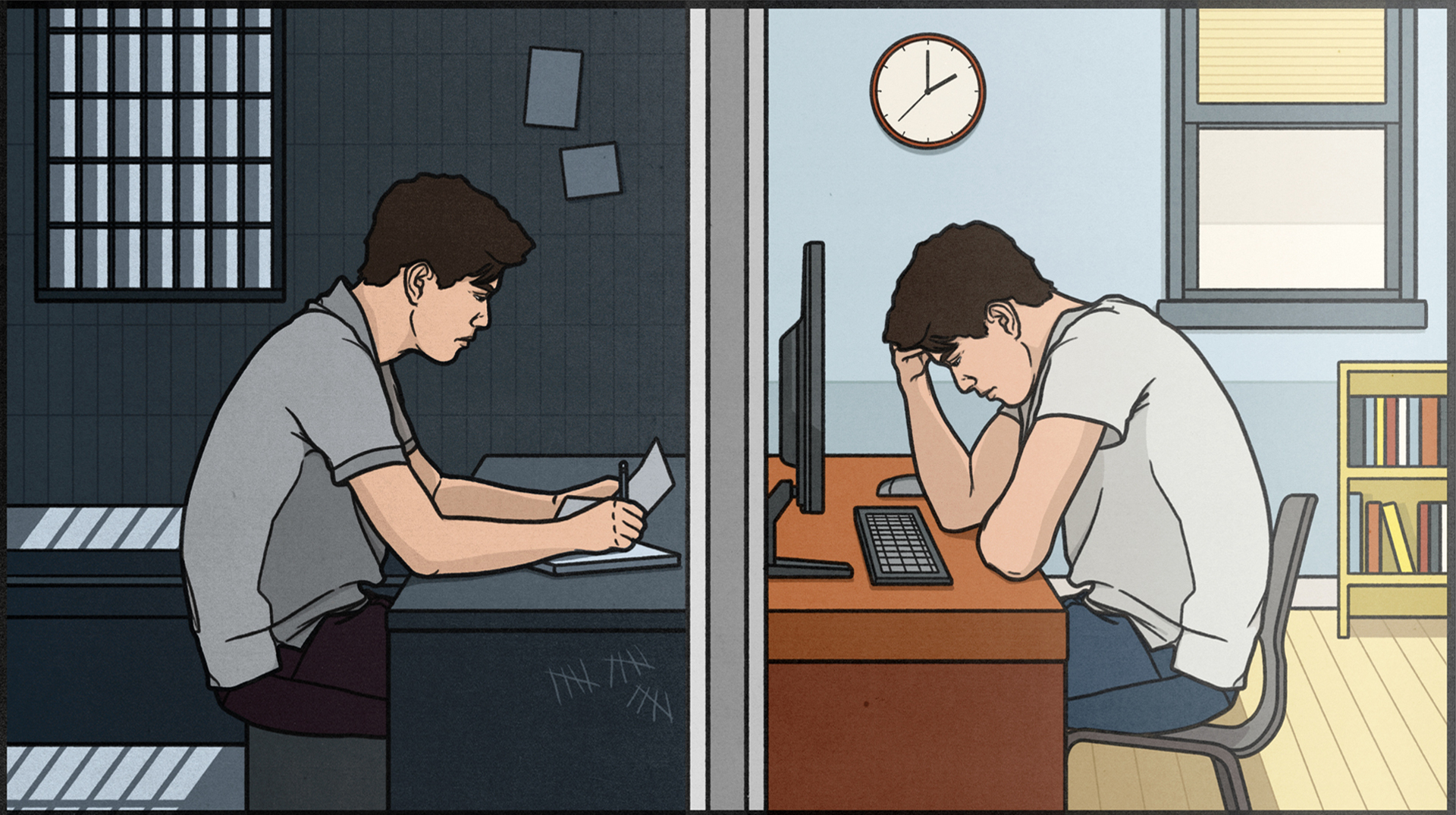
For people who have access to the digital world in prison, it can be a lifeline. Illustration: Eleanor Bannister

In today’s digital-first world, access to the internet is not merely a convenience. It has become a fundamental aspect of societal integration and equal opportunity – it is essential for everyday life. This reality is starkly evident in the challenges faced by former prisoners re-entering society, who are often thrust into a digital landscape that can be both intimidating and unforgiving.

Those leaving the prison system often face considerable barriers, from accessing essential online services – whether finding housing or accessing mental health support  – to finding employment in a job market where opportunities are predominantly listed online. This not only hampers their ability to secure employment but also impacts their potential for a stable, law-abiding life post-incarceration.

The vital importance of digital skills in a job market where 90% of vacancies are only posted online is clear, yet this is just the beginning of the equation for reintegrating former prisoners. Beyond acquiring fundamental digital skills, these individuals also urgently need access to a reliable internet connection and a functional laptop.

Without these essential tools, many ex-offenders are left stranded on the outskirts of the digital economy, deepening their isolation and compounding the barriers they face in rebuilding their lives. The systems around probation and access to welfare assume universal digital access, meaning those who cannot afford a device and connectivity, or lack the skills, are likely to face sanctions for failing to complete tasks required of them.

The Digital Poverty Alliance’s Tech4PrisonLeavers project has played a vital role in addressing this critical yet frequently overlooked aspect of our social fabric, focusing specifically on prison leavers in the West Midlands, and then London and the south east of England.

The pilot project provided a crucial lifeline. In London, of the twenty-three men who committed to the programme, fifteen successfully completed it, with some securing employment. The varied levels of digital literacy among the participants highlighted the necessity for personalised educational approaches, ensuring that each individual could benefit fully from the training provided.


Advertising helps fund Big Issue’s mission to end poverty

The insights and recommendations from this initiative have been compiled in a white paper published by the Digital Poverty Alliance, based on independent evaluation. Serving as a blueprint for scaling the successes achieved and addressing the challenges encountered, this document offers insights that could fundamentally shift the support structures for not only former prisoners but any marginalised community facing similar digital barriers.

Looking ahead, our collective response should involve recognising and treating digital literacy as a fundamental right, akin to education and healthcare, and as essential as reading and numeracy. This involves comprehensive support from the Ministry of Justice and the Prison Service, extending beyond mere access to devices. It necessitates a broad spectrum of digital education, robust pre-release training, and sustained post-release support to ensure successful societal reintegration.

Enhancing collaborations with employers and probation services are not just strategic moves but moral imperatives. These efforts are essential for creating a society that truly rehabilitates and integrates its members, rather than one that risks cycling them back through the prison system.

Initiatives like Tech4PrisonLeavers are not merely beneficial but essential. They act as pillars of what can be achieved when societal efforts are channelled towards empowerment rather than marginalisation. Addressing the digital divide does more than solve a logistical challenge. It heals a social rift, offering a genuine second chance to those who, having paid their debt to society, deserve no less than a fair start.

Elizabeth Anderson is chief executive of the Digital Poverty Alliance.

Do you have a story to tell or opinions to share about this? We want to hear from you. Get in touch and tell us more.

Advertising helps fund Big Issue’s mission to end poverty

Do you know how Big Issue 'really' works?

Watch this simple explanation.

Recommended for you

View all
Healthier lives were Glasgow's 2014 Commonwealth Games legacy. 2026's games must raise that bar
The Commonwealth Games
Steven Mackenzie

Healthier lives were Glasgow's 2014 Commonwealth Games legacy. 2026's games must raise that bar

'I’ve had to weep with those who lost everything': Inside Venezuela's devastating earthquakes
Venezeula humanitarian worker Claudia Gonzalez Pacheco
Claudia Gonzalez Pacheco

'I’ve had to weep with those who lost everything': Inside Venezuela's devastating earthquakes

In the occupied West Bank, a child is killed every week. When did that become acceptable?
UNICEF UK CEO Dr Philip Goodwin visited the community of Um El Kheir Village south of the WB with UNICEF State of Palestine, meeting children and hearing about the challenges they face
Dr Philip Goodwin

In the occupied West Bank, a child is killed every week. When did that become acceptable?

Burnham is singing from Big Issue's hymn sheet on rough sleeping. It gives us reason for hope
new prime minister Andy Burnham in front of Downing Street crowds
John Bird

Burnham is singing from Big Issue's hymn sheet on rough sleeping. It gives us reason for hope