JP Morgan's current HQ at Canary Wharf. Image: Danesman1, CC BY-SA 3.0 via Wikimedia Commons
Share
Take it to the bank
It seems peculiar, to say the least, that JP Morgan could recommend that the government raise money by cutting welfare spending – again. Some state spending is indeed discretionary: they can decide what proportion should go to defence, to education etc. But benefits? You can’t choose to have fewer people unemployed or ill. If you’re jobless, you need benefits. End of. You can’t just magic these people into not needing support.
Fourteen years of austerity taught us that cuts and sanctions don’t force “workshy” people into jobs. They just create more stress, malnutrition, ill-health and alienation. What you might save on benefits you’re going to spend 10 times over later on health, crime and addiction services.
The cost to society is perhaps even greater, in terms of hopelessness, resentment, and social fragmentation. All of which drives people into the arms of the populist right. How can an investment bank possibly see these consequences as a good thing? Or maybe they do.
Sylvia Rose, Totnes, Devon
We’re cooked
I was alarmed to read the shocking statistic that half of children’s patient visits to Alder Hey in Liverpool are attributable to dental-related illnesses.
Wholesome nourishment is so key to strong physical and mental health, and access to good food should not be cost-prohibitive – it’s down to education and time.
Advertising helps fund Big Issue’s mission to end poverty
Advertising helps fund Big Issue’s mission to end poverty
I visited India in the early 00s. It certainly wasn’t a classless society but I was struck by a certain latent solidarity among Indians to the extent that they consume pretty much the same daily grub regardless of household wealth: curried lentils and pulses, limited meat if any; wholegrain flat breads, seeds and nuts; natural yoghurt and cheese; and a plethora of fruit and veg (daily doses of protein, carbs, healthy fats and essential vitamins and minerals). The perfect model for a healthy and wholesome diet!
Things may have changed in India now, with a move away from the traditional family where food is freshly prepared in the home, and there is probably an increasingly heavy reliance on convenience food, but lessons can be learnt from traditional Indian food. Nutritious food can be prepared cheaply and at scale with less reliance on meat; balanced meals enjoyed with (gulp) water; fruit for dessert; and occasional sweet treats!
Both food technology and household budgeting need to feature throughout the school years as a compulsory part of primary and secondary education in UK. Most children really love to cook, given the opportunity. British families have lost the time and skill required to prepare home-cooked food. Now the state needs to step up and take responsibility after decades of encouraging the overconsumption of junk convenience foods that are often seen as an absolute necessity in time-poor Western society.
Keep reading the journalism that powers our mission
Register free to continue and learn more about the stories, campaigns and the support we provide, helping people facing poverty across the UK.
Send us your image, or photo you’ve captured, with a brief description. On socials or email letters@bigissue.com
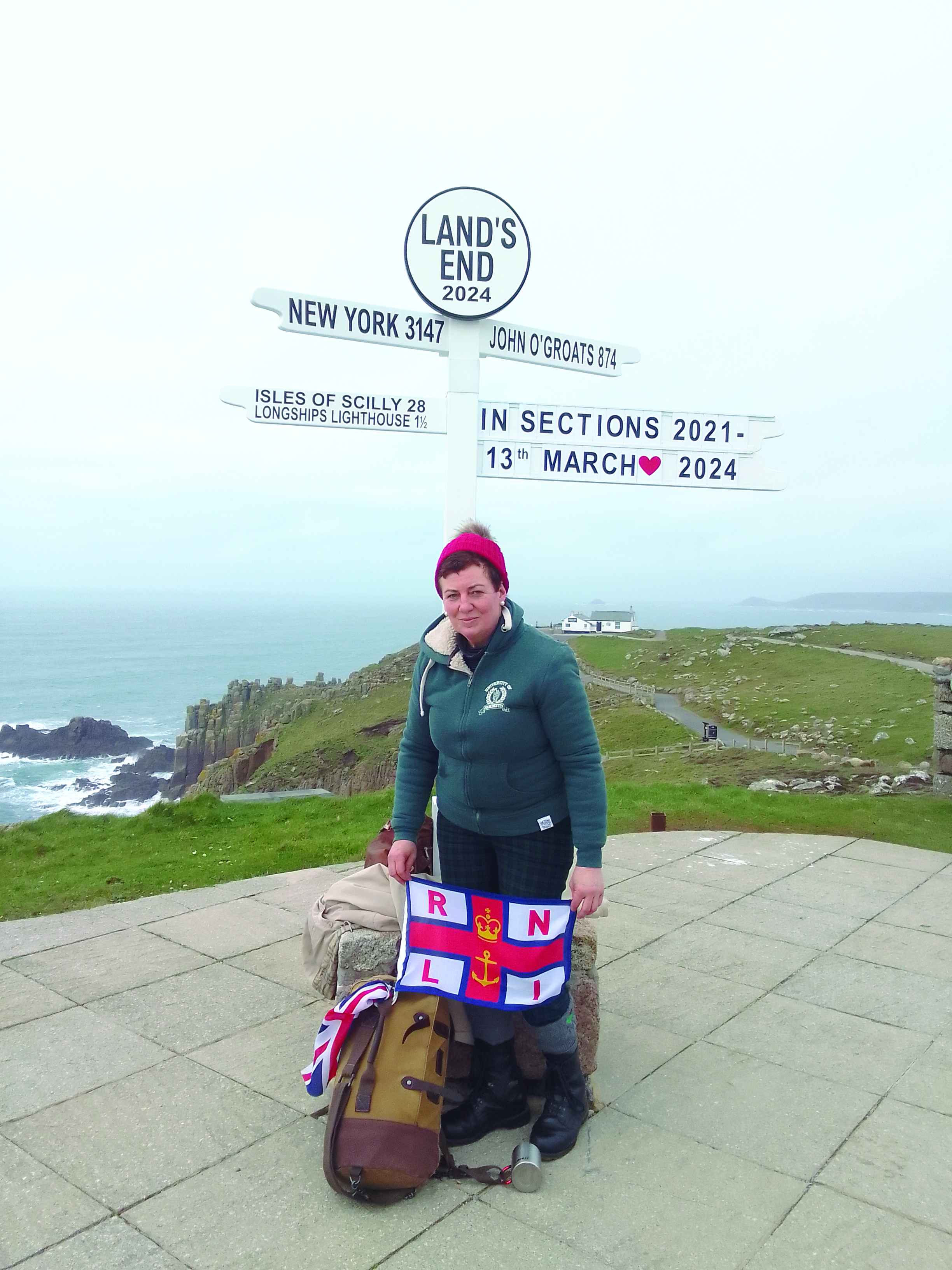
I completed LeJog (Lands End to John O’ Groats) for charity last year. It took four years and I got sectioned in the middle. My hair and teeth fell out with the stress of having no home. I now have a home and a job in the NHS thanks to a few kind souls. Take care all you females on the road. Happy Christmas from my home and do take care of your feet. And thank you to my supporters – please donate to the Veterans Orthopaedic Association and Shelter. Susie Powell
People’s circumstances change. It’s easy to say you should only have kids if you can afford them but that doesn’t mean things will stay the same. Divorce, job loss, inflation etc. Meanwhile, we’re beginning to feel the strain of a birth rate which has been declining since the 1950s.
Advertising helps fund Big Issue’s mission to end poverty
Jay Henderson, Facebook
Instead of giving benefits for extra children they should change the tax-free amount, that way you’re encouraging people to work. Benefits should be enough to get you by in a tough time, not something to support you forever.
Daniel Stillings, Facebook
No one is having an extra kid for £292 a month… hardly covers it!
Ellen Hendriks, Facebook
Remember the days when people had eight or nine kids, no benefits, just family allowance as it was called, and wages were so much better. Yeah, no one had designer gear, granted, but there was work and people were happy. Nowadays, those saying if you can’t afford kids, don’t have them, well, yeah welcome to the end of the British race.
Advertising helps fund Big Issue’s mission to end poverty
Jacqui Sexton, Facebook
A million reasons
This is a positive and uplifting discussion. Large multinational corporations need to be held to account and taxed. For example, can anyone explain why Google does not have to charge VAT in the UK? Surely Google’s UK turnover is over the £90k limit, which obligates charging VAT? Google does not charge VAT for services like Workspace or Adwords. Yet Apple storage, Vimeo and other cloud services charge VAT that goes straight to HMRC to pay for our social needs. What legal loophole does Google have which Apple and Vimeo don’t? If we close Google’s loophole, it would help HMRC considerably, surely…
Buy from your local Big Issue vendor every week – or support online with a vendor support kit or a subscription – and help people work their way out of poverty with dignity.
Advertising helps fund Big Issue’s mission to end poverty
Advertising helps fund Big Issue’s mission to end poverty