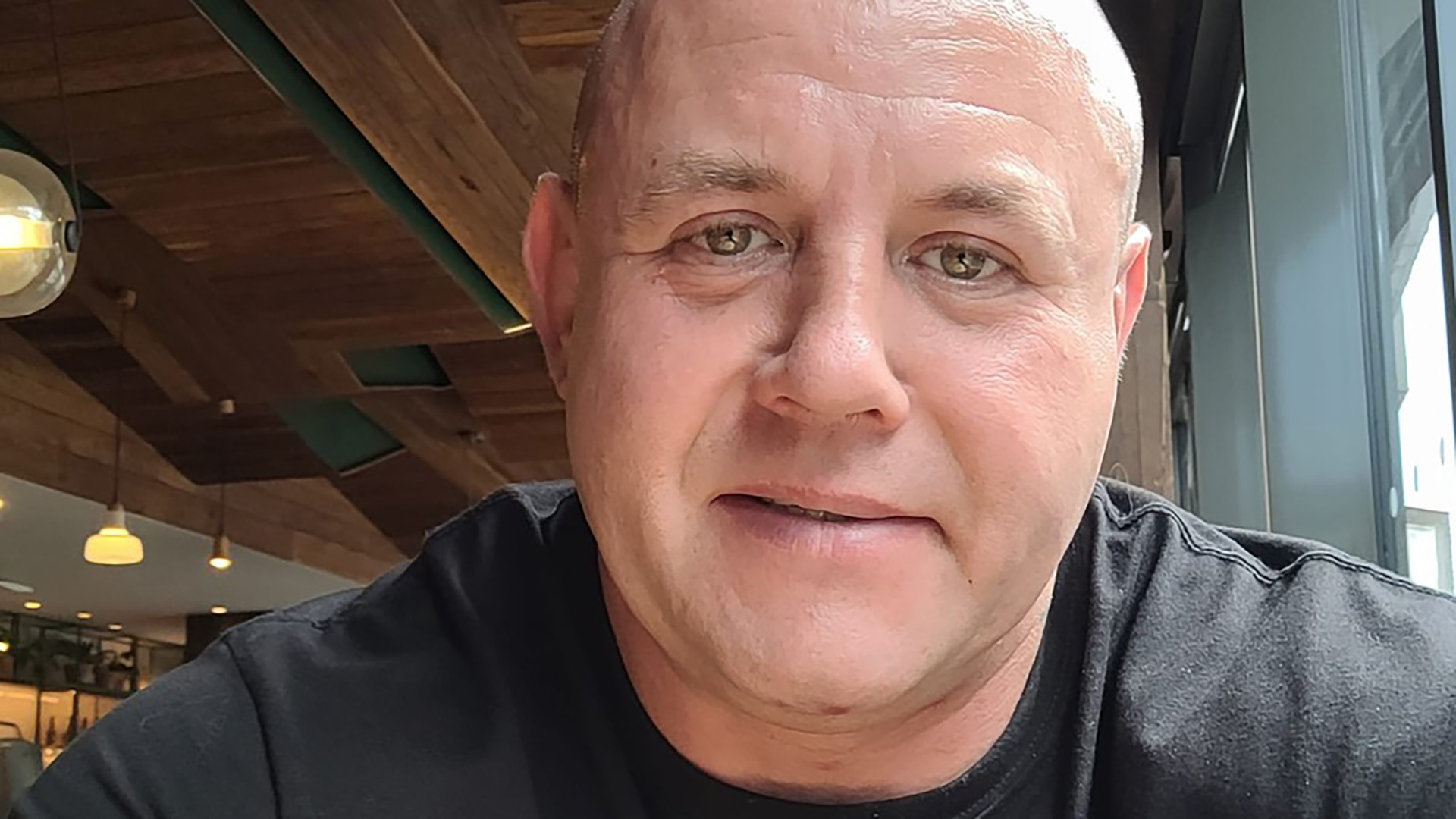
“All I have is a piece of paper that says I was found not guilty. No apology, nothing more,” he says.
MPs and lawyers have called the scheme “unfit for purpose”, but without reform, Szal has no hope of redress.
A false new start
When police arrested him in August 2016, Szal had been in the UK barely six months. At 38, he and Magda had left Gdańsk, the northern Polish port city where he grew up, hoping for a fresh start.
Keep reading the journalism that powers our mission
Register free to continue and learn more about the stories, campaigns and the support we provide, helping people facing poverty across the UK.
“My life was pretty bad since I was a kid because I had parents who were alcoholics. I was raised by my grandmother, my brother was raised by my other grandmother.
“In primary school, I started getting into fights. There were some thefts. Since I was 13 years old, I started to financially support the household where my grandmother lived. Later on, I ended up in a correctional facility and in prison,” Szal said.
The couple settled in Wood Green, North London, found steady work and were soon expecting their first child. Szal thought his life had finally turned a corner.
Advertising helps fund Big Issue’s mission to end poverty
The night before the murder, Szal had been consoling a Polish acquaintance he barely knew. Tomasz, not his real name, turned up at his flat that evening, heartbroken and agitated after being kicked out by his girlfriend. The two drank late into the night until Szal, tired of his laments, walked him home.
The flat was shared by several Polish tenants, including 28-year-old Grzegorz Pietrycki and Szal’s friend Patryk Pachecka.
Szal would later tell a jury that not long after Tomasz entered the flat, Pachecka came running out shouting that Tomasz had gone mad and was attacking Pietrycki with a knife. He said that, on hearing this, he panicked and ran because he had previously been attacked with a knife in Poland and was terrified of it happening again.
Later that morning, Pietrycki was found dead, his throat cut, about sixty metres from the flat, collapsed on a neighbour’s doorstep. The murder weapon was never found.
At the trial in 2017, prosecutors argued that Szal, Pachecka and Tomasz were all guilty of murder. Both Szal and Pachecka denied involvement, with Pachecka claiming Tomasz was the killer.
The witness testimony appeared to support their account. Two tenants living in the room next door told the court it was Tomasz they saw that night, drunk, aggressive and under the influence of drugs, when they knocked on the door of the front room.
Advertising helps fund Big Issue’s mission to end poverty
Both said they heard Pietrycki shouting in Polish, “Why are you beating me? What have I done to you?”, using the singular form of “you”. Neither saw Szal enter, and only saw Pachecka return later, visibly shaken.
CCTV later showed Szal and Pachecka running from the flat before Pietrycki fled in another direction, followed moments later by Tomasz.
Tomasz’s defence insisted it was Szal and Pachecka who killed Pietrycki and then tried to pin it on him. They pointed to both men’s Polish criminal records as evidence of violent tendencies, while Tomasz’s appeared clean.
Szal’s lawyers argued there was no proof he was in the flat when the attack happened, no motive, and that witness and forensic evidence pointed to Tomasz. Nevertheless, the jury convicted Szal and Pachecka on circumstantial evidence but failed to reach a verdict on Tomasz. A second jury also couldn’t agree, and he was released.
Szal began his sentence in December 2017. He recalls spending the first three days in a state of shock, barely speaking or leaving his cell.
Just over a year earlier, he had left Gdańsk determined to rebuild his life. Now he was back behind bars for a crime he hadn’t committed.
Advertising helps fund Big Issue’s mission to end poverty
He might have spent almost two decades there were it not for his solicitor, Siobhan Grey, who remained convinced of his innocence, and the charity Inside Justice.
Polish journalists contacted by Inside Justice helped uncover that Tomasz had falsely claimed to have a clean record, a cornerstone of his defence. In fact, he had a prior violent conviction that Polish police failed to disclose.
Even more crucially, independent pathologists and blood-spatter experts concluded the Metropolitan Police had wrongly assumed the fatal blow was struck inside the flat. Their analysis showed the killing almost certainly happened outside, along the route that Pietrycki and Tomasz took after leaving.
In 2020, the Court of Appeal granted Szal and Pachecka leave to appeal, and in January 2021 ruled their convictions unsafe. A new jury, presented with the fresh forensic evidence, later acquitted both men.
A second punishment
After leaving prison in 2021, Szal tried to return to normality the best he could but found himself struggling.
“I would take my daughter to school, I’d come back home and clean everything, because that would be my day’s work. And then I would sit and cry,” said Szal.
Advertising helps fund Big Issue’s mission to end poverty
The panic attacks began in prison and continued long after. Whenever he left the house, Szal found himself looking over his shoulder, terrified that Tomasz was free.
Szal hoped that compensation might help him move on with his life, but he didn’t know where to start. One law firm agreed to take his case in return for a fifth of any award, but stopped replying after a year.
It was only with the help of the Miscarriages of Justice Support Service, a charity that supports victims, that Szal was able to find an experienced lawyer to finally apply for compensation.
Last year, the MoJ rejected his application for compensation on the grounds that his appeal in 2021, which ultimately led to his conviction being quashed, had been lodged within the original 28-day time limit.
Under the government’s interpretation of the scheme, people whose convictions are overturned on a first, in-time appeal are generally not eligible for compensation, on the basis that the appeal system has corrected its own error.
But for Szal, that process took four-and-a-half years and was beset by legal obstacles. In February, his case was cited as an example of failings in the appeals system in a formal, government-backed review. An acknowledgement it would seem that justice failed to deliver for Szal.
Advertising helps fund Big Issue’s mission to end poverty
Susie Labinjoh, a leading solicitor specialising in miscarriages of justice cases who represented Szal, said his case shows how flawed the scheme is.
“There is an issue if you spend, as Grzegorz did, four years of his life on hold. So you either need to be compensated for that or you need to speed up that process,” she said.
The government’s refusal to offer any compensation has been a double blow to Szal. “I feel like I’m still being punished, and I don’t know for what,” he says.
The years after his release have not been easy. Szal was diagnosed with post-traumatic stress disorder and was only able to see a psychotherapist thanks to the Miscarriage of Justice Support Service.
Szal wishes that his wife, who he says still suffers from flashbacks from his imprisonment, could also get treatment. But neither have the means: Szal currently works as a private security guard and Magda as a cleaner.
If he had been awarded compensation, Szal says, the money could not only have helped his wife get support but also allowed them to move to a more accessible flat for their disabled daughter.
Advertising helps fund Big Issue’s mission to end poverty
Since his release, the Metropolitan Police have referred the case to their Serious Case Review Panel, and the Forensic Science Regulator has launched a separate inquiry, both rare acknowledgements of serious investigative failings. His case has also been cited in the Journal of Criminal Law.
Yet despite growing recognition of the systemic failures that upended his life, Szal has been left with nothing.
Now, a father again after welcoming his second child this year, he is trying to look ahead. But for Szal, moving on doesn’t mean giving up.
He knows he might be in for a long fight, but seems undaunted by justice moving slowly. “I’m ready to get the placard and go protest in front of the government,” he says.
Do you have a story to tell or opinions to share about this? Get in touch and tell us more.
Change a vendor’s life this Christmas.
Advertising helps fund Big Issue’s mission to end poverty
Buy from your local Big Issue vendor every week – or support online with a vendor support kit or a subscription – and help people work their way out of poverty with dignity.