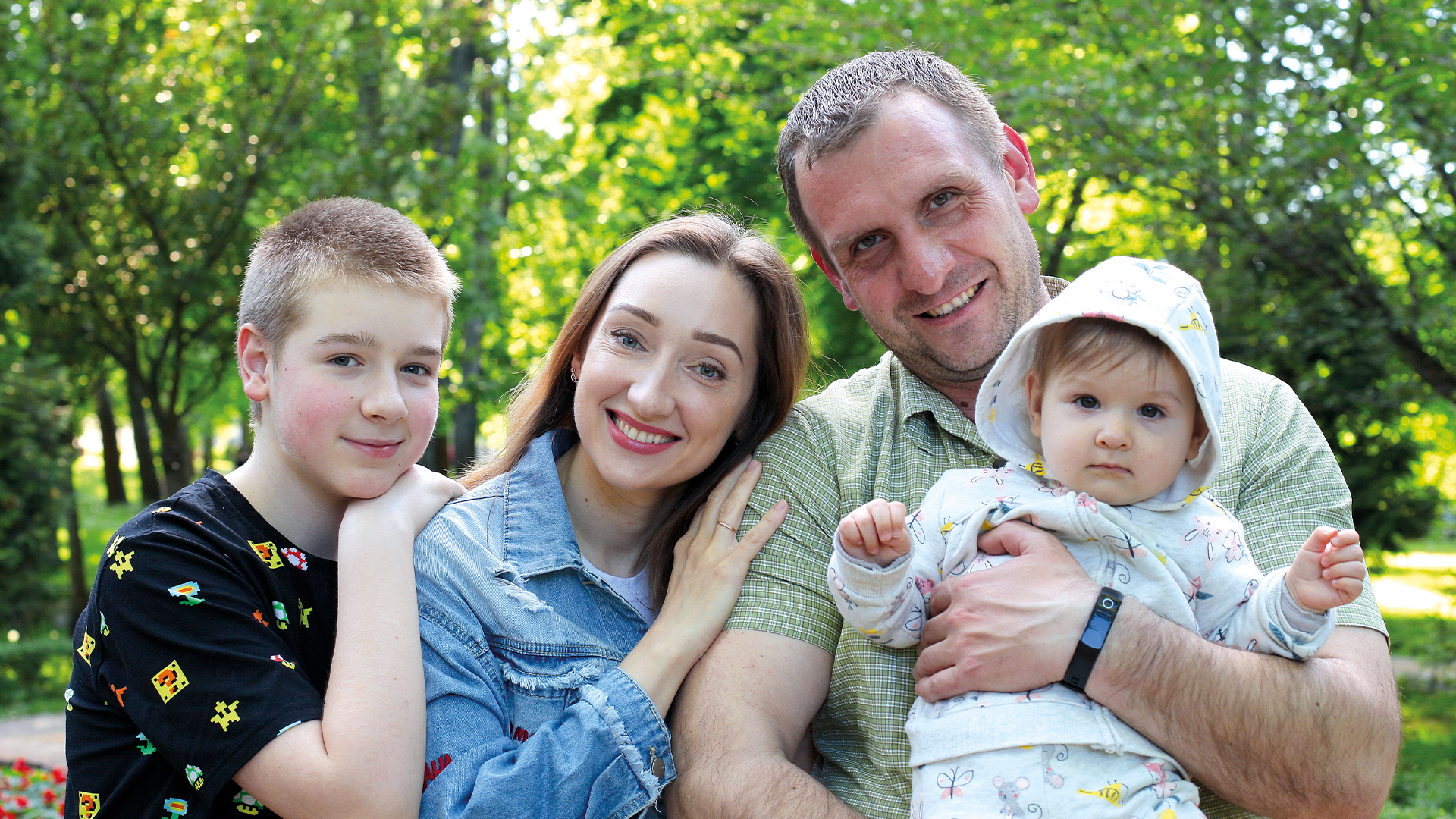
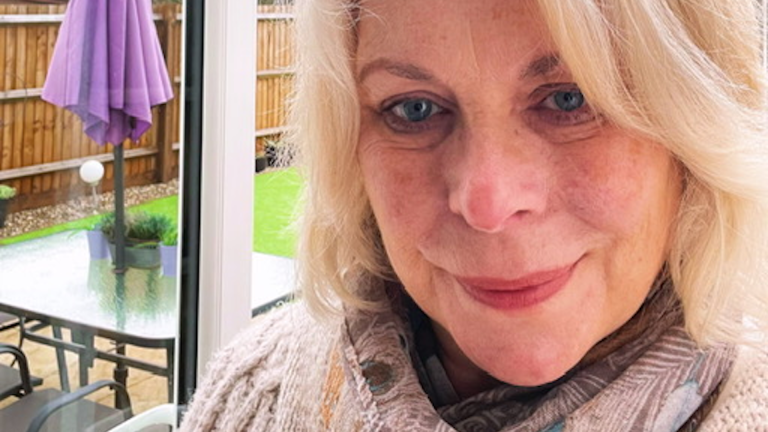
Tetiana Levenchko and her family before they fled Ukraine
Share
Some 2,000 years ago, the Bible says, Mary and Joseph sought refuge.
Whether you are religious or not, the nativity story is a familiar one. When Roman emperor Caesar Augustus ordered his subjects return to their ancestral towns for a census, the expectant mother and her husband set off for Bethlehem.
The couple arrived, Pope Francis told the faithful in 2017, in a land “where there was no place for them”.
It remains a story with modern resonance. “So many other footsteps are hidden in the footsteps of Joseph and Mary,” the late Pope said in his Christmas eve homily. “We see the tracks of entire families forced to set out in our own day… millions of persons who do not choose to go away but, driven from their land, leave behind their dear ones.”
The implication – that the Holy Family experienced displacement, later fleeing to Egypt to escape Herod’s order that all baby boys in Bethlehem be killed – has long sparked debate. But the comparison feels especially acute in an era when refugees are increasingly maligned, and asylum has become a political fault line.
In November, home secretary Shabana Mahmood announced a radical overhaul of Britain’s asylum system, ending the permanent status of refugees and imposing a 20-year route to residency.
Advertising helps fund Big Issue’s mission to end poverty
Advertising helps fund Big Issue’s mission to end poverty
After a year of anti-immigrant and anti-refugee rhetoric, Big Issue spoke to some of the people who have been granted sanctuary in Britain about how they’re spending Christmas – and how they feel as attitudes harden.
This is the first in our series of stories.
Tetiana’s story
In 2023, Ukraine formally changed the date of Christmas.
Keep reading the journalism that powers our mission
Register free to continue and learn more about the stories, campaigns and the support we provide, helping people facing poverty across the UK.
“Traditionally, we followed the Orthodox calendar and celebrated Christmas on 7 January – a week after New Year,” Tetiana Levchenko tells Big Issue. “But recently, Ukraine shifted to align with Europe and the UK, celebrating on 25 December.”
The decision reflected a conscious cultural separation from Russia. But regardless of the date, the spirit of the season “remains the same”, adds the Ukrainian mother-of-two: “filled with light and hope.”
Hope is much needed among the country’s war-displaced communities. Nearly four years after Russia’s February 2022 invasion, an estimated 60,000 to 100,000 Ukrainian soldiers and civilians have been killed. Russian casualties are believed to be even higher, at approximately 250,000.
At the time of writing, officials from both nations were engaged in negotiations over a US-brokered amnesty. Lasting peace must be the goal – but nothing will erase the trauma of the war, says Levchenko.
“I’ll never forget that morning of 24 February: the sound of missiles, the fear in my son’s eyes, the disbelief that this was really happening,” she says. “Then came a text from a former Russian colleague telling me not to resist, to ‘just give up’. It was chilling.”
Originally from Mariupol – one of the first cities to fall under Russian occupation – Levchenko was living in Kyiv with her husband, their 12-year-old son and their baby daughter. As the initial strikes hit the capital, the family “made the difficult decision to leave”.
“On the way to the train station, missiles hit a TV tower. It was terrifying. At the station there was chaos – thousands of people shouting, running, trying to get on any train heading west,” she recalls.
“We jumped into one, almost by instinct.”
Levchenko and her children crossed the border into Poland before continuing to the Czech Republic. Her husband initially remained in Ukraine, “risking his life to try to rescue his disabled father and other relatives from the occupied area”. But Levchenko feared for her children’s safety.
She secured a place through the UK’s Homes for Ukraine scheme and arrived in Sheffield in April 2022. Their host, Lydia, was “extraordinary”, she says: “From the first moment, she made us feel at home. We stayed with her for five months, and during that time she became like family.” The charity Settled provided “invaluable” guidance navigating complex Home Office processes.
Formerly the head of communications for a major steel and mining company, Levchenko now works as a communications manager for a British steel company. Her husband has since joined her in the UK, working as a mechanical design engineer. Their children are settled in school, and Lydia became the godmother to their daughter; Levchenko has since become the godmother to Lydia’s child in return.
Despite their growing sense of normality, their future in the UK remains tied to a system defined by temporary measures.
As of 31 March 2025, the UK had issued 272,945 visas to Ukrainian arrivals under the Homes for Ukraine and Ukraine Family Scheme. These visas provide only limited leave to remain, with extensions available but no direct path to permanence.
Levchenko and her children in the UK, Christmas 2024
“Our route doesn’t currently lead to permanent residency. It’s difficult to plan long-term – for work, for education, for the children’s future,” Levchenko says.
Pressed on whether Ukrainians will fall within the scope of the tough new asylum rules announced last month, Home Secretary Shabana Mahmood said that Ukrainians would be expected to return, but that this was separate to the new review.
For Levchenko and her family, it’s an unsettling feeling. “We’re grateful to be safe here, but living in limbo is emotionally tough,” she says.
“When I read the news and see discussions about migration, I sometimes feel there’s a lot of misunderstanding about who refugees are and what life looks like for us.”
For now she is looking ahead to Christmas, which she will celebrate in December, in keeping with her family back in Ukraine. There are, she says, room for new traditions.
“We’ll cook a mix of Ukrainian and British dishes, visit our friends and, of course, Lydia and her family,” she says. “My children are already planning gifts for their god-sister.”
Buy from your local Big Issue vendor every week – or support online with a vendor support kit or a subscription – and help people work their way out of poverty with dignity.
Advertising helps fund Big Issue’s mission to end poverty