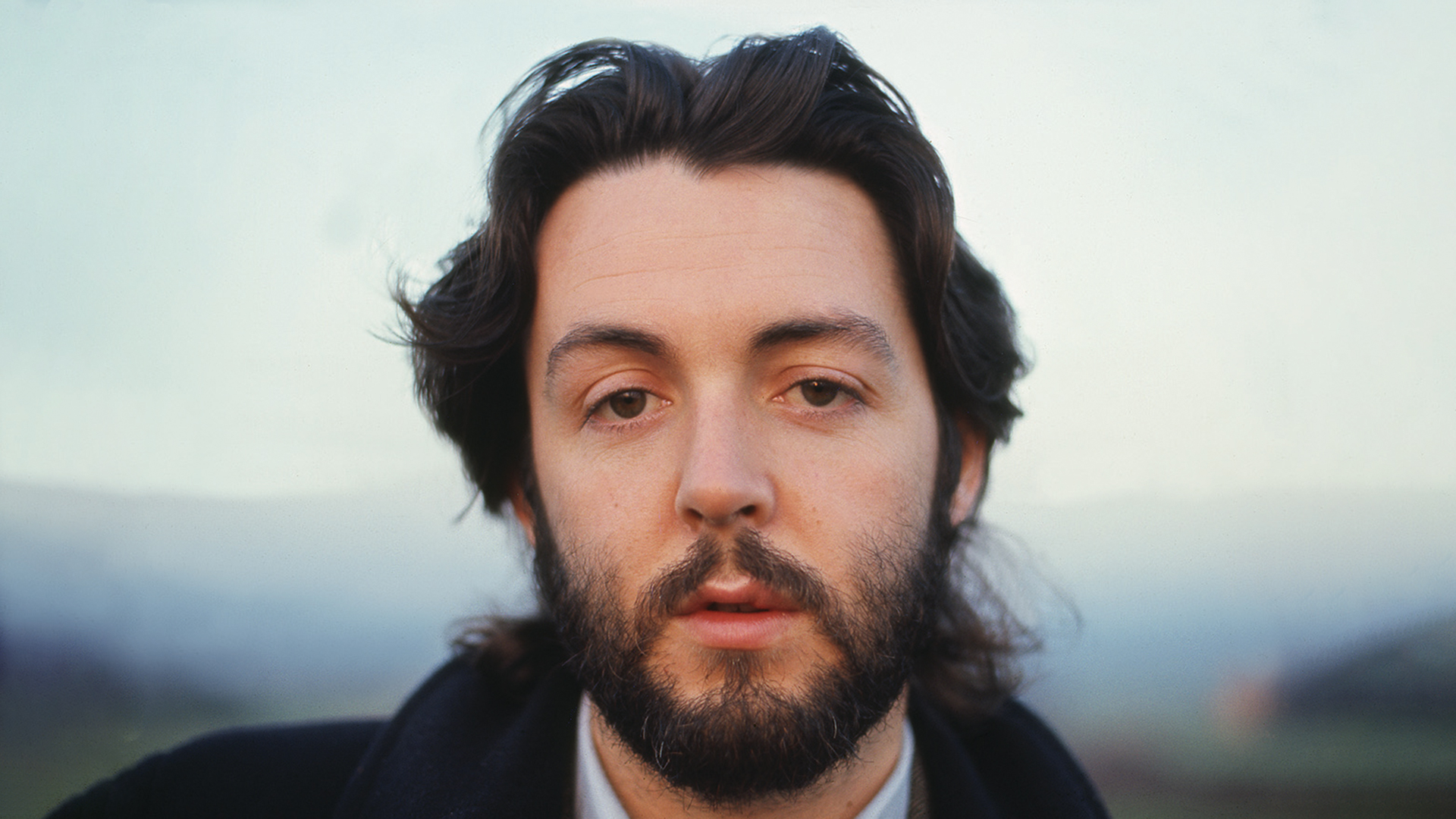
Paul in a portrait taken by his wife in 1969. Image: Linda McCartney
Share
Paul McCartney’s life as a Beatle has been intensively documented. Peter Jackson’s Get Back took us deeper inside their writing and recording process, as well as the band’s break-up, than ever before, while next year Paul Mescal plays McCartney in Sam Mendes’s ambitious quadrilogy.
Our obsession continues. But The Beatles disbanded when McCartney was just 27. And now he is 83.
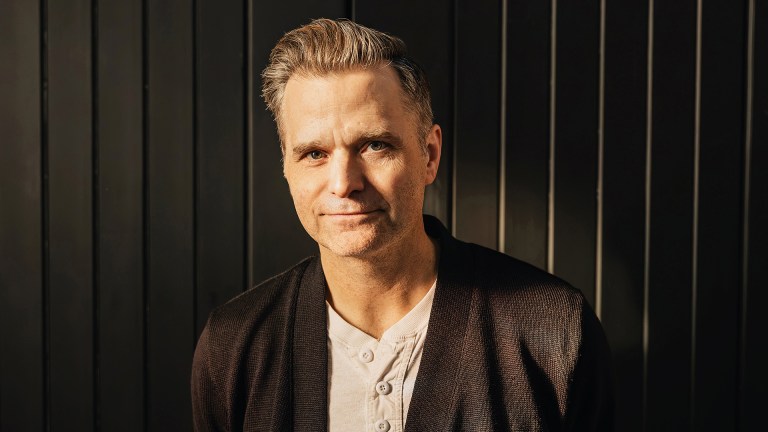
Morgan Neville always offers a new angle on his subjects. The director won an Oscar for 20 Feet From Stardom, which shone the spotlight on the backing singers behind some of the biggest names in music, while his Pharrell Williams biographical comedy was filmed in Lego animation.
In Man On The Run, Neville uses extensive new interviews with McCartney alongside intimate home video footage to offer a new angle on one of the most extensively discussed people on the planet.
Can you describe your first meeting with Paul McCartney and the aura he brings into the room?
Advertising helps fund Big Issue’s mission to end poverty
Advertising helps fund Big Issue’s mission to end poverty
Morgan Neville: I first met Paul on a shoot with Mark Ronson several years ago. Paul is a legend, but he’s incredibly good at making you forget that. I remember he went around and introduced himself to everybody on the crew. He’s been famous for so long and is an expert at making you forget that’s true.
How did the interviews with McCartney evolve as trust was built?
Paul has been interviewed more than almost anybody on the planet. There’s a normal protocol to answering questions for an interview. It was my job to get beyond that. I wanted to have conversations about questions big and small. We ended up talking about painting, family, travel – all kinds of things – to build rapport and have a genuine conversation. Once that door is open, anything is possible.
Keep reading the journalism that powers our mission
Register free to continue and learn more about the stories, campaigns and the support we provide, helping people facing poverty across the UK.
What are your main takeaways from speaking with him and making this film?
One thing that surprised me was how much I identified with Paul. Not because I’m a musical genius, but because he’s a real person. The questions he was asking himself were ones I understood: How do you find your voice and keep it? How do you live with the legacy of your own work? How do you balance art, work, and family? The genius part of Paul almost feels like a different person. It’s the public persona that he can step into. But at his core, Paul is somebody who’s worked very hard at staying grounded. I really respect that.
After watching Peter Jackson’s Get Back many times, the main thing I’m left with is the real love between McCartney and Lennon – every joke told or lyric suggested, they instantly look to the other for reaction. Can your film be viewed through that lens, as being about someone coming to terms with a monumental break-up way beyond music?
Advertising helps fund Big Issue’s mission to end poverty
Absolutely. This film has two love stories. One is between Paul and Linda, but the other is very much about Paul and John. They had one of the great and most complex partnerships of the 20th century. After watching Get Back, you see the depth and complications of their relationship, and this film begins, metaphorically, the next day. What happens when you lose that kind of bond? When John announced he wanted a “divorce”, I think it broke Paul’s heart. However, even when they were feuding, they always knew they were brothers. That’s why I chose to end the film with John’s death – because that was truly the end of that chapter of Paul’s life. It was sad in so many ways, but at the same time, it allowed Paul to simply be Paul.
Did the additional recent Beatles-related material you were able to see change the film you made in anyway?
I devour all things Beatles and I’ve enjoyed all of it, but I was really focused on the vacuum left in the wake of the Beatles. Most of my revelations came from the material I accessed in Paul’s archive: the home movies, Linda’s photographs, the studio tapes. I wanted to feel the texture of Paul’s life during that time. I even looked closely at his clothes. It was rough and it was grounded – but I think that’s what Paul wanted.
McCartney had been a schoolboy, then a Beatle – do you see this as a film about him finding himself as an adult?
When I was starting the film, I read the first interview Paul gave the week the Beatles broke up. It was the written Q&A he released in the press pack that came with [debut solo album] McCartney. In that interview, he announced to the world that The Beatles were breaking up, and the final question asked himself was, “What are you going to do now?” His answer was, “My only plan is to grow up.” I knew immediately that’s what this film was about. If you’ve only known the Beatles since you were 16, you have a lot to figure out when that suddenly goes away.
Advertising helps fund Big Issue’s mission to end poverty
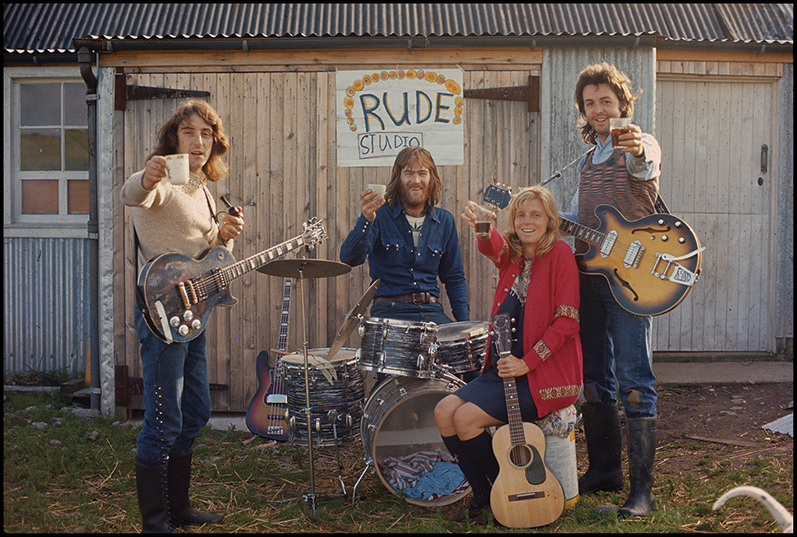
Denny Laine, Denny Seiwell, Linda and Paul announce the formation of Wings in 1971. Image: Linda McCartney
What impressed you about the way McCartney handled himself in this era?
McCartney wasn’t cool in the ’70s. He was playing ukulele and singing songs about living on a farm. Yet that music has lasted. What I respect is that he followed his own creative instincts even when it was, shall we say, ill-advised. For every questionable decision that didn’t work, there was something that went incredibly right. That’s risky, but that’s the job of being creative.
What key elements of McCartney’s evolution in this time you were keen to draw out?
In the ’70s, Paul the musician and Paul the husband and father were deeply intertwined. Home life and music life were one and the same. Linda began collaborating with him almost immediately and whenever they toured, there was never any question that the family would travel with them. Maybe it was the spirit of the ’70s, but I think Paul had figured out that the best way to create a work-life balance was not to separate the two at all.
How has making this film changed your opinions of Paul McCartney as a musician and a person?
One thing I wanted to do at the beginning was assume everyone already understood Paul’s musical genius and, in a way, set that aside. I wanted this to be the story of a real person going through a life crisis and trying to figure out how to put the pieces back together. I think that’s something most of us can relate to.
Advertising helps fund Big Issue’s mission to end poverty
Man On The Run is out on Prime Video from 27 February