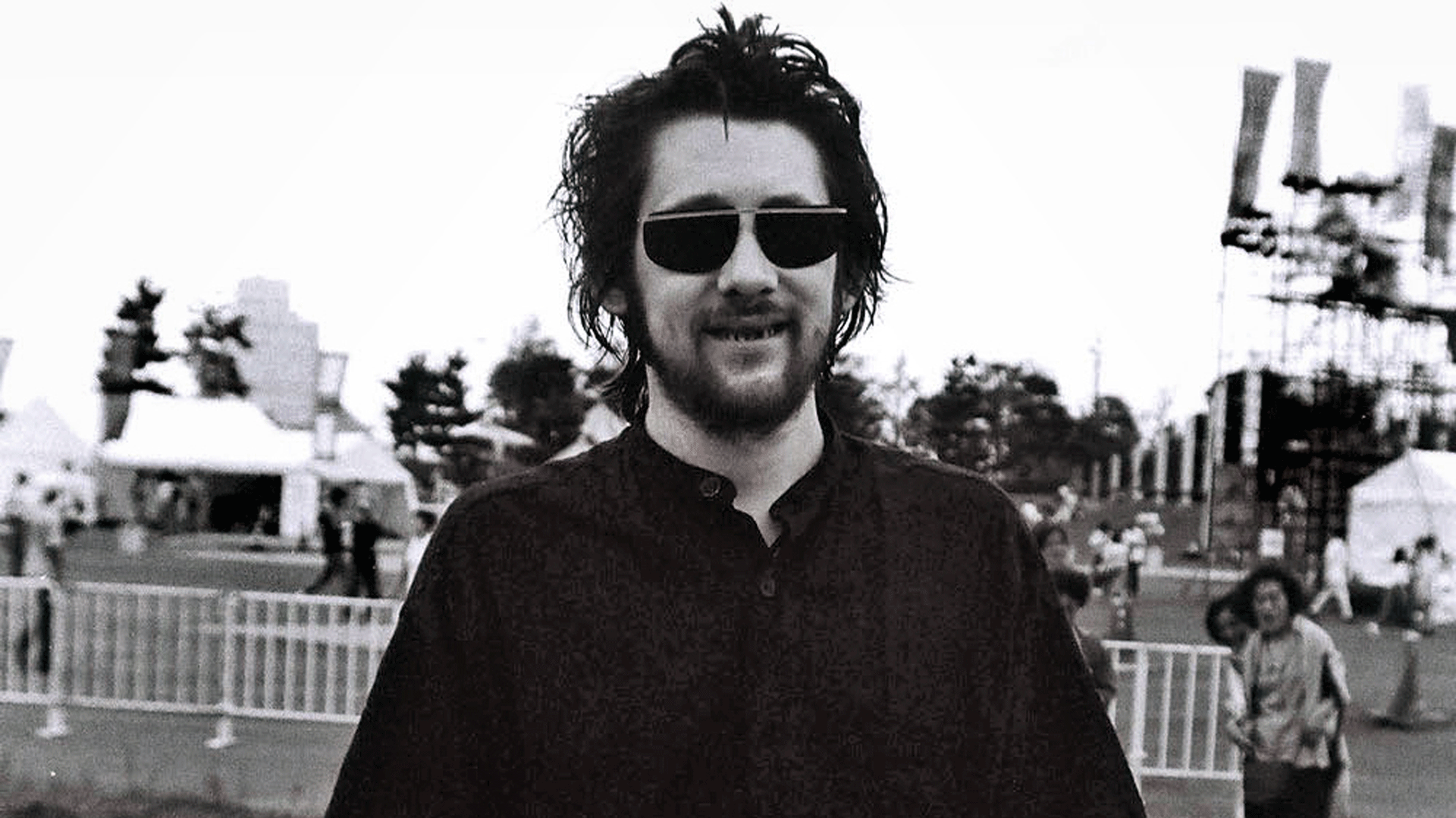
Shane MacGowan, pictured at WOMAD festival, Japan, in 1991, was able to survive when starting out because of the state support he received.
Image: Masao Nakagami, CC BY-SA 2.0 / Wikimedia Commons
Share
As so often, there is always an opposite reaction.
Last week, employment figures were published for the UK showing the unemployment rate was at its highest for five years. The rate was 5.2% – amounting to 1.88 million people. Within this, the figures for younger people are staggering. Over 16% of 16- to 24-year-olds are unemployed. That’s much higher than the EU average.
This is not an epidemic of laziness, rather of opportunity. It doesn’t take much digging to find young people who have been through demoralising searches for months, receiving rejection after rejection. It’s across the board. Last year nearly 1m people graduated from university in the UK. Applications for jobs from them is up 15%.
The issues are macro and micro. Entry level jobs are being squeezed, with rises in employers’ national insurance contribution and minimum wage being blamed by some employers; globally, many major companies are cutting the number of entry roles.
AI compounds things, both as something that is replacing jobs and also as a device for gatekeeping, a machine that intervenes, searches only for key words, stops candidates moving through and then – having no obligation to provide useful or meaningful feedback – giving a cold and clinical kiss-off.
Apprenticeships are also suffering, despite government insistence on a push. Employers keen to hire report complex arrangements for financial support and little breathing room to wait for competency.
Advertising helps fund Big Issue’s mission to end poverty
Advertising helps fund Big Issue’s mission to end poverty
It’s really no wonder hundreds of thousands of young people, burdened with massive debt, seeing no clear route in the future, are moving away from traditional political parties and looking to the emergent Greens and Reform for some tangible alternative. The old class lines are nothing to do with this. A new burgeoning underclass is the educated underemployed. The threat of AI – which enriches the already engorged super-wealthy at the expense of everybody else – grows.
Meanwhile, a positive reaction, one that shows the possible, is growing across the Irish Sea. A couple of years ago, the Irish piloted a universal income plan for artists. It was a post-Covid scheme to encourage creativity and boost the lot those who’d suffered huge downturns in income due to restrictions. Then, they were given €325 (£283) a week for three years. Around 9,000 people applied, and 2,000 received the income, all chosen at random. It was not means-tested and it was not based on any critical reading. The government said at the time that it had the “potential to fundamentally transform how we support the arts and creativity [in Ireland]”.
Keep reading the journalism that powers our mission
Register free to continue and learn more about the stories, campaigns and the support we provide, helping people facing poverty across the UK.
The scheme is now being made permanent. Last week, the Irish government announced they would award another round of the guaranteed basic income for 2,000 more artists at the same level. Applications open in May. The government made the right noises about the investment – every €1 returned €1.39. But it’s more than that. It’s respect for creativity and respect for the human spark that delivers.
It doesn’t change everything for a lot of people, but at least it shows there is a government and leadership that believes in something beyond the grind. And that, I hope, would inspire a sense that a government, inspiring creativity, is thinking creatively.
Advertising helps fund Big Issue’s mission to end poverty
I’d love to see it in the UK. But I can’t. Perhaps the government wouldn’t be against it. If it were rolled out at the same scale per population by the Westminster government, it’d reach over 24,000 people and cost around £280m. In the scheme of things, that isn’t much. It could be funded as an arts tax on the AI conglomerates.
But there would be a tabloid pile-on, complaints about some content created, about something woke and un-British, and a wonder at why these spongers were getting it when others couldn’t. It would reach an ignominious end. Perhaps that says something about how differently the Irish view the arts.
Forty years ago this week the Pogues released Poguetry In Motion, one of the best EPs of the 80s, arguably the best, though with a terrible name! It had two good songs, Planxty Noel Hill and London Girl, one great song, The Body of an American, and one of the great pieces of the late 20th century, A Rainy Night in Soho. That beautiful, battered love song, of hope and loss and scarred dignity, will not age.
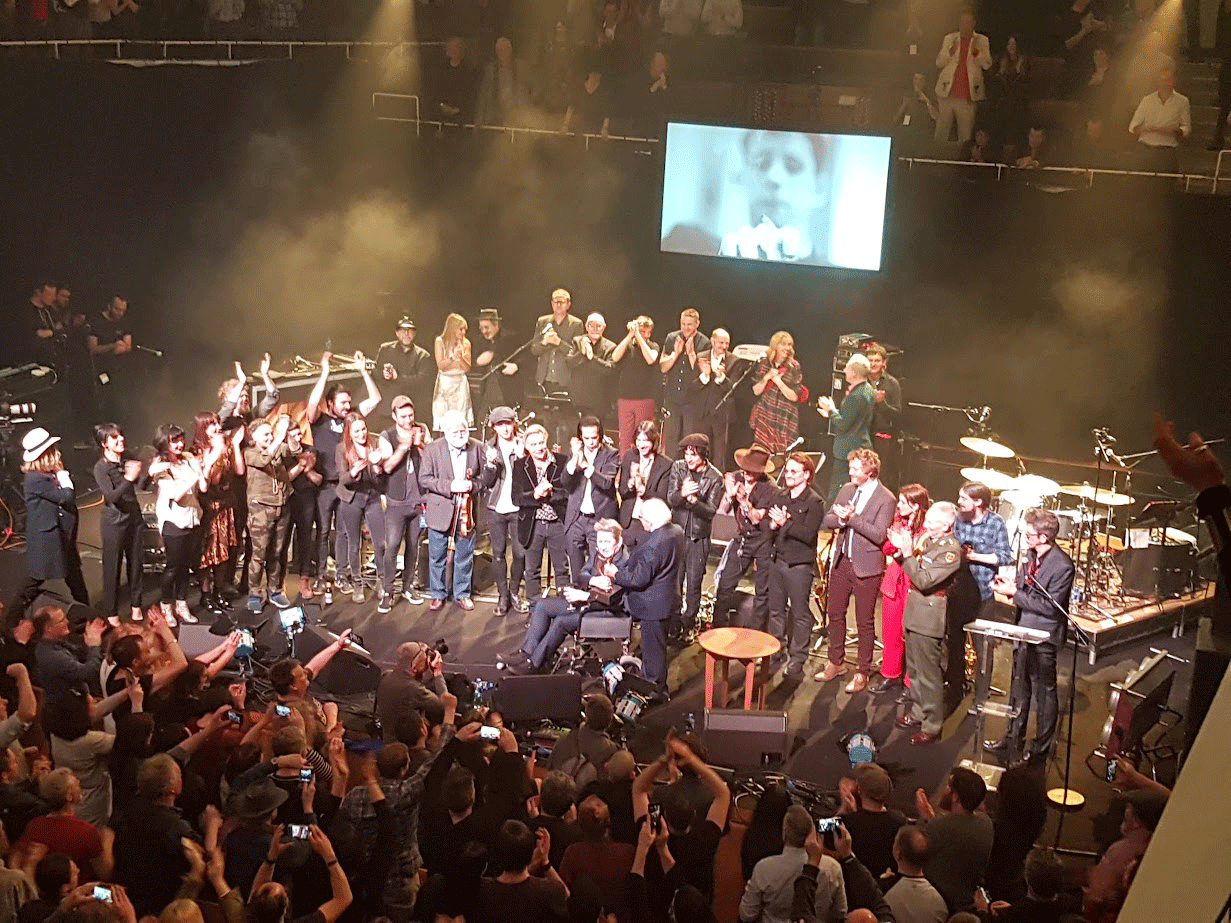
Shane MacGowan receiving a lifetime achievement award at the National Concert Hall, Dublin, 15 November 2018. Image: Bastun, CC BY-SA 4.0 via Wikimedia Commons
Years ago, Shane MacGowan discussed how dole money helped him stay afloat during tough early years. He was not alone, others like Bobby Gillespie said the same. It allowed them to go away and hammer at their craft. It was, in effect, a blind eye turned version of the Irish Basic Income For The Arts. It allowed a space for A Rainy Night in Soho to grow.
Creativity, a humanity, the chance of lifting beyond machine learning, has to be the way ahead. Imagine a government with enough character to allow such character to shine again.
Buy from your local Big Issue vendor every week – and always take the magazine. It’s how vendors earn with dignity and how we fund our work to end poverty.