And could that mercurial definition shift once again before we’ve even had time to chisel it into legislation? Meanwhile, the outrage machine churned out its usual gunk, such as one aristocrat-authored column in The Telegraph that argued we should extend any protections to “posh sorts” too, claiming they too were “repeatedly pilloried”.
That’s what happens when we talk about class – the discourse drowns out plans for progress, all before those actually affected have even cleared their throats. Part of the problem is lack of platform. Like other underrepresented groups, writers from working-class backgrounds don’t have enough of a voice.
There’s simply too few opportunities, and too much noise pollution drummed up by writers from elite backgrounds who, last time the NCTJ checked, constituted 80% of all journalists. Those engaging with research in good faith, and from lived experience, go unheard.
Continue reading for free
Registration is free and takes less than 30 seconds.
Our supporters make Big Issue’s work possible. Join us to see the impact we’re having together and discover more ways to help people facing poverty access income, opportunity and support.
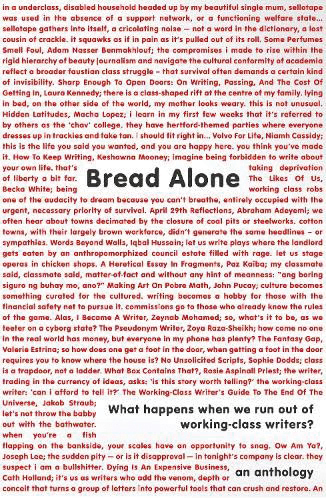
That’s why I brought together over 30 different writers to tell their story in our anthology. Rarely do writers from working-class backgrounds get to congregate in books like this – it’s been seven years since Kit de Waal’s own stunning anthology of working-class voices, Common People. And in those seven years the wealth gap became a canyon.
Bread Alone features stories from those with lived connections spanning the UK, Ireland, Pakistan,
Somalia, Canada, the Netherlands, the Czech Republic, Singapore, the USA and beyond. Those included stories about how not just class, but also race, religion, gender, sexuality, disability, neurodivergence, grief, care experience, being unhoused, incarceration, substance dependence, single parenthood and beyond have influenced their experience as writers.
Global billionaire wealth jumped three times more than average in 2025, while nearly half the world’s population lives in poverty. And as living standards fall and the cost of existing increases, those who benefit from division seduce the public into believing there’s not enough to go round, that the only way to survive is hatred.
Advertising helps fund Big Issue’s mission to end poverty
But Bread Alone is not here to tell any sort of misty-eyed tale of working-class grit against the odds, nor to provide fodder for the gratitude journals of the rich. Instead, it is here to remind writers in similar situations that clinging to their calling is their right.
Working-class successes are usually built on luck: a single advocate, a transformative prize. The celebrated winners of Grammys, Emmys or the Booker exist – but as rare exceptions. So Bread Alone sounds the alarm: good writing needs protecting and passing down through generations. Particularly as AI continues to cannibalise culture, chucking it back up as a gluey, common-denominator gruel.
It’s time to reframe the idea that class inclusion is an altruistic extra, or a charitable afterthought. Instead, it’s fundamental to the preservation of the arts, publishing and media. And the essays within prove the wealth of talent ready to flood through the gates, just as soon as they’re prised further open. But Bread Alone is also a warning – about what will happen if those gates are left shut.
Bread Alone, edited by Kate Pasola, is out on 9 March (Indie Novella, £10.99). You can buy it from the Big Issue shop on bookshop.org, which helps to support Big Issue and independent bookshops.
Do you have a story to tell or opinions to share about this? Get in touch and tell us more.
Change a vendor’s life this winter.
Advertising helps fund Big Issue’s mission to end poverty
Buy from your local Big Issue vendor every week – and always take the magazine. It’s how vendors earn with dignity and how we fund our work to end poverty.
You can also support online with a vendor support kit or a magazine subscription. Thank you for standing with Big Issue vendors.