Advertising helps fund Big Issue’s mission to end poverty
News

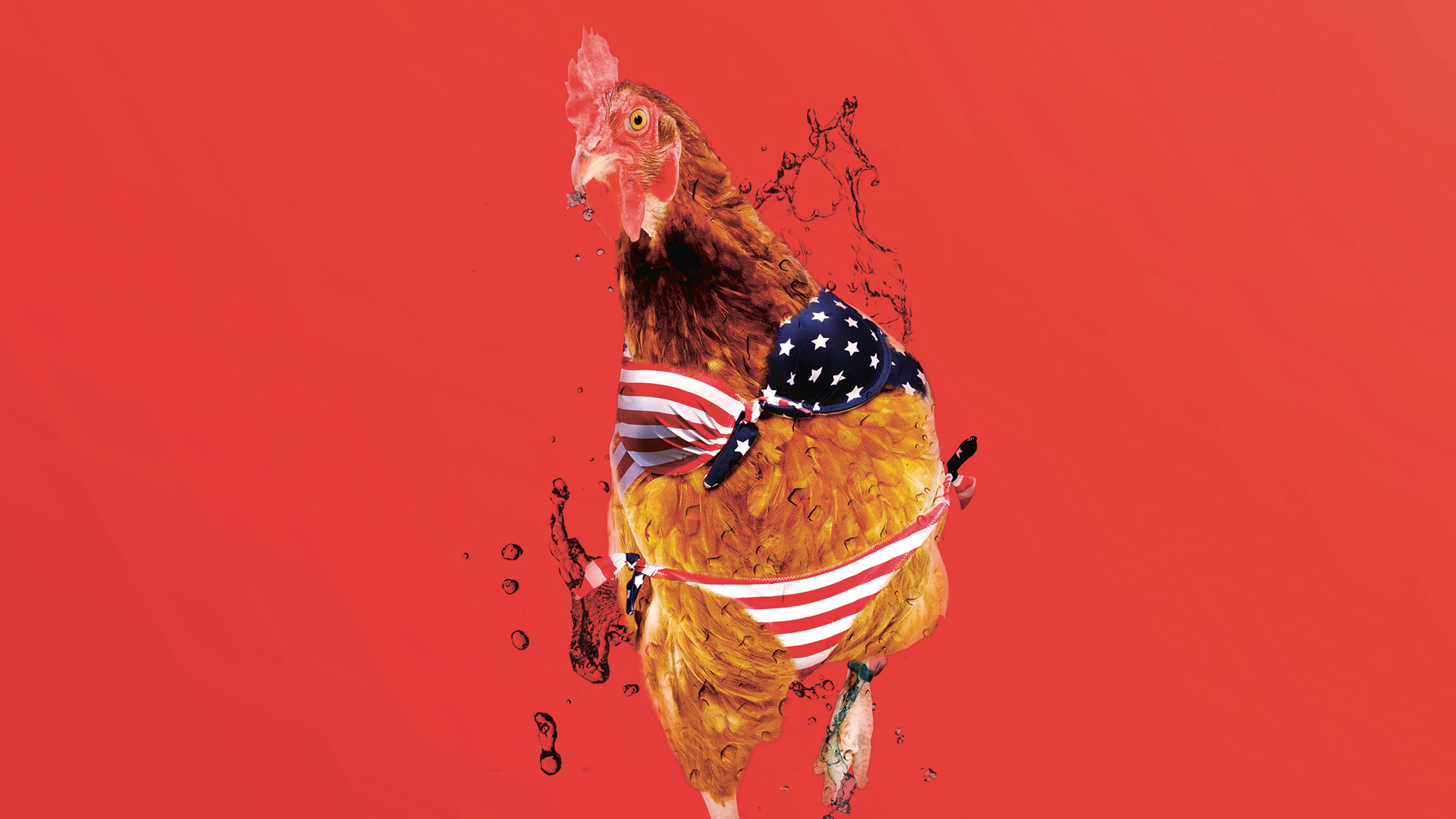
The truth behind the chlorinated chicken panic

Leaving the EU opens the doors to more food from other parts of the world. But experts say to think twice about your chicken – it’s not the chlorine, it’s what it’s hiding

Does the idea of chowing down on chicken that’s been blasted with chlorine dioxide sound appetising? Americans have been served up chlorine-washed poultry for decades and as we flap ourselves towards Brexit, chlorinated US chicken may well end up on British plates in the near future.

International Trade Secretary Liam Fox said earlier in May that the UK could import US chicken in a post-Brexit deal, with US trade officials asking for British food standards to be relaxed to allow for the import of American poultry after we leave the EU.

We are tying ourselves in knots about chlorine, but that isn’t really the issue. The problem is that chlorine is part a processing method that makes up for poorer welfare standards on poultry farms that have sacrificed hygiene for increased production. And so chicken is washed with chlorine and other chemicals to kill off harmful microorganisms, such as salmonella, that may be present on carcasses.

“In the US, the hygiene standards during rearing and slaughtering [are] not as rigid as in the UK/EU, therefore, by incorporating a disinfection spray wash, it is designed to remove pathogenic bacteria,” says Simon Dawson, senior lecturer in food science and technology at Cardiff Metropolitan University.

“In the UK and EU we have worked tirelessly to improve hygiene and welfare standards of poultry through the food supply chain. It was felt that if we have to incorporate this final chemical decontamination step then all our other standards would slip.”

For example, in the UK the maximum amount of time live birds can be transported for is 12 hours. In the US, it’s 28 hours. Cramped, hot, and maltreated, the chickens become susceptible to infection.

Advertising helps fund Big Issue’s mission to end poverty

Ken Isley of the US Department of Agriculture is having none of it though, telling an audience of journalists at a food convention in Chicago this month: “I think the concerns and fear are unfounded. I would stack US food safety and our food safety record against anywhere in the world.

“It’s not lower food safety standards, it’s different and more advanced and more modern than what you find in Europe.”

Food standards across the board in the UK will take a hit after Brexit

Dawson disagrees. “In the UK, the Food Standards Agency have reported that there are approximately one million cases of foodborne illness each year, with a population currently of 66 million, you have about a 1.5 in 100 chance per year of getting food poisoning.

“In the US, the Centers for Disease Control and Prevention (CDC) have reported that there are approximately 37 million cases of foodborne illness each year. With a population of 327 million, you have an 11.4 in 100 chance per year of getting food poisoning. In other words, you are over seven times more likely to get food poisoning in the US than the UK,” he says.

Indeed, a study from the University of Southampton published in 2018 found that chlorine-washing practices were not totally effective in killing pathogens on fresh vegetables, and can even make foodborne pathogens undetectable.

Consumers remain unconvinced too, with 90 per cent of respondents telling Which? that it’s important that UK food standards are maintained after Brexit.

Kath Dalmeny, chief executive of food and farming alliance Sustain, agrees that food standards across the board in the UK will take a hit after Brexit if ideas of trade deals with the US are floated.

“The US has made it abundantly clear that if the UK wants to do a trade deal with them we will have to lower our food standards,” she said in a statement responding to Isley. “That would mean UK consumers being forced to accept things like hormone beef, pesticides currently banned in the UK, the removal of E number additive labelling and overuse of farm antibiotics.”

Dalmeny is just one of many researchers warning about the consequences of lapsed agricultural standards post-Brexit. This month, new analysis by the UK Trade Policy Observatory warned that unclear agricultural regulations will open the gates for the widespread use of outlawed pesticides that have been shown to alter human reproductive, neurological, and immune systems.

“While the stated aims of the EU Withdrawal Act were to bring existing EU pesticide regulations into UK law without major changes to policy, our analysis reveals that there are significant departures from EU pesticides legislation,” said Dr Emily Lydgate, senior lecturer in environmental law at the University of Sussex and Fellow of the UK Trade Policy Observatory.

Researchers argued that new agricultural regulations include the removal of a blanket ban on endocrine disrupting chemicals (EDCs), potentially allowing for their use on UK land despite considerable evidence the chemicals, which affect how the body responds to sex hormones such as oestrogen, raise the risk of some cancers, birth defects, and other developmental disorders.

Advertising helps fund Big Issue’s mission to end poverty

GIVE A GIFT THAT CHANGES A VENDOR'S LIFE THIS CHRISTMAS 🎁

For £36.99, help a vendor stay warm, earn an extra £520, and build a better future.
Grant, vendor

Recommended for you

View all
Nicola Sturgeon: 'Scotland will definitely be independent much sooner than it feels right now'
Letter to my Younger Self

Nicola Sturgeon: 'Scotland will definitely be independent much sooner than it feels right now'

'We try and make it magical': How this Big Issue-backed grotto is spreading Christmas cheer
A santa with children dressed in Christmas costumes
Big Issue Invest

'We try and make it magical': How this Big Issue-backed grotto is spreading Christmas cheer

Labour’s failure to commit to national Housing First expansion 'risks thousands losing their home'
a homeless person sleeping rough on the streets
homelessness

Labour’s failure to commit to national Housing First expansion 'risks thousands losing their home'

Labour's immigration changes could cost £11bn due to 'significant loss' for UK workforce
Immigration

Labour's immigration changes could cost £11bn due to 'significant loss' for UK workforce