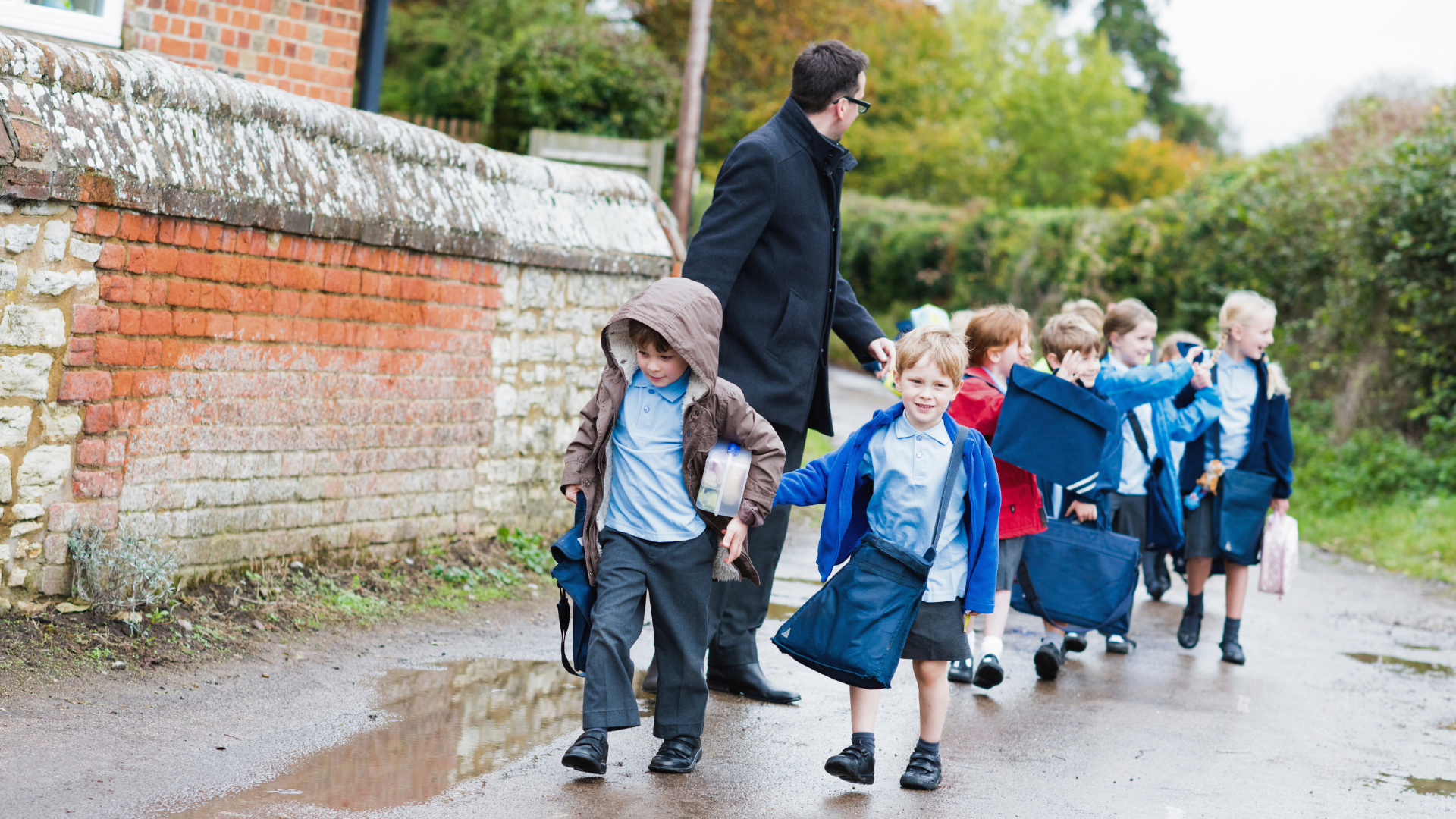
“Peace comes out really strongly. When they think of anything that’s going on, what they want to see is peace and kindness and everybody being good to each other. So I think we need to take that seriously. We need to understand how the world is affecting them. It’s also what’s really lovely – children come with hope, and they still believe, wonderfully, that kindness and peace are achievable.”
It contrasts starkly with the overall OUP word for the year – ‘rage bait’, a term for deliberate online provocation.
“The adults are angry, the adults are seeing the challenges in the world and the doom,” said Quincey. “And the children are still hopeful and positive.”
Researchers surveyed nearly 5,000 children across the UK, aged 6-14, to determine the shortlist of three words. More than a third (35%) chose peace from the final list, narrowly followed by AI (33%), with resilience at 21%.
“We don’t always give children enough credit for being tuned in,” said Quincey. “And obviously the availability of news and information 24/7 is feeding into that. They are very aware of what’s going on and have a voice.”
The research highlighted children’s awareness of global conflicts: one in ten children mentioned “war” when asked why they chose peace, citing specific events in Ukraine and Gaza. Children frequently used words such as need, want and should when calling for peace.
Advertising helps fund Big Issue’s mission to end poverty
“In previous years, we’ve had Brexit, we’ve had coronavirus, we’ve had refugee – the words do tend to reflect what is going on in broader society,” Quincey said.
For the second year running, AI was the runner-up. A fifth of children (20%) mentioned “hearing” and “talking” about AI. More than a quarter of 6-8-year-olds (29%) selected AI as their word of the year. These kids often described it positively, with more than one in ten using words such as “excited” or “exciting”.
Resilience also featured prominently in the research, chosen by 21% of children. It’s quite an adult word, said Quincey – but it reflects conversations happening at home and in schools.
“Schools are talking a lot about the importance of resilience,” she said. “Obviously, we see anxiety and wellbeing issues, mental health issues, war and conflict, all the other awful things going on in the world. Schools and families are helping children navigate that. Resilience is something we talk about a lot in school. We are encouraged to think of ourselves as being more resilient and to be more resilient.”
If ‘resilience’ is an adult word that has been taught to children to help them cope, six-seven has emerged from children themselves. It’s adults who are doing the catching up.
So what, exactly, does it mean? That’s not the point, says Quincey.
Advertising helps fund Big Issue’s mission to end poverty
“The beauty of children’s slang language is it sort of means whatever you want,” says Quincey. “It doesn’t have a fixed meaning. It’s silly, it’s annoying, it’s their way of having a voice. They use it to be part of a group – social currency. And it’s really temporal. Last year it was Skibidi, and that didn’t come up at all this year – it has disappeared.”
Six-seven dominated, chosen by almost half (47%) of children, followed by aura (24%) and delulu (7%). Research shows the slang fosters social bonds; while 12% admitted six-seven had no meaning, 72% said it was important to have words only used with friends.
So, what’s the next six-seven?
“Honestly, I don’t know, and I wouldn’t want to try and predict,” said Quincey. “Who knows? Let’s wait and be surprised.”
Do you have a story to tell or opinions to share about this? Get in touch and tell us more.
Change a vendor’s life this winter.
Advertising helps fund Big Issue’s mission to end poverty
Buy from your local Big Issue vendor every week – and always take the magazine. It’s how vendors earn with dignity and how we fund our work to end poverty.
You can also support online with a vendor support kit or a magazine subscription. Thank you for standing with Big Issue vendors.