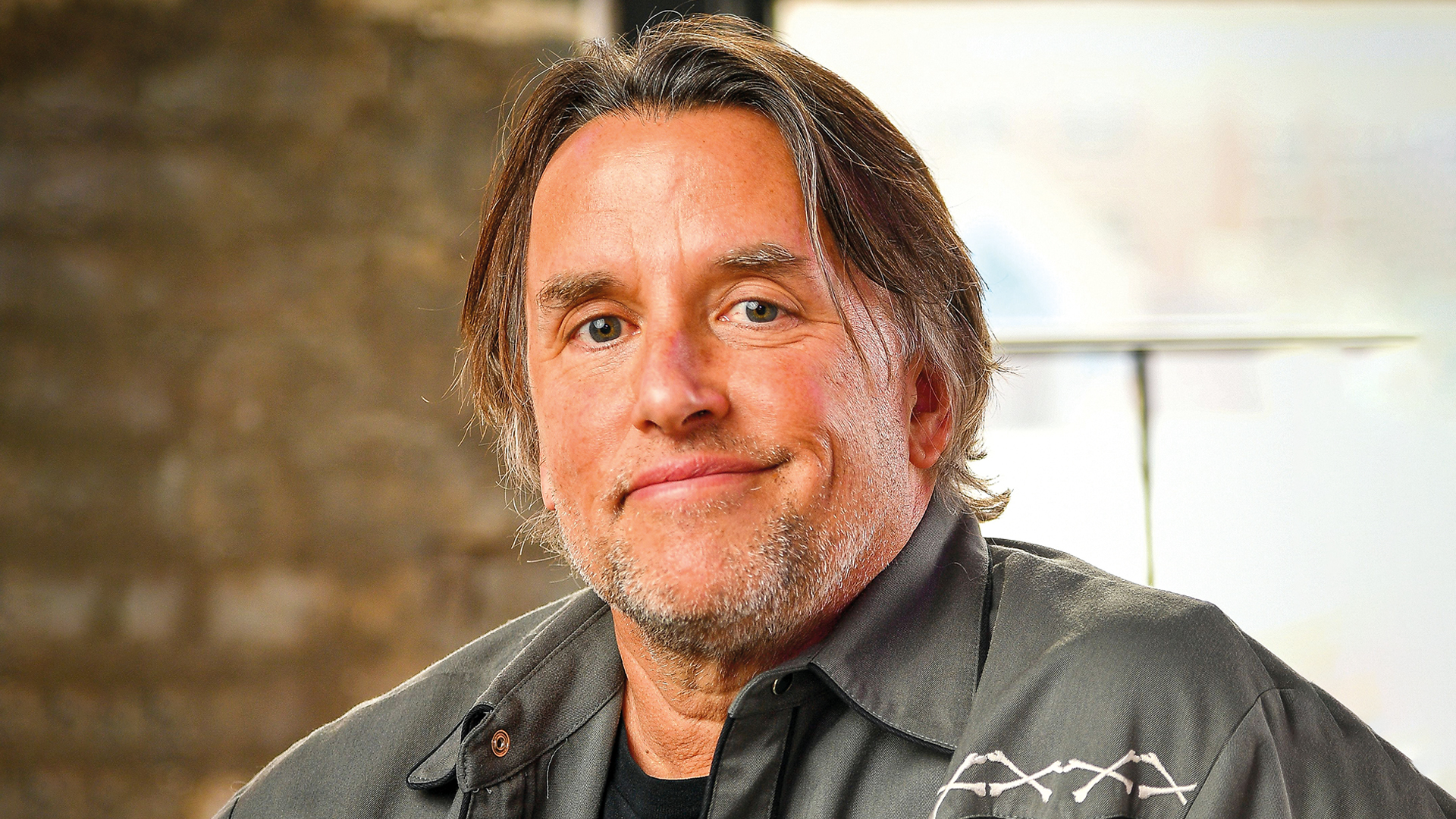
Richard Linklater was born in Houston, Texas, in July 1965. He started making short films in his early twenties but really broke through with his second feature film, 1990 indie comedy Slacker. Linklater went on to become one of the most acclaimed directors of his generation, with films including Dazed And Confused, the ‘Before’ trilogy, Waking Life, School of Rock, Boyhood, Hit Man and Blue Moon. His latest film, Nouvelle Vague, is a dramatisation of the filming of Jean-Luc Godard’s 1960 classic Breathless.
In his Letter to My Younger Self, Linklater recalls childhood ambitions, his love of music and film, and offers sage advice to his youthful self.
I’ve made a lot of films about young people trying to figure out what the hell they’re doing in the world. Although I’m still wondering that myself. It’s so interesting looking back – I realised from fifth grade that I felt a need to express myself. I didn’t put it in those terms, but I just felt creative. And I had outlets. I’d write plays and short stories. So, in my limited view of the world, I was an aspiring writer.
Music was huge. I’ve made entire movies about that feeling that when you can’t really express yourself. Music does it for you. It becomes such a big part of your philosophy of life. I loved visual art and museums, I was painting and doing designs, I liked woodworking. I was taking it all in.
By 16, I was already thinking that cliche, I’m gonna write the Great American Novel. I felt I had stories and characters in me. It’s hard to pinpoint why you have that. But I was the kind of person who analysed the world as I experienced it. Who knows what childhood traumas lead you to a slightly disassociated personality that wants to comment on the world or do something creatively with it rather than just be happy in it! I think that’s the artistic personality. And I remember feeling that my entire life.
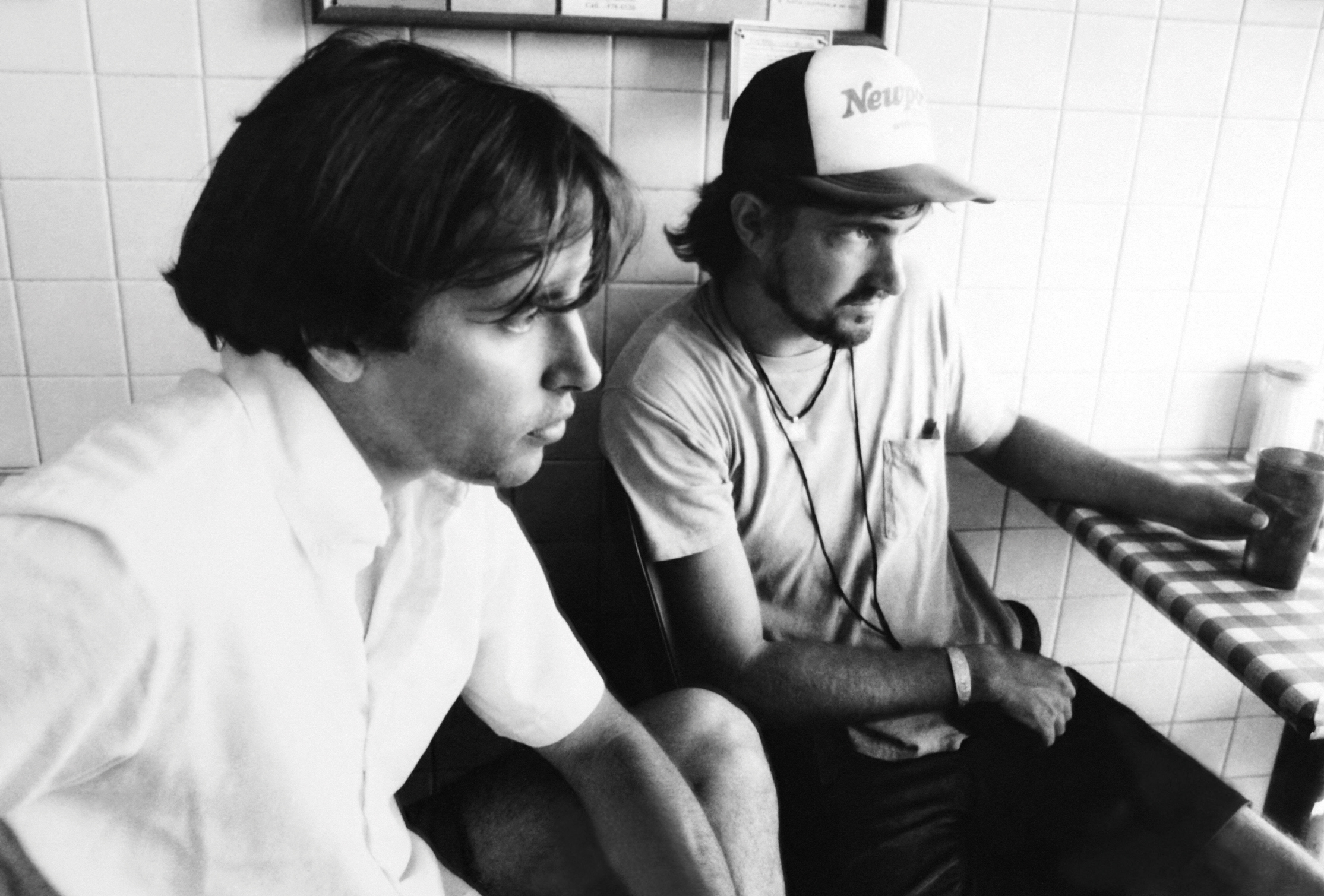
1990: On the set of Slacker (left) with cinematographer Lee Daniel. Image: Everett Collection Inc / Alamy
Parallel to this, I was a good athlete. I was on sports teams and good enough to get a college [baseball] scholarship. But I just wasn’t that competitive. I love sports but didn’t have that killer instinct; my needs weren’t so deep that I had to win so bad, you know? So I was probably more artist than athlete, but when you’re young, you don’t have that perspective on yourself. You’re just following your instincts and there’s something pure about them.
Advertising helps fund Big Issue’s mission to end poverty
Advertising helps fund Big Issue’s mission to end poverty
I grew up in a series of households with lots of different politics. They were generally progressive liberal types, not activists, necessarily, although my mom became one later. And there were some stepfathers, looking back, that were pretty damn conservative and racist. In my own films, the early ones are more political; there’s anarchy in the air. But I come from the politics-of-everyday-life school. The politics are in the room with us. It’s everywhere, it permeates everything.
Films to me were just these fun things. I lived in a place with one theatre. We were in a small town, so the big films you heard about came to our town two months later. But my dad lived in the big city. So I would go there on weekends and come back and tell all my friends, hey, I saw American Graffiti or the new James Bond film and they’d be like, huh? Then it would play in our small town months later. So I was ahead of the game because I had a big city element in me.
In 1976, when I turned 16, I’d be at Aerosmith or Black Sabbath concerts, and Jackson Browne concerts as well. The whole gamut. You like it all. But then, here comes the new wave and that became a big thing. At first, I didn’t know what I was listening to. When I first heard Sex Pistols, I was too young, didn’t know enough. So it took me a couple of years. But I got there and was listening to The Clash or the Ramones and had a full appreciation of punk. The breakthrough is when you go from paying a lot of money to go to concerts to sit in the audience worshipping these mythological heroes on stage, to being in a club with people your own age just letting go. Then it’s like, wow, you are in the mosh pit, sweating, part of the scene.
We all write our own little biographies backwards. So we make key events from our childhood when it’s probably more subtle than we’ll ever know. A major moment for me was being satisfied with a story I wrote and thinking that was a calling. It’s sounded corny, especially in the town I was in, to say I want to be a novelist. If you said, I want to be a writer, people went, like for Sports Illustrated? But I was thinking, no, I want to write On The Road, these are my heroes, these beatniks.
I remember fantasising when I was 17 that I could be a Major League baseball player and a published author. So in the off-season, I’d finish the great novel I’d been writing during the season. Why not? No one’s pulled that off before or since.
Advertising helps fund Big Issue’s mission to end poverty
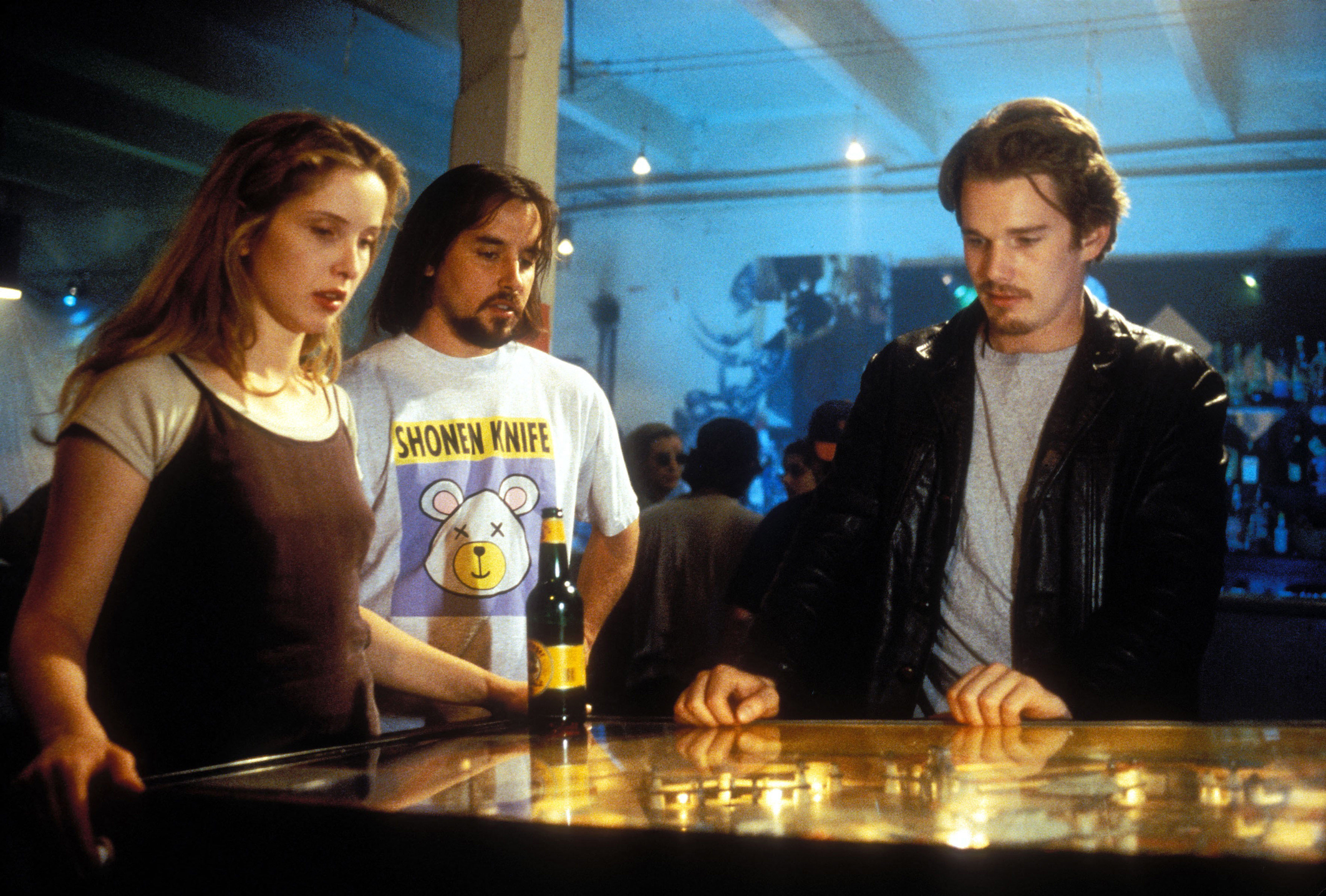
1994: In between the star pairing of Julie Delpy and Ethan Hawke while filming Before Sunrise. Image: Photo 12 / Alamy
Once I was out of school, I was so happy to get into a world that I controlled. I could put all that passion into art and spend entire days reading, watching movies, writing, editing, shooting my short films. My life was mine. I was doing what I was 100% passionate about and didn’t need permission from anyone or to impress a coach to put me in the lineup. You can’t tell an artist they can’t do something, not in the early throes of your own passion. I’ll always remember that as my free-est and happiest time, undergirded by the anxiety of not knowing what’s next.
I didn’t know what kind of filmmaker I would be. At that time, I had some big commercial, science fiction ideas. A lot of the stories I wrote were pretty out there. But what I really had to express was right in front of me. There’s a moment where you realise the stuff of your own life can be your material. You have to work to get there. It’s a hurdle to overcome to think it’s worthy – because we grow up thinking stories are these big things that come from elsewhere.
I wasn’t in Paris like Jean-Luc Godard. But for Nouvelle Vague I could totally relate to the anxieties and exhilaration of making a first film and trying to do something different that you could barely describe to someone else. It’s a unique position to work from. It was all about liberation. I realised my own movie, in my backyard, about my myself and my friends and the collective buzz we were in at that moment, was the film. Nouvelle Vague represents that too. Truffaut talks about it so eloquently. In the 1950s, he wrote about what the film of the future will be. He saw them as love letters. You can make a film about a trip you took or a love affair. He was reducing the scale and grandiosity of storytelling to something personal to you.
There is always room for a little revolutionary newness. Because the world is always changing. The response to Slacker was wonderful, it confirmed all my intuition. I was grateful it connected. This was a film that had no story and was so unusual in its storytelling. But I instinctually felt it could work, because of our backgrounds and channel switching. I thought the modern mind could process that and I could hold their hand. So it’s audience friendly and radical at the same time, just like Breathless is both a traditional gangster film and something new. Something new can pop out of the way you mash up things in your brain. Because you are unique. When you are born, the influences come at you and in every generation, there are new things in the air.
What I would whisper in my younger self’s ear is, keep going. I always tell young filmmakers that it’s like renovating your house – it’s gonna take twice as long as you think and cost twice as much. But I’m blessed with patience. I remember reading a Godard interview where he says, you don’t really get to make your first film till you’re 30. And I was 21 when I started taking this seriously, so I knew there was a long way to go. I built a foundation under myself – I’m going to watch all these films, read about film, make shorts. By the time I was 30, I had done two films, but first I created an environment where I could follow that passion.
Which of my films would speak to my teenage self? Wow. That’s a good question. I would have to say Dazed and Confused, because I made it from that teenager’s perspective. I made Nouvelle Vague from my 29-year-old perspective; it’s the cinephile making his first film. But for Dazed and Confused, I just said, I’m taking whatever film skills I have to make this film as my teenage self documenting my world. So that would be bizarrely amusing to him. He’d be like, what the fuck is going on? The Before… trilogy would also be fun because that’s how it all looked when you’re young. I couldn’t wait to be an adult because – and this was mostly from movies – it looks like there’s a lot of fun to be had. Adventures, romance, love, international travel. So it’s all the romance of getting older.
Advertising helps fund Big Issue’s mission to end poverty
I’d give my younger self the same advice I give my kids about love. And it does no good whatsoever. I know what you’re going through is hurtful or is so lovely and you’re feeling it so intensely. But you’re in a sea of humanity that has felt like this for thousands of years. We’ve all felt the same thing and it’s transitory. The sun will come up tomorrow. But it can hurt. We’re all humans, we’re just going in different directions sometimes. So give everybody a break. It’s not all about you.
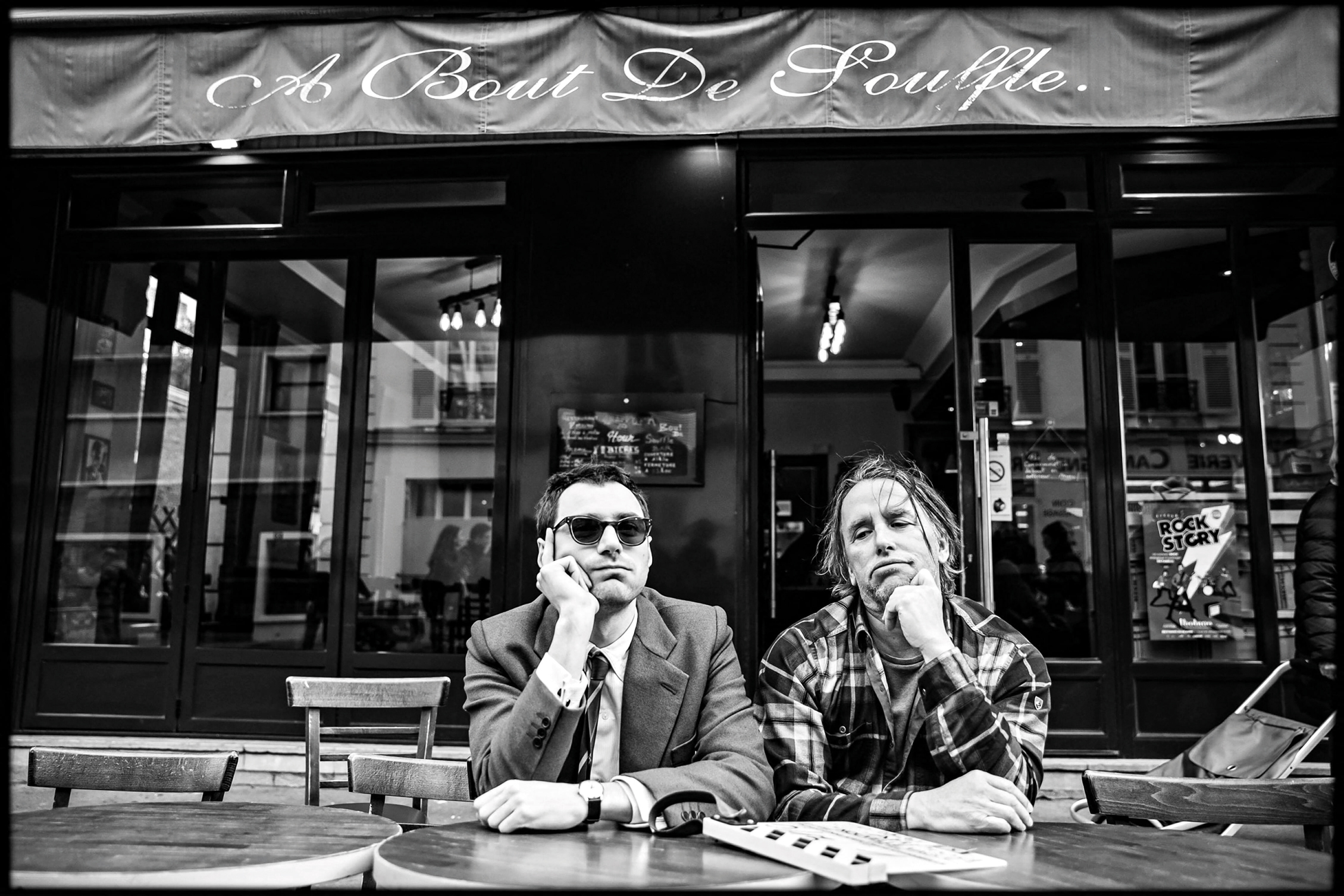
2025: Joined by Guillaume Marbeck (left), who plays Jean-Luc Godard in Linklater’s new film Nouvelle Vague. Image: LANDMARK MEDIA / Alamy
My younger self would be absolutely thrilled that I’ve spent my adult life doing exactly what I wanted with no compromise. I’ve spent very little time doing things that weren’t adjacent to or absolutely in the world I created that I wanted to live in. Because that was my goal, even as a teenager. You’ve got to be vigilant, though. And you’ve got to work hard.
The number one thing I would tell my younger self is just don’t fucking drink. I can’t put it any more simply. It’s the ruination of the body and the mind. And I want to dissuade young people. I’m not a Puritan, I did everything, but I’d rather have my mind fully functional because I like reading and writing and don’t want to feel bad the next day. It’s cool in its own way, to be like, hey, man, I got wasted. But it’s even more fun to have your wits about you. I had that feeling pretty early on, and I’m grateful for it. Be your own best friend. Be healthy.
My two new films are about someone at the end of their career and someone at the beginning.Blue Moon is a guy leaving us way too soon because of alcohol. The beginning, like in Nouvelle Vague, looks more sexy. But I’m past the midfield now and enjoying it immensely. So it can all be fun.
Advertising helps fund Big Issue’s mission to end poverty
Change a vendor’s life this winter.
Buy from your local Big Issue vendor every week – and always take the magazine. It’s how vendors earn with dignity and how we fund our work to end poverty.