I was at one of those gatherings where friends of friends sprawled into groups entirely unconnected from the first, like a suburban town long freed from its planner. “It must be great to be in entertainment,” one stranger responded upon learning that I work in classical music.
I had never really considered it that way and was interested in this perception of what is usually, more pompously, referred to as ‘the arts’. ‘Entertainment’ suggests amusement or enjoyment – and yes, plenty of concerts and performances fit this description. But, as with theatre, dance – any of ‘the arts’ – there’s often much more to the experience.
Get the latest news and insight into how the Big Issue magazine is made by signing up for the Inside Big Issue newsletter
I thought of this exchange recently after a night at the opera. Such evenings are still regularly portrayed as they are in Pretty Woman – all flashy frocks, warbling sopranos and wealthy, wooing men. Even the latest series of The Morning Show, otherwise known for its contemporary storylines, has a ball-gowned Jennifer Aniston doing a deal with an oligarch in gilded theatre boxes under the guise of listening to Puccini.
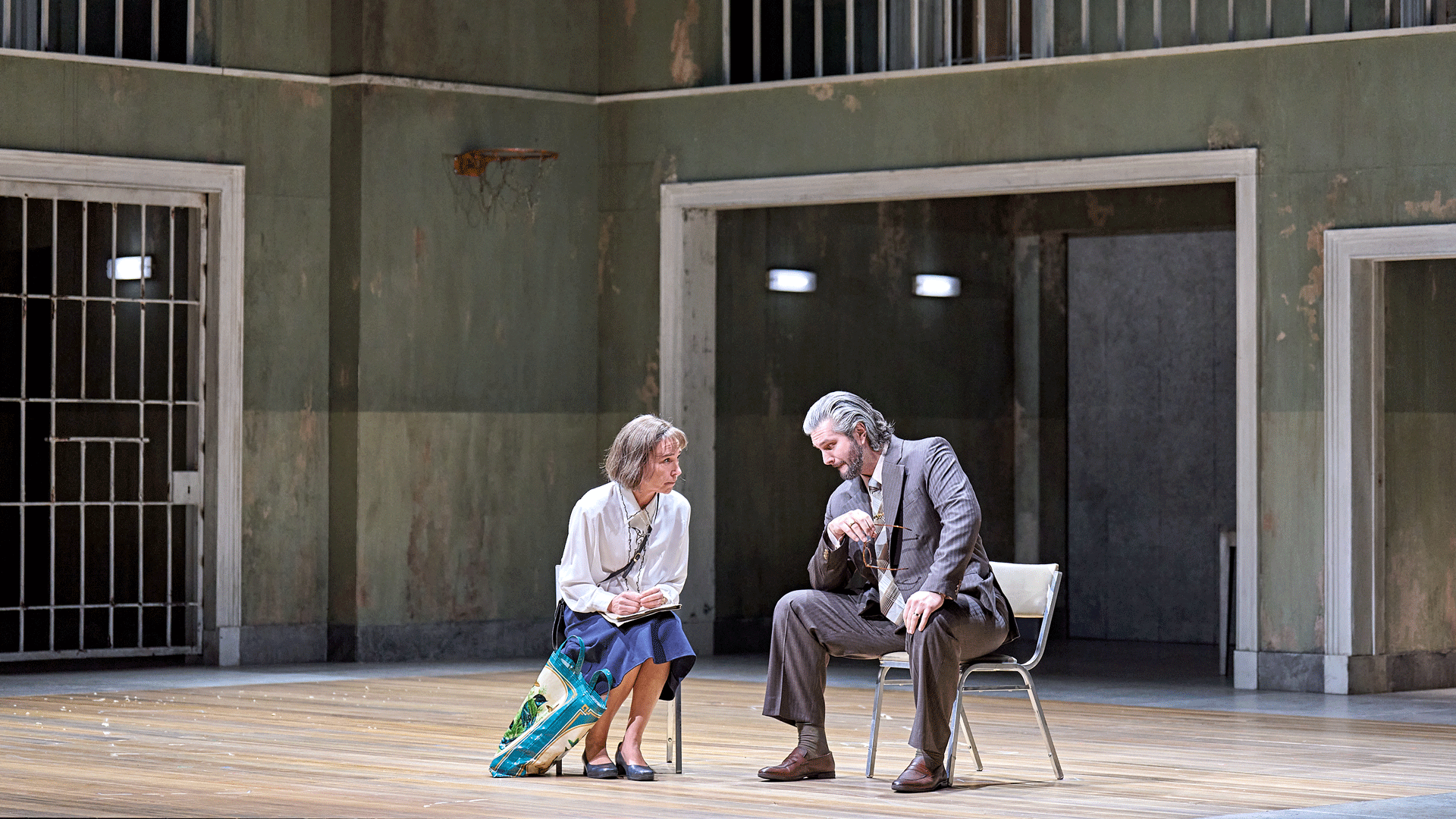
Dead Man Walking couldn’t be more different. The English National Opera‘s (ENO) production of Jake Heggie’s opera (composed in 2000) includes scenes of rape, murder and execution, telling the real-life story of sister Helen Prejean and Joseph De Rocher, who formed an unlikely friendship while the latter was on death row. As we observed De Rocher (baritone Michael Mayes) strapped down for the final lethal injection scene, the woman to my right silently sobbed.
Later, a friend who had also attended messaged to say that she couldn’t concentrate for the rest of the evening. As Saturday nights go, this one was compelling, engaging – with some superb singing-acting, especially from mezzo-soprano Christine Rice as Helen – but entertaining? I guess working in ‘consensually harrowing projects’ doesn’t quite have the same zip.