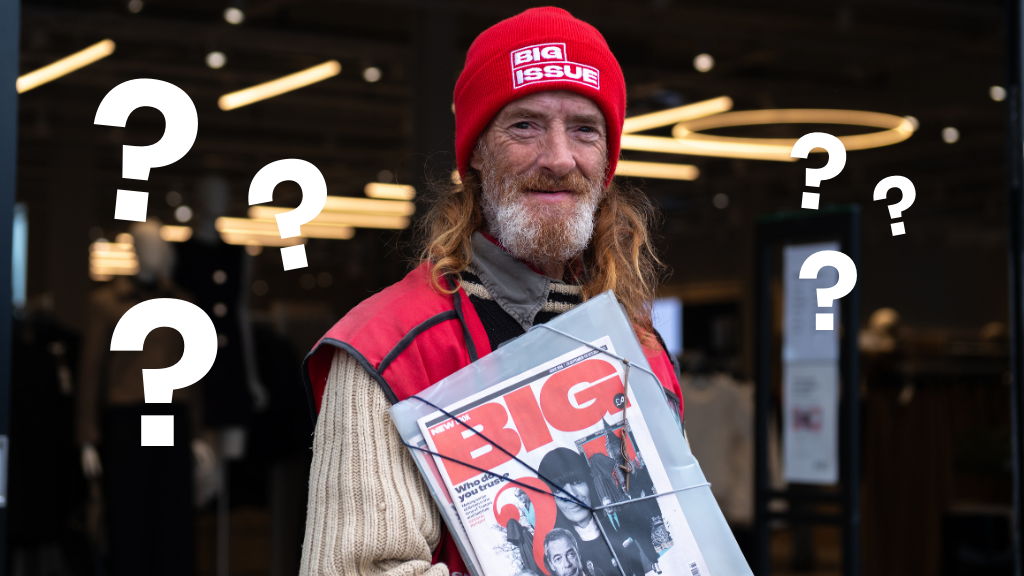

I’ve been selling the magazine in Inverness for the past few years. I’ve worked really hard to build up the pitch and a loyal clientele. It’s all about communicating with people and building a rapport, and I really have to thank my customers for supporting me. I’ve had some mental health problems to try to overcome, and selling The Big Issue has been a big stabilizing influence on my life.
 My brother died at the end of November. He was living down in Essex and had struggled with cancer. The Big Issue Foundation were able to fly me down south so I could go to his funeral. It was so important for me to be there, and I’m really grateful they were able to help me be there.
Since Christmas, my brother-in-law and father-in-law have also passed away, so it’s been a really difficult time. Being able to get outside and speak to people is such a help – so, so much better than sitting in on my own.
I really have to say a massive thank you to all the people that work at The Big Issue and all my brilliant customers, because they’ve made a big difference to my life.