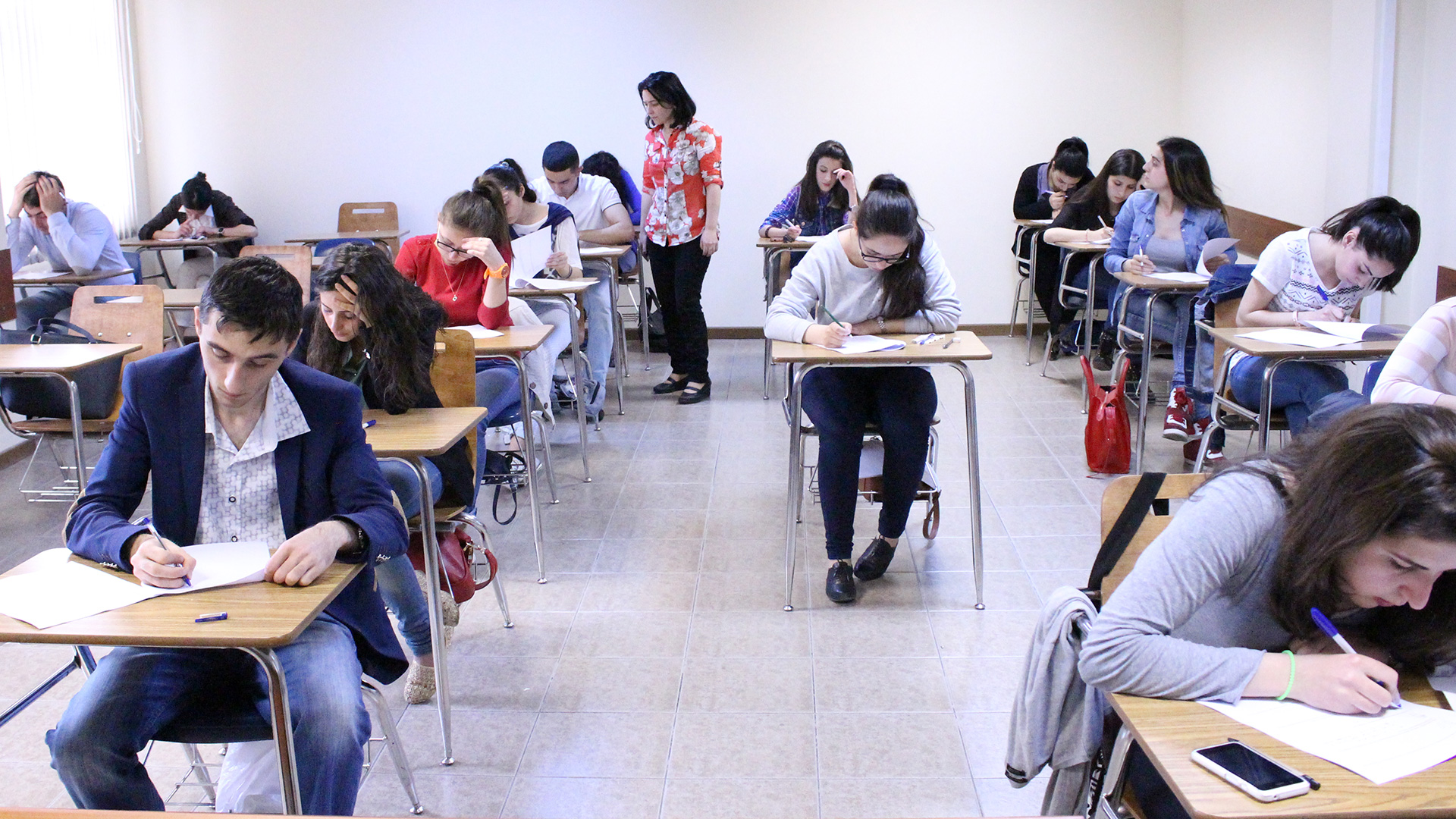
GCSE exams results were published today.
Credit: Narek75, CC BY-SA 4.0 , via Wikimedia Commons
Share
The “disadvantage gap” between private and state school GCSE results has widened, experts have warned, while regional inequalities stubbornly persist.
Thousands of students across England, Wales and Northern Ireland received their GCSE grades today, with overall results in line with last year’s. Some 67.6% of students passed, slightly down from last year’s rate of 68.2%.
Education secretary Bridget Phillipson praised the cohort – who started secondary school just as the pandemic hit – for their “remarkable resilience and determination”.
But the Covid-19 era disruption has entrenched inequalities between fee-paying and state schools.
According to analysis by the Sutton Trust, 48.4% of grades in independent schools were at A/7 or higher, up from 47.5% last year. In contrast, at academies it rose slightly from 21% to 21.2%, and at comprehensives 19.3% to 19.4%.
This means the gap between independent and comprehensive schools rose from 28.2 percentage points to 29 percentage points. Grammar schools similarly saw bigger rises than non-selective schools.
Advertising helps fund Big Issue’s mission to end poverty
Advertising helps fund Big Issue’s mission to end poverty
These results must be understood in a pandemic context, explained Dr Rebecca Montacute, head of research and policy at the Sutton Trust.
“We know from our research that the experiences of young people from different kinds of backgrounds in that time were extremely variable,” she said.
“There were kids who, first day, got sat down with live lessons, and would have had all the equipment they needed in a quiet space. And on the other hand, there would have been those who were in cramped housing conditions, didn’t have a quiet space, and never got given a laptop. The impact of that will be long-lasting.”
Keep reading the journalism that powers our mission
Register free to continue and learn more about the stories, campaigns and the support we provide, helping people facing poverty across the UK.
At the start of the pandemic, 1.8m children were without adequate access to devices, Ofcom estimates. Almost a million were without an acceptable connection to the internet, the majority of whom came from low-income families.
According to previous Sutton Trust research, just 5% of teachers in state schools reported that all their students had a device in January 2021, compared to 54% at private schools.
“We’ve lost 10 year’s worth of progress with the pandemic, that is simply unacceptable,” Montacute said.
Advertising helps fund Big Issue’s mission to end poverty
“So many young people are behind where they could be in terms of their talent, their skill, the work that they’re putting in. This is because they’re not getting the right level of support, and because they are being impacted by circumstances beyond their control.”
The attainment gap between students who are eligible for free school meals and students who aren’t is clear evidence of this. Last year, just 43% of the former group got ‘good English and maths GCSEs’, according to the Institute for Fiscal Studies. This compares to 63% of all other pupils.
What about regional disparities in GCSE results?
In England, top grades increased slightly, whereas passing grades decreased. This year, 21.7% of grades were at 7 and above, up slightly from 21.6% in 2023 and 20.7% in 2019.
In contrast, at grade 7/A Wales dropped from 21.7% to 19.2%, and Northern Ireland from 34.5% to 31%.
These gaps are largely due to Wales’ and Northern Irelands’ more gradual strategy to reverse inflation following the pandemic. But within England, entrenched regional disparities are yet more evidence of educational inequality.
The gap between London – the wealthiest area – and the North East – the most deprived – narrowed for the first time in a decade. However, it remains that in London, 28.5% of entries were awarded an A, compared to 17.8% in north-east England.
Advertising helps fund Big Issue’s mission to end poverty
“This widening of the gap between London and the rest of the country is consistent with analysis of learning loss during the pandemic (which has tended to focus on younger pupils) and has also suggested greater learning losses for pupils in the north and in parts of the midlands,” EPI warned.
Montacute called for government investment to tackle educational inequality.
“These young people have been amazing and extremely resilient in the face of huge challenges. They should be really proud,” she said.
“But to close inequalities and enable pupils to reach their potential, we need sustained investment in teaching, particularly in areas with lower attainment.”