Advertising helps fund Big Issue’s mission to end poverty
Social Justice

'Back to cost of living crisis': Households will be £770 worse off by next UK election, experts say

Rachel Reeves promised her autumn budget would 'put money in people's pockets', but the Joseph Rowntree Foundation has warned differently

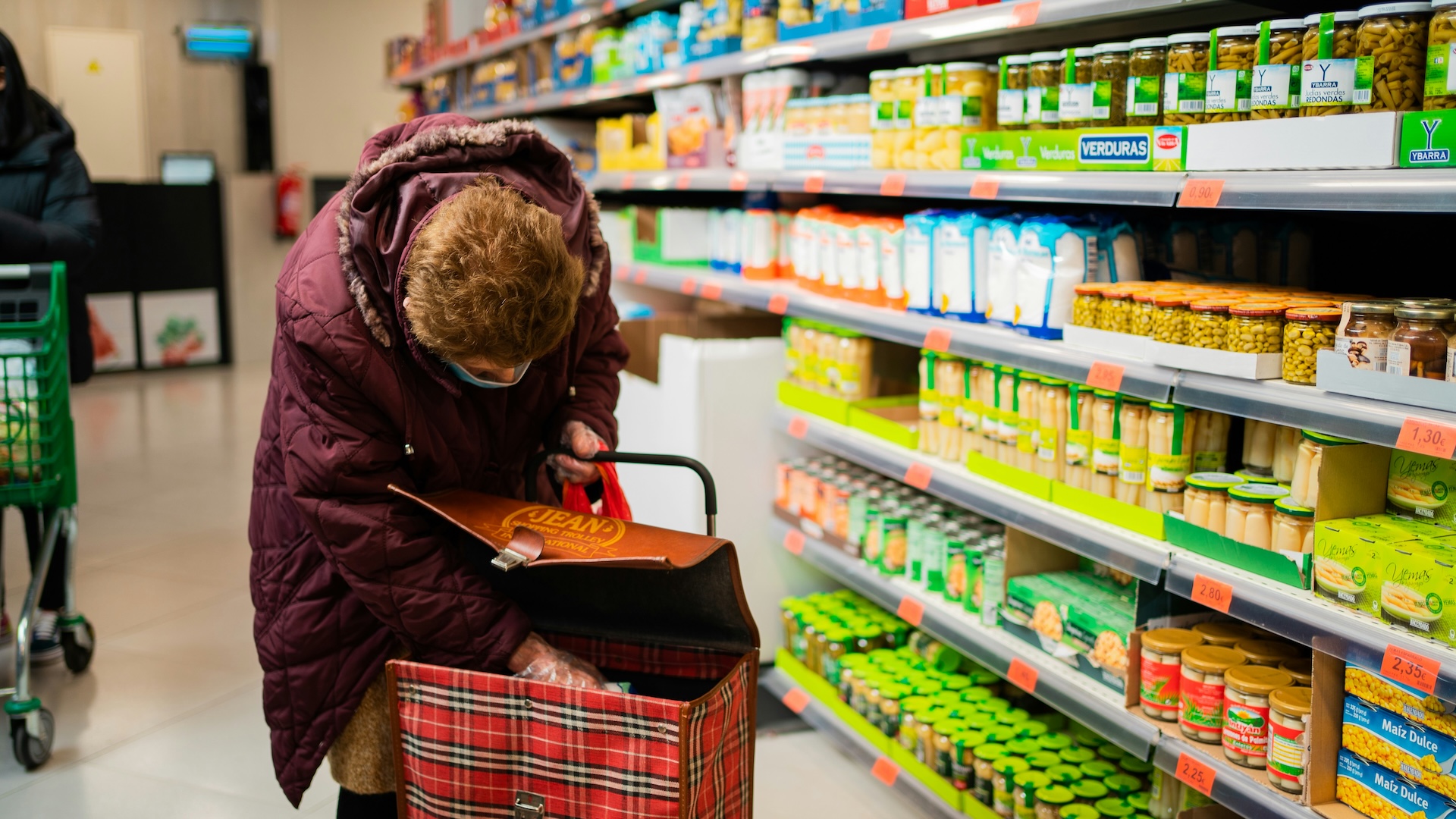
woman in supermarket

Living standards are stagnating. Image: Unsplash

Living standards could fall to “depths seen in the cost of living crisis” by the end of this parliament, according to new analysis.

The Joseph Rowntree Foundation predicts that average families will be £770 worse off in real terms in October 2029 compared with today.

Average household disposable income after housing costs, which is the measure used to determine living standards, is currently £41,843. In 2029, it will have fallen to £41,070 in real terms.

It reached a low of £40,689 in 2023, amid the cost of living crisis.

The Office for Budget Responsibility (OBR) forecast that living standards will grow by an average of just over 0.5% a year in the next few years, but the Joseph Rowntree Foundation’s modelling takes into account housing costs.

It also uses the Family Resources Survey, which is used to calculate poverty figures, to determine how incomes are changing for each household.

Advertising helps fund Big Issue’s mission to end poverty

Poverty is set to rise for all family types except pensioners, and households with children are most at risk.

Around 100,000 more children are set to be in poverty by October 2029, along with 300,000 more working-age adults.

Single parent families will be £1,000 worse off on average by October 2029 compared to now, with couples with children worse off by £1,760.   

Inequality is also set to rise. The poorest third of households will see their real disposable incomes fall by 3.3% between today and October 2029, while the highest income third see a fall of 1.7%.

The analysis comes after chancellor Rachel Reeves announced her autumn budget, which she said will “put more money in people’s pockets”.

Paul Kissack, chief executive of the Joseph Rowntree Foundation said: “The chancellor is right that change must be felt. The people who needed to feel the most change are those living in and at risk of hardship.”

Kissack welcomed the chancellor’s investment in social homes, help for carers to work and care, a rise in the minimum wage and a cap on how much can be deducted from universal credit.

But he added: “It’s deeply worrying that we haven’t seen changes to social security that will seriously bring down hardship. In particular private renters will feel let down by the choice to keep local housing allowance frozen meaning that it will become further out of step with local rent levels, which have soared in recent years.”

Do you have a story to tell or opinions to share about this? Get in touch and tell us moreBig Issue exists to give homeless and marginalised people the opportunity to earn an income. To support our work buy a copy of the magazine or get the app from the App Store or Google Play.

Advertising helps fund Big Issue’s mission to end poverty

GIVE A GIFT THAT CHANGES A VENDOR'S LIFE THIS CHRISTMAS 🎁

For £36.99, help a vendor stay warm, earn an extra £520, and build a better future.
Grant, vendor

Recommended for you

View all
What lessons do Sadiq Khan's free school meals have for Labour as two-child benefit cap ends?
Sadiq Khan serves dinner
Child poverty

What lessons do Sadiq Khan's free school meals have for Labour as two-child benefit cap ends?

Volunteering on Christmas Day: How you can get involved
a man chops vegetables on a table behind an older man
Christmas

Volunteering on Christmas Day: How you can get involved

How to volunteer at a food bank
volunteers arrange food donations along rows of crates on tables
Food banks

How to volunteer at a food bank

Rachel Reeves cracks down on benefit fraud. How much could she really save – and at what cost?
Chancellor Rachel Reeves
Benefit fraud

Rachel Reeves cracks down on benefit fraud. How much could she really save – and at what cost?