Advertising helps fund Big Issue’s mission to end poverty
Social Justice

Nearly half of people using food banks are in debt to the government

'Our welfare system should increase people’s security, not suffering,' Trussell Trust boss Emma Revie said

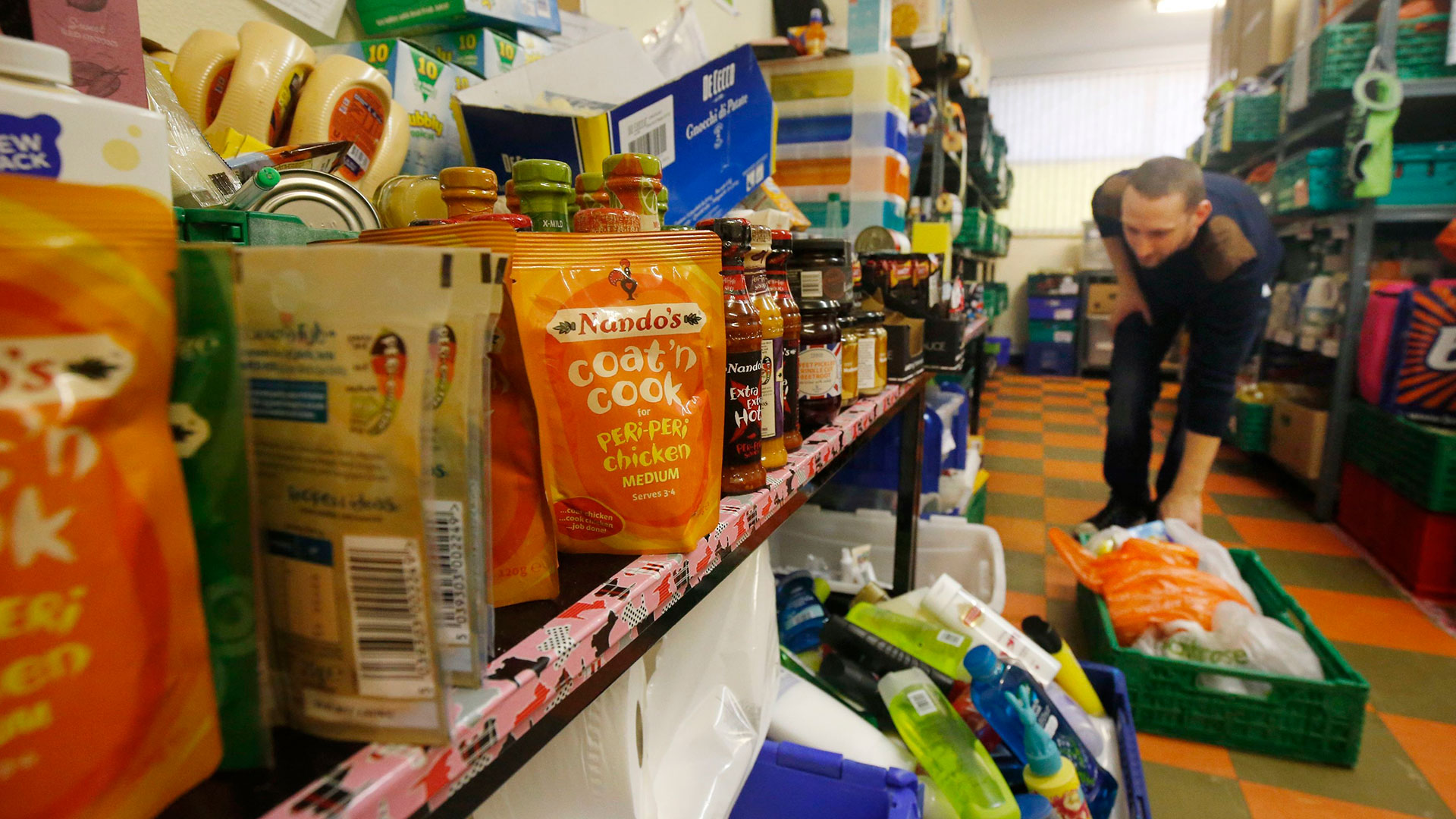
Packages of food are lined along shelves and on the floor in a food bank

Packages of food are lined along shelves and on the floor in a food bank. Image: Trussell Trust

Almost half of people who used food banks during the summer owed money to the Department of Work and Pensions, new research has revealed.

This was because of loans or benefit overpayments – up 10 per cent since before the pandemic.

The Trussell Trust found three quarters of households on Universal Credit who needed emergency food parcels were repaying an advance payment. This is a loan usually given to cover the five-week wait for a first installment of the benefit.

“Our welfare system should increase people’s security, not suffering,” Trussell Trust chief executive Emma Revie said.

Taking money off payments to repay these debts makes it much harder for people to afford the essentials and can impact on people’s mental health – this isn’t okay.”


Advertising helps fund Big Issue’s mission to end poverty

Someone was living with mental health problems in more than half (53 per cent) of households using Trussell Trust food banks who owed money to the government. The findings were published in new report Lift the Burden, from the charity and Heriot-Watt University.

British firms planned 300,000 redundancies in June and July as Covid-19 restrictions virtually closed down the hospitality and retail industries.

By September UK unemployment had hit a two-year high, with the number of people on payrolls down nearly 700,000 compared to March. 

The number of people claiming Universal Credit or Jobseeker’s Allowance increased 1.4 million between March and October to 2.6 million, Office for National Statistics figures showed.

It means an increasing number of people have encountered the five-week wait for a first Universal Credit payment. Anti-poverty campaigners have repeatedly called for it to be axed or for the advance loan to be made non-repayable. This is key to stopping people in poverty being pushed further into debt, they said.

We need to create a system that works for everyone

The charity is asking ministers to “stop taking money from people’s pockets” until “a more responsible” system is introduced.

“This would help people on the lowest incomes to keep every penny of their benefits to help afford the absolute essentials, instead of needing to turn to a food bank for help,” Reevie said.

Government debt collection practices should be brought in line with those in the private sector, the charity said. That would mean assessing people’s ability to pay before recovering debts from them.

Researchers surveyed 435 adults across Britain who needed to use a Trussell Trust food bank between June 22 and July 31 this year.

“We need change this Christmas to create a system that works for everyone,” Reevie said, calling on the public to join the Hunger Free Future campaign.

The Big Issue has contacted the DWP for comment.

Advertising helps fund Big Issue’s mission to end poverty

Do you know how Big Issue 'really' works?

Watch this simple explanation.

Recommended for you

View all
Wales homeless football team faces race against time to survive: ‘We’re at breaking point’
Wayne Ellaway Homeless World Cup
Homelessness

Wales homeless football team faces race against time to survive: ‘We’re at breaking point’

Period poverty forces UK women to use newspaper instead of sanitary products: 'It's unacceptable'
Sanitary towels
Period poverty

Period poverty forces UK women to use newspaper instead of sanitary products: 'It's unacceptable'

Carer's allowance turns 50: 'I keep the money side of things from her, I don't want her to worry'
carer pushing someone in a wheelchair
Unpaid carers

Carer's allowance turns 50: 'I keep the money side of things from her, I don't want her to worry'

One in three terminally ill people miss out on benefits in the final year of their life
homelessness dying with dignity
benefits

One in three terminally ill people miss out on benefits in the final year of their life