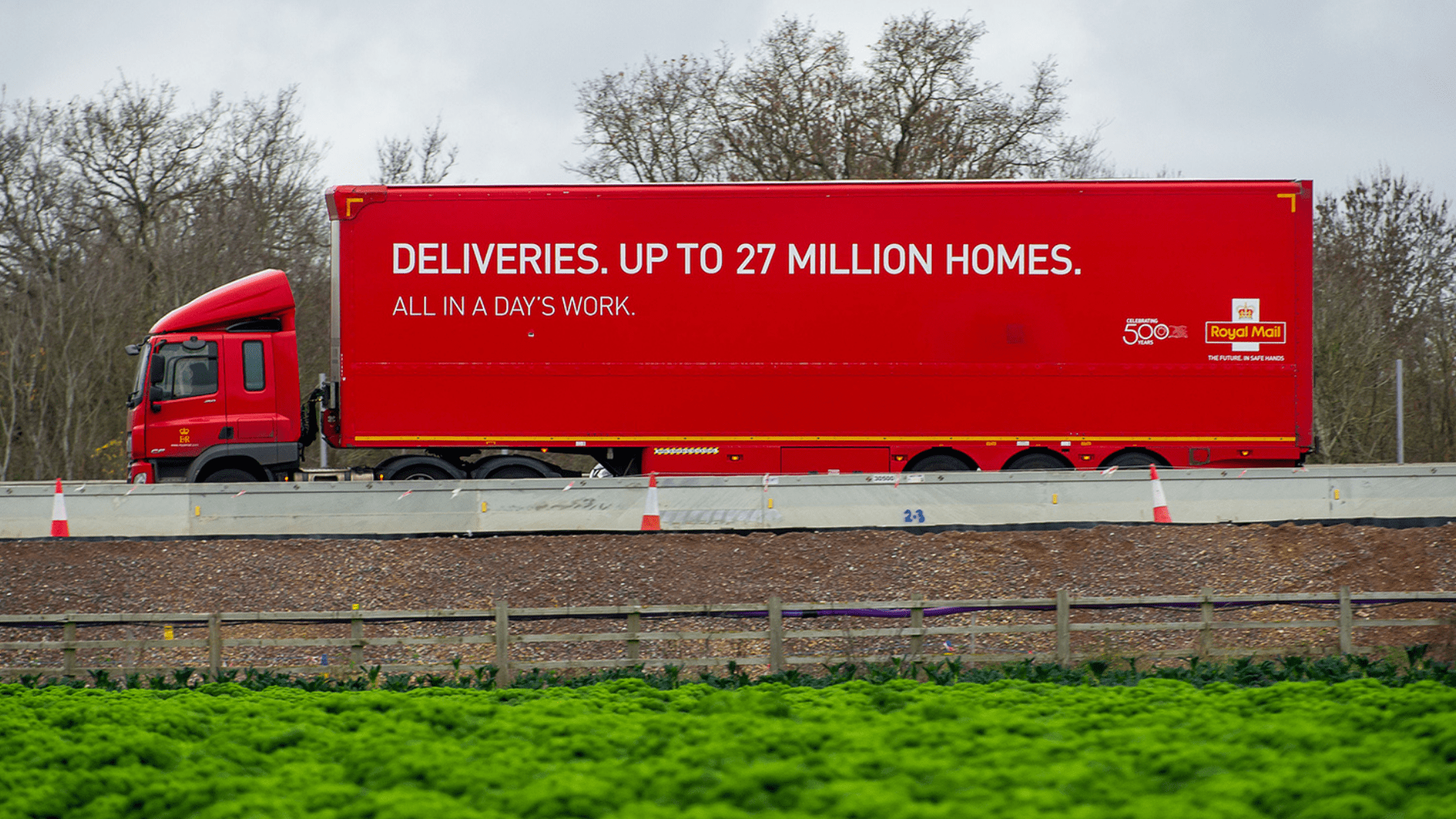
“The biggest asset this company has, I believe, is its people, and it’s the one asset that they’re sweating the most,” John said. “And people aren’t robots. They can’t keep going. It’s difficult.”
What is going on at Royal Mail?
Royal Mail was privatised in stages from 2013, ending more than 500 years of public ownership. The process culminated in 2023, when Czech billionaire Daniel Křetínský took control of IDS as part of a £3.6 billion deal.
Since then, the company has oriented itself around parcels. With people sending 60% fewer letters than in 2005, the shift makes commercial sense. But it has also made the job “much harder”, says Wandsworth-based John.
“With the decline in letters and obviously the move to a parcel business, obviously our workloads increased,” he said. “I’d probably be delivering a hundred parcels when previously I was delivering 20 or 30.”
This pivot has pushed Royal Mail into direct competition with Amazon Logistics, DPD, Evri and other operators with lower costs and far greater automation. Unlike these rivals, Royal Mail must still serve every address in the UK at a uniform price. The universal service obligation (USO), requires the postal service to deliver letters six days a week to 32 million addresses, though second class deliveries will only happen every other day in 2026. With volumes falling, the cost of maintaining the USO has become increasingly difficult for the company to absorb.
It is still an essential service, adds John.
Advertising helps fund Big Issue’s mission to end poverty
“Don’t get me wrong. Letters are still very important, and at the end of day, there are people that still rely on them. Yeah, we deliver an awful lot of NHS and obviously DWP stuff,” he said.
Nonetheless, the emphasis on profitability has changed how the company works. In recent years, the business has leaned more heavily on ‘gig economy’-style productivity systems, including ‘scan in, scan out’ tracking and tighter performance metrics.
Life is getting harder for the workforce, said academic and postal services expert Stephen Mustchin.
“Postal workers often report increased rising workload pressures and work intensification,” he told Big Issue. “With deliveries this includes rounds being expanded geographically… which is a particular problem in rural or less densely populated areas.”
“In the years running up to privatisation postal workers often reported increased levels of management surveillance, with management checking closely for relatively small infringements of policy and disciplining workers accordingly.”
For John, these pressures materialise in everyday scheduling.
Advertising helps fund Big Issue’s mission to end poverty
“They made us have a later start. 7:24 compared to 6:10, then finish later. They didn’t want what they called ‘stranded hours’… But 90% of the mail is ready at 6:15,” he said. “That pile of mail just sits there and then you have to really hurry to get everything sorted.
“It has had effect. A lot of people have left, not just older hands, but newer people as well. We find it hard. And then you finish later – you start in the dark and you finish in the dark.
“They just see as you’re making me work from that time to that time, whereas maybe guys at one time would come in an hour early and finish an hour early, and they’ve kind of removed that.”
A Royal Mail spokesperson told Big Issue later start times were introduced last year to respond to customer demand for next-day parcels, reduce environmental impact by removing domestic flights, and improve overall quality of service and capacity.
For many, pay is also a breaking point. Years of below-inflation rises mean new recruits enter on terms that compare poorly with other delivery and warehouse employers.
In 2022, postal workers went on strike over pay and conditions, as well as fears over the future of the USO. Privatisation was meant to usher in greater efficiency and better customer service. That promise, Mustchin argues, has not been realised.
Advertising helps fund Big Issue’s mission to end poverty
“Inefficiencies and a reduced quality of service have often emerged… and there’s a lot of evidence that such problems have grown in Royal Mail in the aftermath of privatisation and marketisation.”
John is nearing retirement. His 40 years in the service are increasingly unusual. With conditions as they are, Royal Mail struggles to retain staff for more than a few years.
“Most of the guys I work with, they still see it as a service. We understand it’s a business. We understand it has to make money. But as far as we’re concerned, you know, you’re serving the community. Guys have seen people move in. They’ve had children, and now their children’s children are getting deliveries.
“But with all the changes, they’ve made it a bit more… it feels a little bit more impersonal.”
When you send a last-minute parcel in the lead-up to Christmas, spare a thought for the postal worker delivering it.
A Royal Mail spokesperson told Big Issue: “We know how important letters and parcels are to our customers, especially in the run-up to Christmas. This is our busiest time of year, with mail volumes more than doubling, and our posties are working incredibly hard every day to deliver for people across the UK.
Advertising helps fund Big Issue’s mission to end poverty
“Last year, 99% of items posted by the last recommended posting dates were delivered in time for Christmas, and we’re grateful to our posties for the commitment and effort they show during this exceptionally busy period.”
Do you have a story to tell or opinions to share about this? Get in touch and tell us more.
Change a vendor’s life this Christmas.
Buy from your local Big Issue vendor every week – or support online with a vendor support kit or a subscription – and help people work their way out of poverty with dignity.