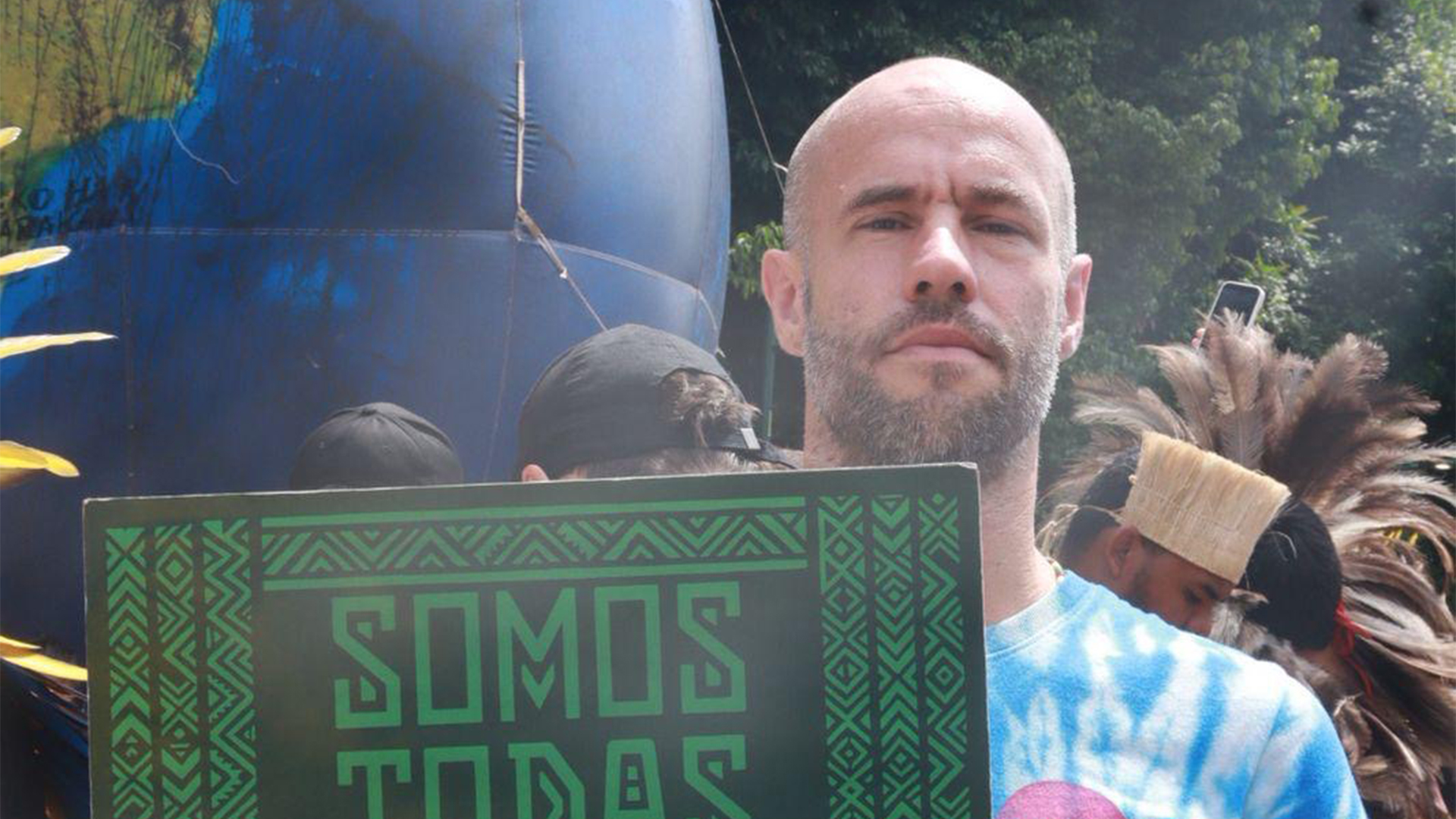
As I arrived in Belém – the gateway to the Amazon – for COP30, I found myself reflecting on what this moment means, not only for the climate movement, but for humanity. The science tells us we are currently on track for between two and four degrees of warming by the end of the century. The difference between those two numbers is the difference between struggle and catastrophe – between a planet still teeming with life and one where large parts become uninhabitable. Yet beyond the numbers and negotiations, the real question we face is this: how do we mobilise action at scale, fast enough, to change our trajectory?
For me, the answer lies in reimagining our relationship with nature – and with each other. Over the past decade, my activism has evolved through #TOGETHERBAND and our bioeconomy program, which uses regenerative design to create products that directly support Indigenous communities on the frontlines of climate change. These are the guardians of the world’s biodiversity – protecting 80% of the planet’s remaining species – and yet they are often the least resourced and most threatened.
Our approach is simple: build supply chains that sustain life rather than extract it. By co-creating livelihoods with Indigenous artisans – using sustainably sourced materials from the forest – we impact families and wider communities. It’s an economy rooted in reciprocity, creativity and respect. We call this regenerative design – not just sustaining nature, but healing it, while making beautiful products that remind us of our interconnection.
Read more:
- COP30 marks 30 years of COP climate summits. Has it actually made a difference?
- ‘It would be good to know how long we have left’: This clifftop community is falling into the sea
- These scientists felt powerless over the climate crisis – so they decided to do something about it
Our We Are All Forests bands are one such example. Made in partnership with the Yawanawá people from waste açaí seeds, Parley Ocean Plastic thread, and recycled Humanium metal – forged from decommissioned illegal firearms – each one is a symbol of transformation. The açaí seeds represent regeneration, the Parley thread the global fight against ocean plastic, and the Humanium metal a powerful act of turning violence into peace. Together, they form the heartbeat of the We Are All Forests movement – driving tangible impact through circular supply chains while creating cultural and economic resilience for Indigenous peoples and spreading awareness of the challenges they face.
But these bands are also about something bigger: helping those outside of these privileged spaces – who may never travel to the Amazon or walk into a COP summit – to connect, to remember that we are all part of this living web. They are symbols to engage, educate and inspire.