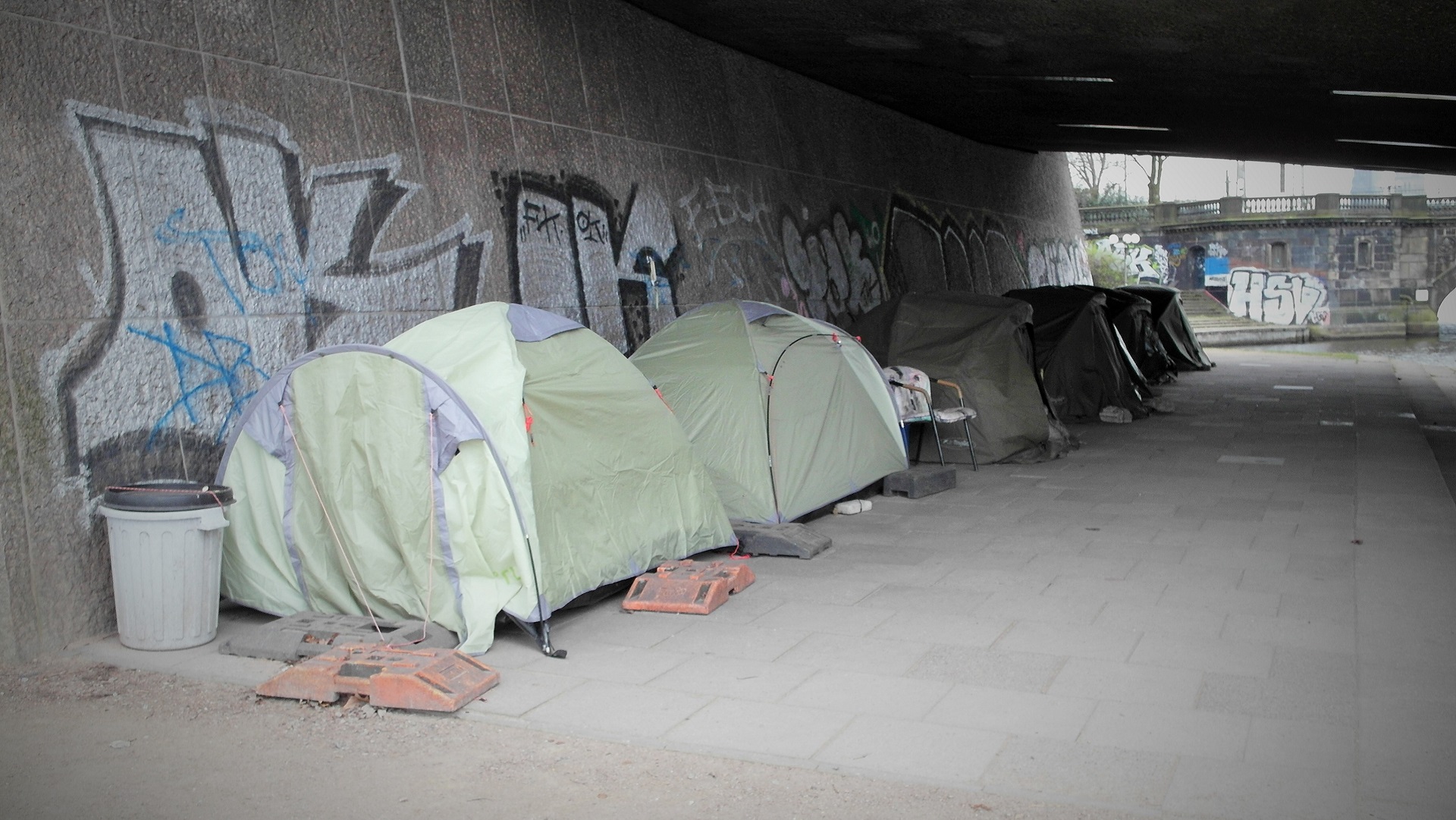
Some people also told us about how ‘social distancing’ was something they were doing – or was forced on them – long before Covid-19. Others described having little contact with friends or family, and of social isolation. As such, the potential to get Covid was already quite low.
There was also speculation among people living on the streets, and among frontline support workers too, whether they might have ‘immunity’ to Covid-19. Their bodies are so used to so many harsh demands or to other viruses that they could fight off Covid-19. Although others thought that rather than some form of immunity it might instead be that people were getting Covid and were just ‘numb’: so used to pain or feeling ill-health, that having Covid-19 might not be something to report or prioritise.
These findings suggest that the hotels were only part of the story of Covid-19 in 2020. These findings might mean that – perversely, horrendously – experiences of loneliness and exclusion might have helped prevent Covid-19. Stigma, a failing housing system, punitive services may have generated living conditions that limited exposure to Covid-19 for some. Or living conditions were so bad that Covid-19 wasn’t reported and couldn’t be prioritised.
Continue reading for free
Registration is free and takes less than 30 seconds.
Our supporters make Big Issue’s work possible. Join us to see the impact we’re having together and discover more ways to help people facing poverty access income, opportunity and support.
This is just one study, but these findings need careful thought. Covid-19 might have been prevented for some, but at enormous cost, and no doubt with other indirect effects for health, with other mental and physical health issues not being treated. As the growing mental health crisis and pressure on the NHS shows.
The study is also a reminder that we should keep a critical eye on claims for success with Covid-19 and homelessness. The Everyone In scheme of funding hotels was remarkable. But a narrow focus on this scheme risks us ignoring the long-running factors in the UK homelessness crisis. That led to people needing hotels in the first place.
Politicians and some in the media like the idea of quick fixes and silver bullets. The Everyone In hotels seemed like that, and the talk of them ending homelessness shows it. But recognising that loneliness and exclusion might have been part of the reason for lower-than-feared Covid-19 infections is a reminder of the complexity of our current crisis.
Andrew Guise is a senior lecturer in Social Science and Health at King’s College London. The full study is available to read for free here. The research team included Stan Burridge (Expert Focus), Martin Burrows (Inclusive Insight), Andrew Guise, PJ Annand and Michelle Cornes (King’s College London) and Sujit D Rathod, Paniz Hosseini and Lucy Platt (London School of Hygiene and Tropical Medicine).