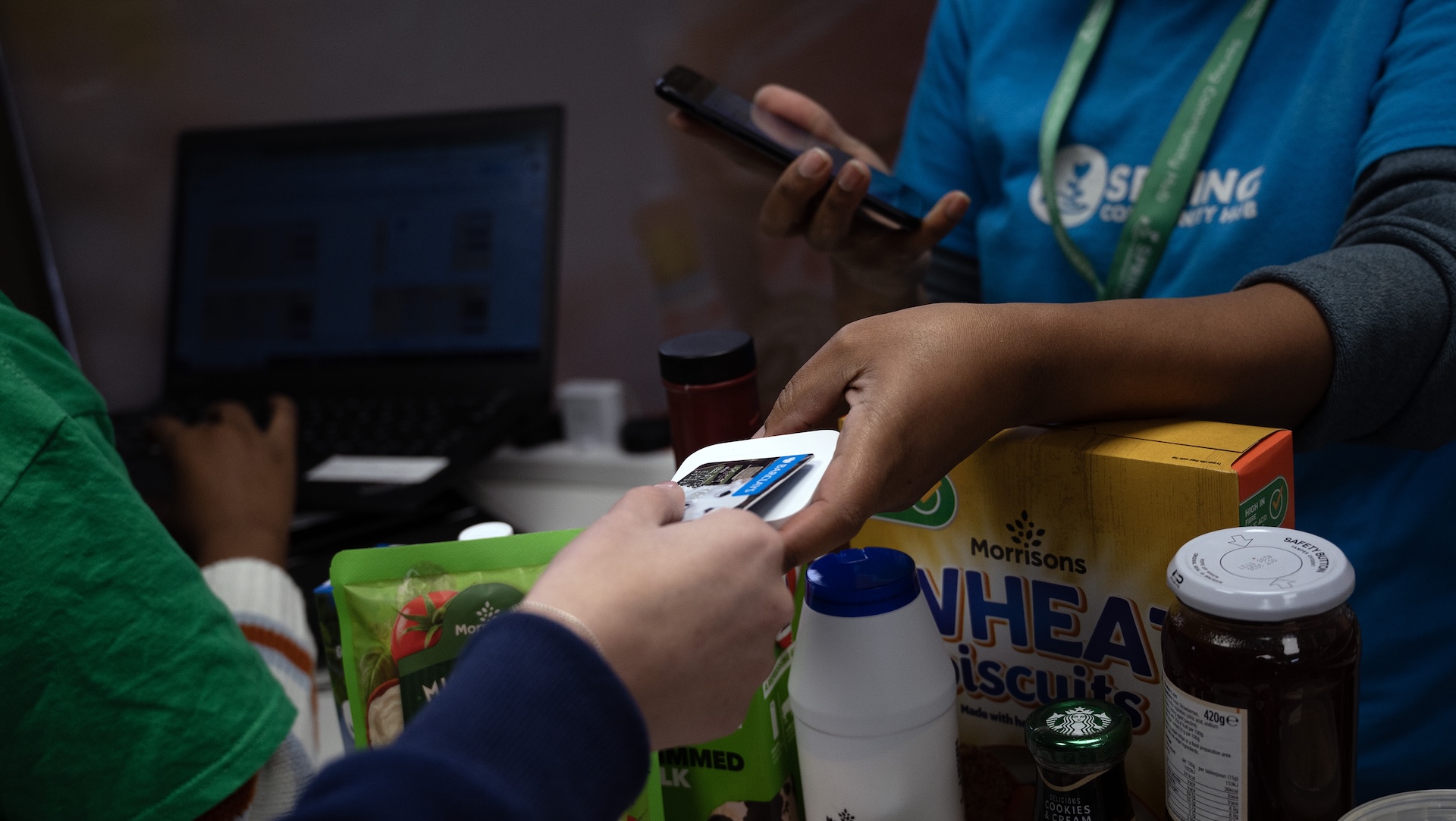
North Paddington Foodbank’s cash-first pilot has collated important evidence on the positive impact of cash payments. Meanwhile, the evaluation of the 2022 Leeds City Council Cash Grant Pilot Programme found ‘people experiencing financial hardship overwhelmingly prefer cash to emergency food aid’.
It’s long been established that providing cash-first support works while simultaneously boosting local economies. However, the default cash-first approach espoused by the DWP’s guidance isn’t limited to crisis payment distribution. Councils are also being asked to put financial resilience-building front and centre of their crisis resilience fund schemes ensuring people can access advice and support to maximise incomes. What’s more, given that they will be building local eco-systems to do that, there’s every chance that more people will get the help they need before crisis sets in.
Since 2020, IFAN has been working with local partners in over 135 UK local authorities to co-develop ‘Worrying About Money?’ resources epitomising a cash-first approach to food insecurity. Leaflets and their alternative versions have been used as tools to validate putting income-focused options at the heart of local responses. The step-by-step guides help people facing financial insecurity as well as support workers and volunteers identify local agencies best placed to help increase people’s incomes. Policy in Practice has found that no less than £24.1 billion in support goes unclaimed.
Keep reading the journalism that powers our mission
Register free to continue and learn more about the stories, campaigns and the support we provide, helping people facing poverty across the UK.
This is a pivotal moment for the many campaigners who have long called for a cash-first approach. Having committed to a cash-first approach to food insecurity in 2022, the Scottish government published its plan towards ending the need for food banks in 2023. By championing effective cash-first crisis support alongside financial resilience-building, the UK government is paving the way to reduce ‘mass dependence on emergency food parcels’ as promised in its 2024 manifesto.
However, it’s evident in Scotland, as it will likely be in England, that there is only so much that crisis support alongside optimum financial resilience-building can do. The UK’s social security system is simply inadequate. The abandonment of the two-child limit will make a big difference while the 6% increase in universal credit’s standard allowance in April is welcome. However, social security payments will still be lacking while a punitive sanctions system remains alongside the five-week wait, the benefit cap, and no recourse to public funds status. The government’s cash-first crisis resilience fund is a heartening step in the right direction but there’s still a long way to go.
And while the guidance’s ambition and attention to detail are cheering, some pragmatism is also called for. Many local authorities already have well-established cash-first schemes in place, but others will be starting from scratch with this type of delivery or will have to adapt whole systems predicated towards supporting families with children on free school meals in the holidays.
Advertising helps fund Big Issue’s mission to end poverty
Other local authorities have normalised distributing the Household Support Fund through food banks meaning careful strategic thinking is needed to adapt existing practices to fit with guidance objectives. The food aid landscape is complex. As IFAN and Trussell spelt out in their briefing ‘The Crisis and Resilience Fund and charitable food provision’, “government funding should be directed towards models which can be a permanent part of the community support landscape, without the need for charitable food provision”.
Three important years are ahead of us and there’s a real chance that permanent crisis support could be reinstated in England in 2029. The demise of the Discretionary Social Fund resulted in cutting back local welfare assistance in England. By 2024, End Furniture Poverty found that 36 local authorities offered no local welfare support at all. The new crisis resilience guidance is clear that funding can enhance existing local welfare schemes but shouldn’t replace them. This acknowledgement of their significance and some assiduous evidence-gathering could pave the way for permanent crisis support as part of a much-improved wider social security system. The new crisis resilience could be a game-changer – its guidance prepares the ground for a time when no one needs to access charitable food provision to get by.
Sabine Goodwin is the director of the Independent Food Aid Network, a member of the Crisis Support Working Group which also includes Trussell, The Children’s Society, Barnardo’s, Joseph Rowntree Foundation, Child Poverty Action Group, Mencap and many more.
Do you have a story to tell or opinions to share about this? Get in touch and tell us more.
Change a vendor’s life this winter.
Buy from your local Big Issue vendor every week – and always take the magazine. It’s how vendors earn with dignity and how we fund our work to end poverty.
Advertising helps fund Big Issue’s mission to end poverty
You can also support online with a vendor support kit or a magazine subscription. Thank you for standing with Big Issue vendors.