These are issues that wouldn’t be expensive to fix. It would take less than 1% of the overall NHS eye care budget to close these gaps. ‘It probably equates to a rounding error realistically,’ Telfer says. A rounding error. That’s what stands between people experiencing homelessness and the ability to see properly. That’s what we’ve been arguing about while overall homelessness in England rose to an estimated 382,618 people, including more than 175,000 children, in 2025.¹
Research by Vision Care shows that 14% of people experiencing homelessness have at least one eye health condition, compared to just 1.4% of the general population.² That’s 10 times the rate. Conditions such as glaucoma, cataracts and age-related macular degeneration can be serious and eventually cause vision loss if left untreated. And yet people are locked out of care by bureaucratic barriers that were supposed to have been removed seven years ago.
The really maddening element here is that it’s not even about creating a new system. It’s about letting people use a service they’re already entitled to.
Keep reading the journalism that powers our mission
Register free to continue and learn more about the stories, campaigns and the support we provide, helping people facing poverty across the UK.
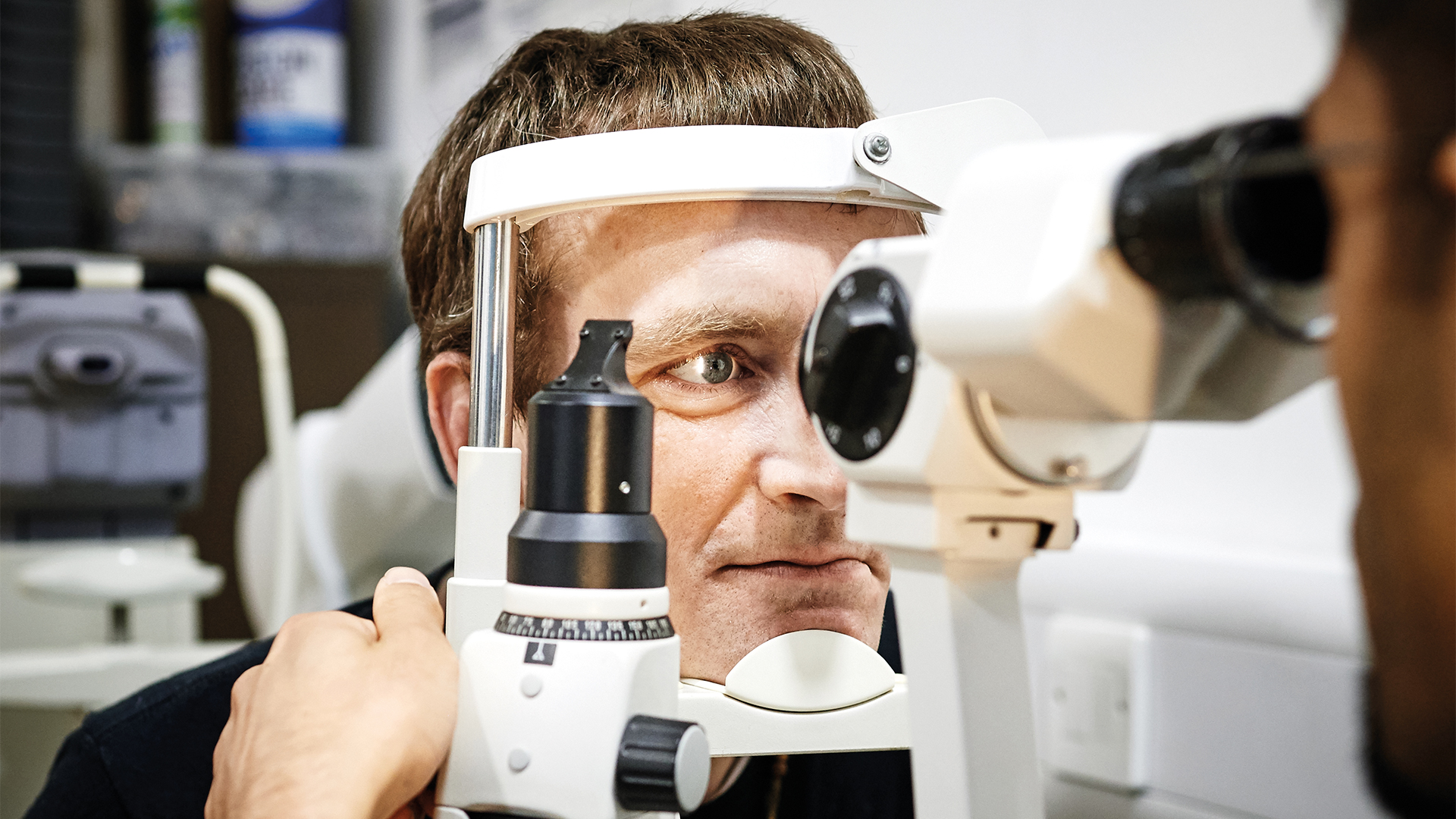
Specsavers’ role here is not as a stand-in for the NHS, but as proof that accessibility failures are impacting people’s lives. By partnering with Vision Care, Big Issue and Crisis to deliver eye tests directly in shelters, hostels and even Big Issue offices, Specsavers have shown that the barriers keeping people out of NHS eye care are just administrative. The care already exists. The expertise already exists. What’s missing is a system willing to meet people where they are.
Vision Care and Specsavers are jointly calling for three fixes. First: make homelessness an eligibility criterion for free NHS eye tests and glasses, so that people don’t fall through gaps in the system.
Second: let mobile opticians deliver NHS eye care at homeless shelters without bureaucratic hoops. Currently, NHS rules say you need three weeks’ advance notice and, absurdly, a list of named patients before you can bring eye care to a shelter – which is impossible when people are in crisis, moving between hostels, or sleeping rough.
Advertising helps fund Big Issue’s mission to end poverty
Third: provide free replacement glasses when they’re lost, stolen or broken due to homelessness. Currently anyone with lost glasses must wait up to two years for their next NHS test before they’re eligible for replacements, forcing people to navigate their lives with serious eyesight issues, including rough sleepers for whom vision problems can be especially dangerous.
The government keeps saying it cares. Lord Darzi’s independent investigation into the NHS, published in September 2024, described homelessness as a ‘health catastrophe’ and highlighted how difficult health services are to access for people experiencing homelessness. The government says that its upcoming 10-year health plan will prioritise these inequalities.
And yet when questions are asked in parliament, the healthcare minister gives what Telfer politely calls ‘a non-answer’. Just words. No action.
Meanwhile, private companies and charities are plugging a gap that the NHS won’t – or can’t – fill. Since 2022, Specsavers have offered free eye care to all Big Issue vendors and thanks to their ongoing partnership with Vision Care, have helped over 6,000 people experiencing homelessness access free eye care and glasses. This shouldn’t require corporate partnerships, though. This is basic healthcare. It should be there when people need it.
This isn’t even about finding extra money or ambitious reforms. It’s about keeping a promise made in 2018. It’s about spending less than 1% more on eye care. It’s about removing bureaucratic barriers that actively prevent people from accessing services they’re already entitled to.
‘We want to make as much noise as possible,’ Telfer says. ‘We want MPs to be fed up of hearing from us.’
Advertising helps fund Big Issue’s mission to end poverty
To find out more, visit specsavers.co.uk/about/charitable-partnerships/homelessness or vision-care.co.uk/.