Kinship carers forced to turn to food banks after taking in vulnerable children
The government has announced its “biggest ever investment in support for kinship carers” – but is it enough as so many are struggling to cope financially?
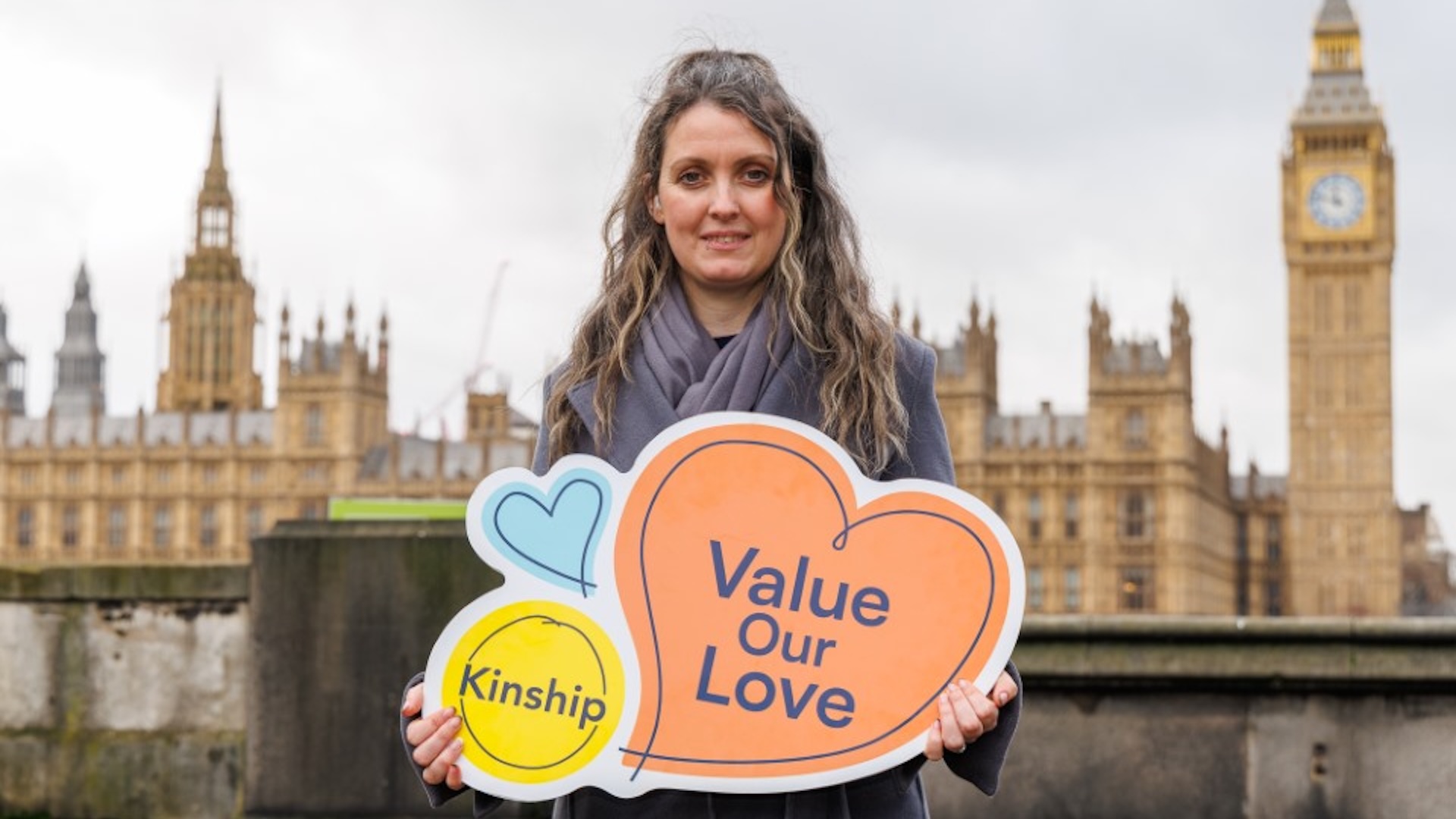
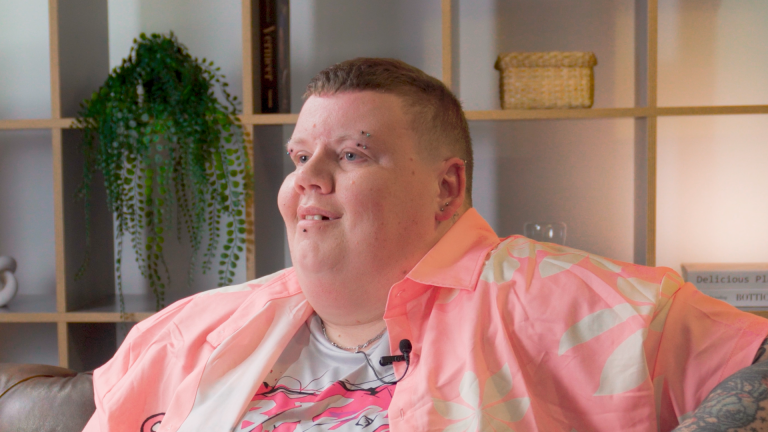
Sarah, a kinship carer who took in her two-year-old nephew. Image: Kinship
Share
When Sarah took in her two-year-old nephew seven years ago, it was an easy decision. She knew she wanted to support him and provide him with a safe and loving home with family when his parents were unable to care for him. But it was a decision which plunged her into financial difficulties.
Kinship carers – relatives or close family friends who are raising a child instead of the parents – do not receive the same financial support from the government that is afforded to foster parents and adoptive parents. Some local authorities provide help, but it is a postcode lottery as to what is available.
It means that carers like Sarah often struggle to cope financially. Two in five kinship carers are having to rely on benefits to support them, recent research from charity Kinship found.
“Before the little one came to live with us, I had a career,” says Sarah. “My husband had a career. He was working as a nurse in the NHS and I worked as an area manager for a chain of bistros. When the little one came to live with us, I had to give up work to take care of him because there’s no paid leave.
“There’s not even unpaid leave. You are expected to not have a child one day and have a child the next day and still be able to get on with your life as though nothing has changed.”
Advertising helps fund Big Issue’s mission to end poverty
Advertising helps fund Big Issue’s mission to end poverty
Sarah adds: “We went from a small family on two wages to a slightly bigger family on one wage, which was obviously not ideal. We ended up borrowing from family and we had to go down the route of the benefits system, while still relying on family.
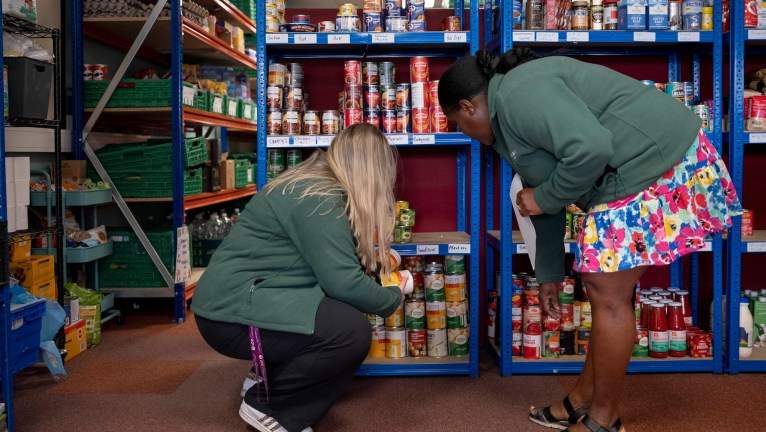
“At points we have had to use food banks. It was just terrible. It got to the point where we were saying: ‘Are we going to eat this time or are we going to make sure we’ve paid the bills?’ It was tricky. And we were lucky that we had some family that could help us. There are lots of carers that don’t have that option.”
The government recognises that there is a problem – and it has responded with its “biggest ever investment in support for kinship carers”, announced on Friday (27 February).
Keep reading the journalism that powers our mission
Register free to continue and learn more about the stories, campaigns and the support we provide, helping people facing poverty across the UK.
Up to 4,500 children and their families will benefit from a pilot scheme to support kinship carers, with £126 million of support set to be distributed to seven local authority areas over the next two years.
Bexley, Bolton, Newcastle, North East Lincolnshire, Medway, Thurrock and Wiltshire will receive a package of funding, with councils able to deliver that support to kinship carers according to local needs.
The programme will run for up to three and a half years, with further funding set to be confirmed after the evaluation of the pilot. The Department for Education hopes to be able to roll it out nationally if it proves successful.
Advertising helps fund Big Issue’s mission to end poverty
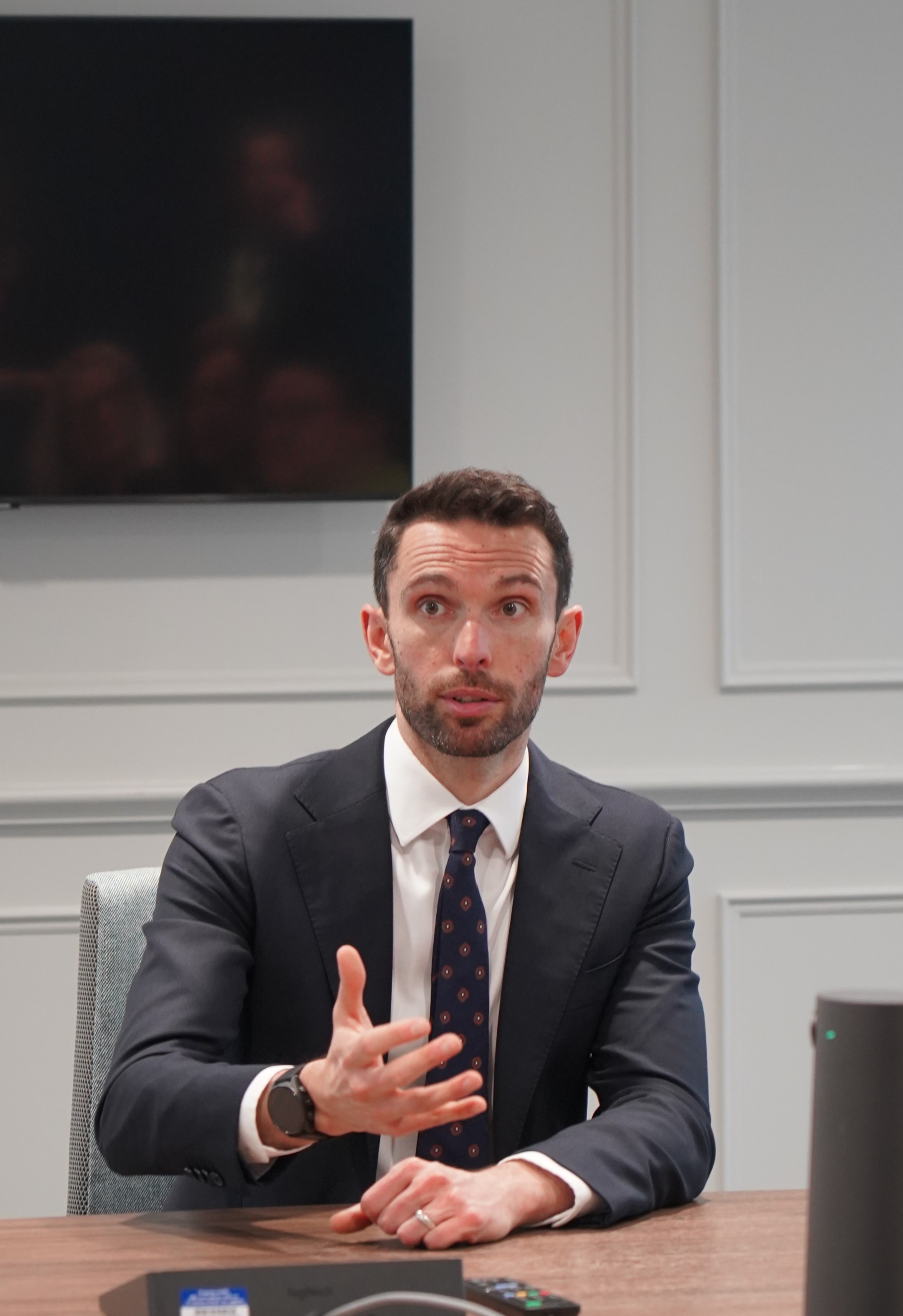
Children and families minister Josh MacAlister. Image: Department for Education
Speaking to the Big Issue, Josh MacAlister, the minister for children and families, says he would like to tell kinship carers: “We’ve heard you. You do an incredible thing for your kin and government and the state needs to take a different approach in the future so that we get behind you and help to make what you’ve done a success.”
There was an overwhelmingly positive response from kinship carers who attended a briefing with the minister at the Department for Education on Wednesday (25 February) – even from those carers who will not benefit from the pilot programme.
Meyrem Sonerman, who was in kinship care as a child and is now a kinship carer herself, says that the pilot scheme sounds “amazing” and that it makes her “giddy” that it could help families stay together.
Sonerman explains that, like Sarah, she received no paid leave and no financial allowance when she became a kinship carer to three children. She found herself facing debt, which meant she was unable to take in two other children, who were placed into other parts of the care system. She believes that financial support like that which the government is piloting would have meant her family could have stayed together.
Lucy Peake, chief executive of Kinship, says: “It’s a really critical step towards recognising that all kinship carers should get support. It will make an immediate difference to the carers in the pilot areas. And of course, we hope it will drive momentum towards what we really need, which is allowances for all kinship carers.”
But it is still a pilot programme, and only a proportion of kinship carers will benefit from the scheme.
Advertising helps fund Big Issue’s mission to end poverty
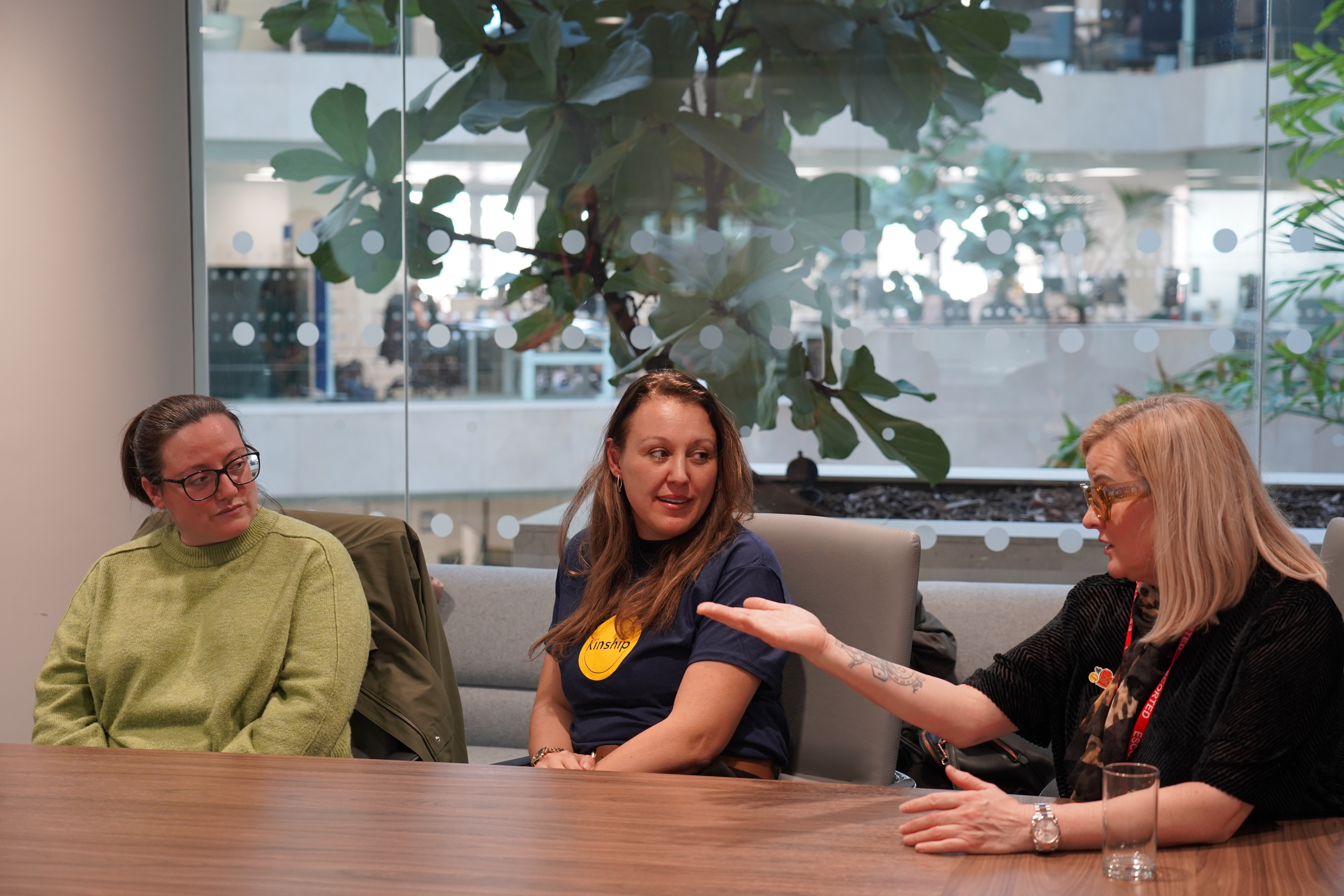
Meyrem Sonerman (in the middle) with two other kinship carers at the briefing. Image: Department for Education
Asked why the government does not roll it out nationally, MacAlister said: “We want to see the total effect on a really complicated system of allowances that are provided at the moment, as well as the interaction with the fostering system. There are quite a lot of moving parts within the system, which is one of the problems.
“I need to know and the government needs to know, when we put this on the table, what’s the behavioural change amongst kinship carers? Making a change like this is pretty massive – even in the first couple of years, it’s £126 million, so it’s a considerable amount of money in a small number of areas. The logic stacks up and it should work. We want to make sure that it does because it’s quite a big change in how the system works.”
Kinship has found that for every 100 children looked after in well-supported kinship care rather than local authority care, the state saves £4m per year.
Peake says: “We really want the government to understand that it makes sense to invest in well-supported kinship care. It really makes sense to go further and faster with this to ensure that every kinship family gets the support that they need.”
Sarah found herself “fighting constantly for support” and was eventually diagnosed with compassion fatigue, meaning physical and emotional exhaustion resulting from chronic, empathetic engagement with people.
“These children often are coming from a great deal of trauma, whether they’ve suffered abuse or their parents may have passed away or any of those,” Sarah says. “That’s a great trauma for anyone, but especially a small person who doesn’t understand feelings yet. I’ve got those emotions to manage as well as thinking, how are we going to survive?”
Advertising helps fund Big Issue’s mission to end poverty
When Big Issue puts Sarah’s story to MacAlister, particularly pointing out how she was forced to quit her job due to lack of paid leave, he says the government is currently consulting on whether to extend parental leave to cover kinship carers.
“I think there’s a lot of merit in looking at that. We’re asking that question as a government because of the stories like the ones that you’ve shared and that I’ve heard over the years as well,” MacAlister says.
Sarah and her family are now in a much better place, thanks to the support of Kinship, but she hopes that there will be more help on a governmental level for kinship carers in the future.
“We’ve had Kinship in our lives for three years now,” Sarah says. “And without the support of our family worker from Kinship, I don’t know where we would be. She really helped us to get on top of everything and make sure that we had therapeutic practices put into place for the little one. Because of that, I can now go back into the workplace.”
Advertising helps fund Big Issue’s mission to end poverty
Buy from your local Big Issue vendor every week – and always take the magazine. It’s how vendors earn with dignity and how we fund our work to end poverty.