Advertising helps fund Big Issue’s mission to end poverty
Books

Humanity has lost its animal instincts. And it's been a disaster for the world

To call someone an animal is an insult, the quintessential “other”. At the same time, we humans covet their qualities

Image: Hemis / Alamy

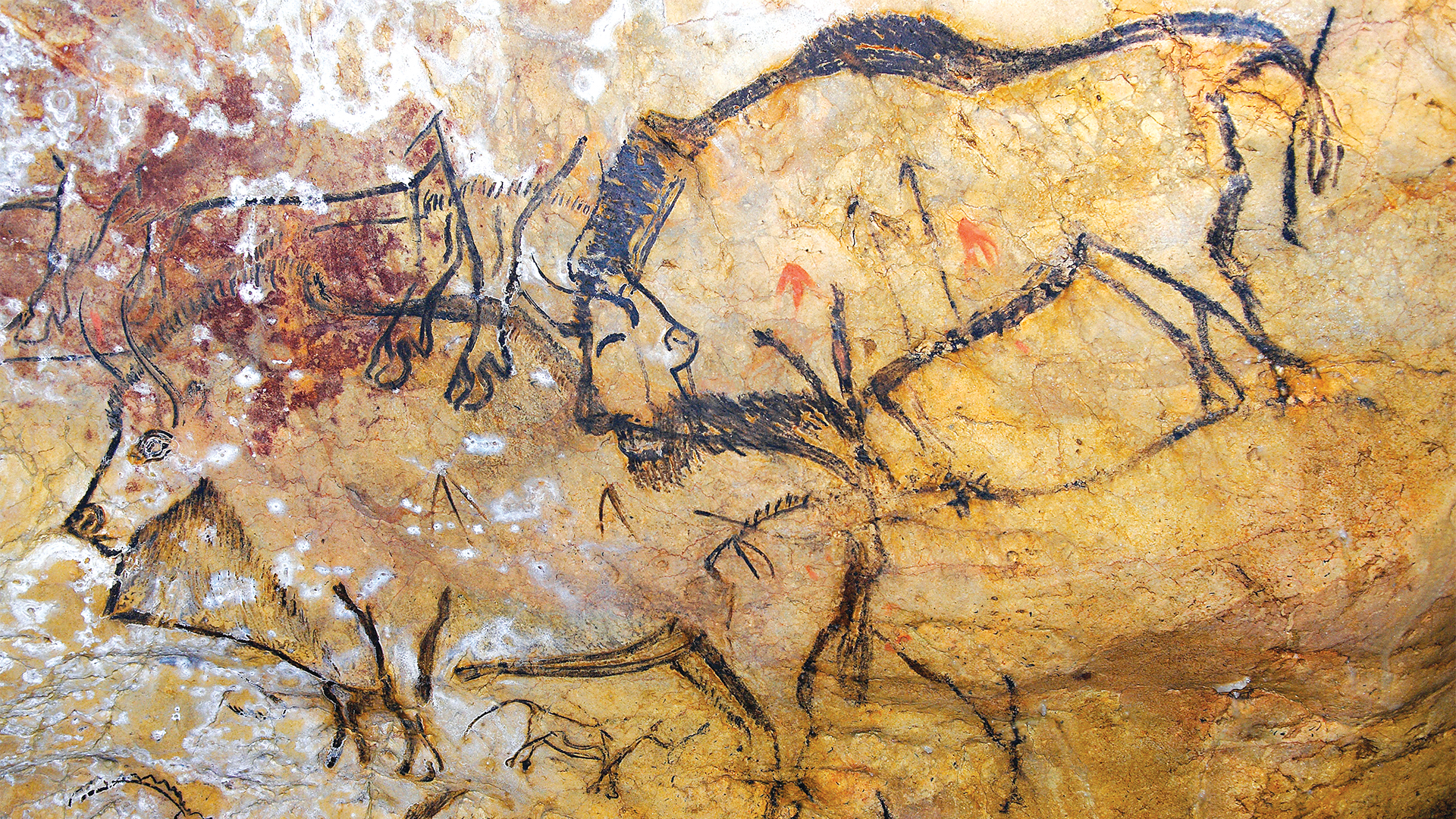
In the Pyrenean region of southern France and northern Spain, the walls and ceilings of hundreds of caves are adorned with paintings that date to between 10,000 and 40,000 years ago. The artworks are noteworthy in many ways, but one thing about them immediately stands out: they consist almost entirely of animals.

The paintings are sophisticated, vivid and often affecting. We do not know who made them, why they did it and what the art means. But we can be fairly sure, given the care with which the artists immortalised their subjects, that they thought deeply about the woolly mammoths, horses, bison, woolly rhinoceros, ibex, reindeer and other animals with whom they shared their lives, and that the animals were important to them.

Get the latest news and insight into how the Big Issue magazine is made by signing up for the Inside Big Issue newsletter

Today, our attitudes towards animals, and towards the natural world in general, could hardly be more different. For the last few thousand years we have thought of ourselves as biologically, cognitively and morally distinct from other species and, by implication, superior. We have given ourselves permission to subjugate nature, and to use it as a means to our ends.

This kind of anthropocentric thinking has been disastrous for most non-humans and for entire ecosystems. Unsurprisingly, many of us are troubled by it, even as we buy into it. Our view of other species is fraught with tension and ambiguity. We consider them lesser beings, a position that has become part of how we describe both them and us. An animal is an insult, the quintessential “other”.

At the same time, we covet their qualities – the elephant’s memory, the eagle’s eyesight. They are indispensable to us as emblems, metaphors and expressions of our identity. Less obviously, anthropocentrism has been used as a pretext to enforce divisions among people. The human-animal divide has spawned a human-human divide.

Advertising helps fund Big Issue’s mission to end poverty

Language designed to emphasise the superiority of our species is frequently used to highlight the superiority of certain human groups over others, or to discriminate against people on grounds of their race, ethnicity, religion, nationality, gender, background, sexuality, politics or outlook.

Read more:

Comparing members of a human out-group to animals is an effective way to de-value them because it implies not only that they are outsiders, but that they are sub-human. 

The philosopher Mary Midgeley called this approach “pseudo-speciation” – the tendency for humans to regard their cultures as if they were separate species. It has made it easier to insult and belittle those we distrust, and even to abuse them. 

This explains why racist football fans still find it all too easy to aim monkey chants at black players. Why, in 2013, a far-right Hungarian commentator chose to say of his country’s Roma minority, “These animals shouldn’t be allowed to exist.” Why Palestinian and Israeli children who have never met depict each other in their sketchbooks as animals or monsters. Why opponents of the nationwide university strike in Colombia in 2018 dismissed student protesters as lambs, rats, pigs, chickens, cockroaches, snakes and pests, and why Shakespeare spiced his dramas with an abundance of animal-themed taunts (“that bottled spider, that foul bunch-backed toad!”).

Attitudes towards animals and human out-groups appear to be directly linked: one study found that people who believe strongly in a human-animal divide are more likely to hold negative views of ethnic minorities and women. All too often dehumanisation quickly leads to discrimination, since the more ‘animal’ someone appears to be, the more likely we are to treat them as one. Their animality becomes synonymous with everything we dislike about them. We are species-ist even within our own species.

Advertising helps fund Big Issue’s mission to end poverty

Happily, there are signs that the way we think about animals and what they represent is beginning to change, albeit at a glacial pace. The UK government’s new Animal Welfare Strategy, announced in December, aims to establish new norms governing how we treat various farmed and wild species. More significantly, biologists who study animal behaviour are challenging the assumption that humans are categorically different to other animals. 

For centuries we have assumed that our complex language, sophisticated technologies, extensive social networks and other attributes puts us in a class of our own. But science is showing us that the differences are more of scale than essence. It is becoming clear that we have underestimated the worlds of our fellow creatures, and that our sense of superiority is misplaced.

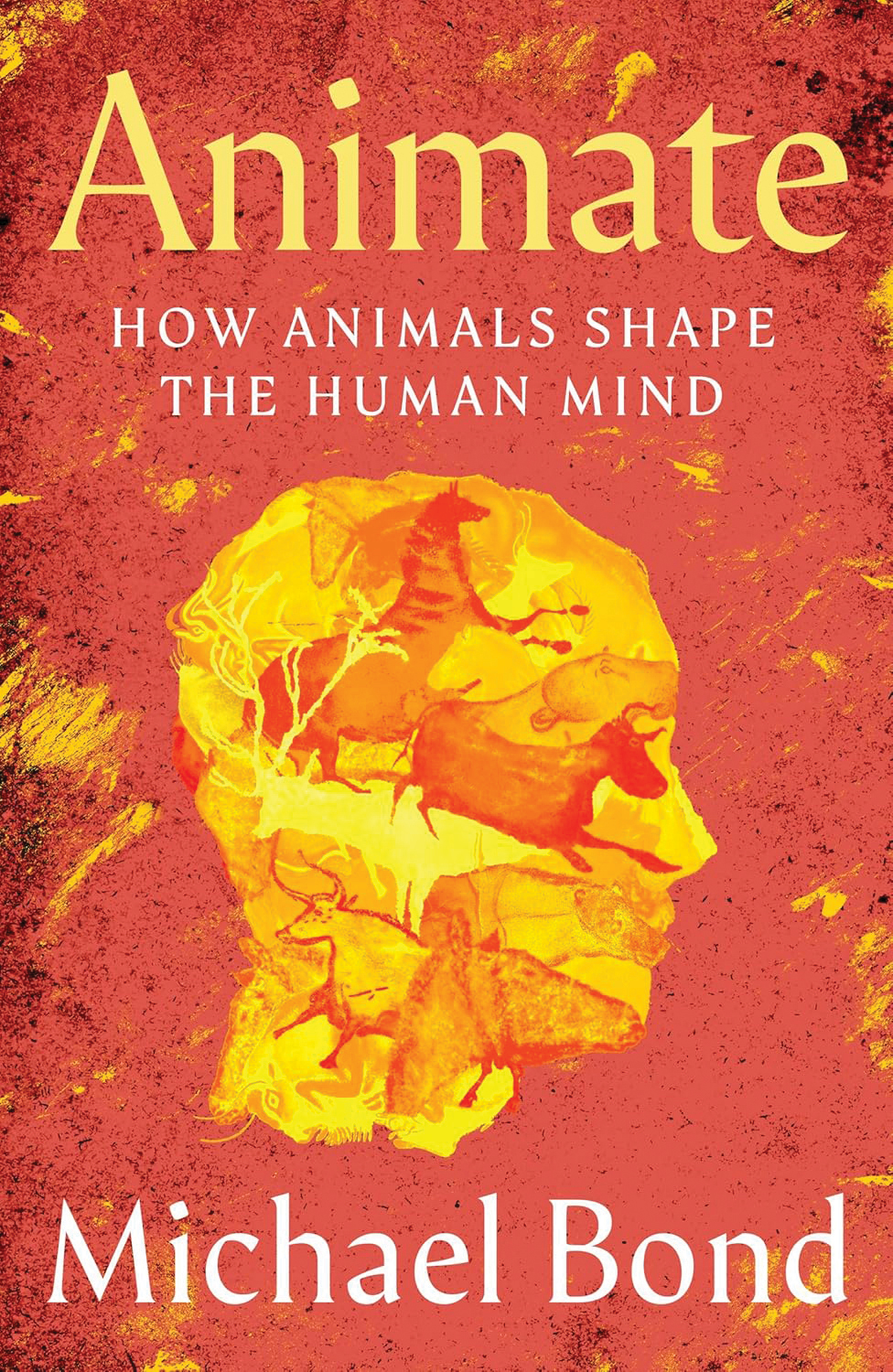
Animate: How Animals Shape the Human Mind by Michael Bond is out now (Pan Macmillan, £22).

You can buy it from the Big Issue shop on bookshop.org, which helps to support Big Issue and independent bookshops.

Do you have a story to tell or opinions to share about this? Get in touch and tell us more

Change a vendor’s life.

Advertising helps fund Big Issue’s mission to end poverty

Buy from your local Big Issue vendor every week – and always take the magazine. It’s how vendors earn with dignity and move forward.

You can also support online:
Subscribe to the magazine or support our work with a monthly gift. Your support helps vendors earn, learn and thrive while strengthening our frontline services.

Thank you for standing with Big Issue vendors.

Advertising helps fund Big Issue’s mission to end poverty

Do you know how Big Issue 'really' works?

Watch this simple explanation.

Recommended for you

View all
From twitching curtains to Ring doorbells: The history of surveillance in the suburbs
Books

From twitching curtains to Ring doorbells: The history of surveillance in the suburbs

The Library of Traumatic Memory by Neil Jordan review: a story that aims for the heart and head
Review

The Library of Traumatic Memory by Neil Jordan review: a story that aims for the heart and head

The Comfort of Distant Stars by IO Echeruo book review: An unusual coming-of-age story
Review

The Comfort of Distant Stars by IO Echeruo book review: An unusual coming-of-age story

The science behind racism: How discrimination is still holding people back in the jobs market
A rejected stamp on an employment contract
Books

The science behind racism: How discrimination is still holding people back in the jobs market