Advertising helps fund Big Issue’s mission to end poverty
Activism

Greenham Women's Peace Camp: The forgotten protest against nuclear weapons that lasted 19 years

Writing her novel Fallout – set against the backdrop of the Greenham Women’s Peace Camp – turned Eleanor Anstruther into an anarchist

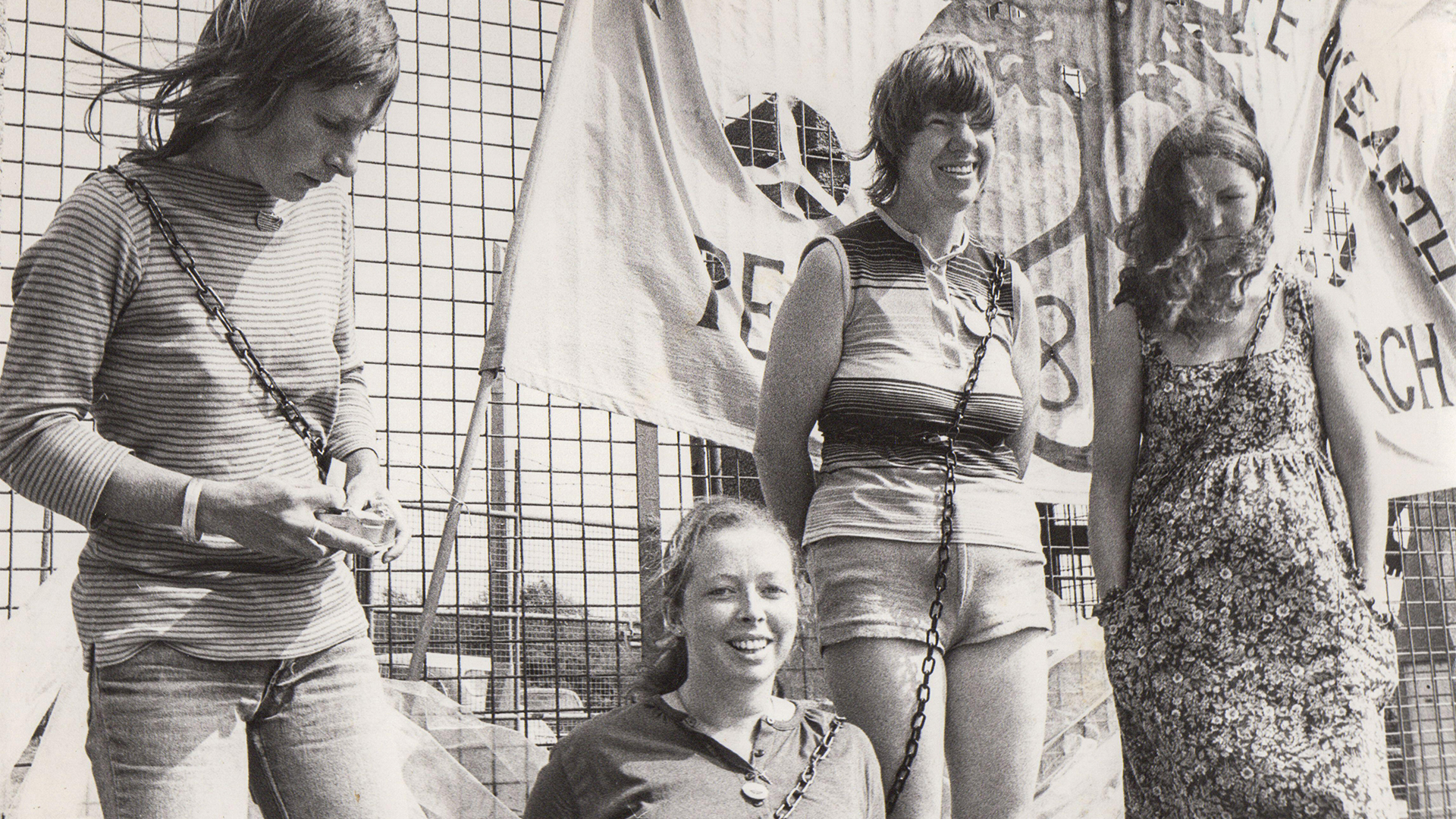
On the first day of the protest, 5 September 1981, women from Cardiff chain themselves to the perimeter fence. Image: Maggie Sully / Alamy

You’d have thought a protest that lasted 19 years, involved hundreds of thousands of people, achieved its aims through non-violent direct action and was women-only would already be assured of its place in history. If not in the story of women, then surely as a module in a political degree, or on the school curriculum alongside the suffragettes, apartheid, Gandhi and the American civil rights movement.

Yet throughout all my research and the many conversations I’ve had since writing Fallout, I’ve only met one – yes, you read that right, one – person under the age of 30 who’d heard of it, and she was a journalist who’d studied politics at university and consciously sought out the missing pieces in the history of British civil disobedience.

Get the latest news and insight into how the Big Issue magazine is made by signing up for the Inside Big Issue newsletter

Even those of us who knew about Greenham from seeing it on the news as young people ourselves in the Eighties are surprised when I tell them how long it lasted. “Nineteen years?” They say, incredulously. “Yes,” I reply,“ and in the signing of the INF treaty which marked the removal of the cruise missiles from RAF Greenham Common, Reagan and Gorbachev cited Greenham women as part of their inspiration.

Eleanor Anstruther

The leaders of America and Russia, locked for so long in a deadly battle of mutually assured destruction (or MAD for short) found it in themselves to namecheck these women who refused to give in to bullying, not only from the government but consistently from the British media. Yet, the history books? Barely a whisper. A level politics? Forget it. Primary school dress-up days? You can’t move for Emmeline Pankhursts, but Greenham women are nowhere to be found. 

Can you hear the outrage in my voice? You’d be right in thinking Fallout is more to me than a book. I thought I knew about Greenham until I started researching it and I thought I had a pretty good handle on the history of protest until I started talking to Greenham women. I’ve been holding up banners and holding up the traffic for much of my adult life, but writing Fallout turned me into an anarchist, and I mean that in the true sense of the word; a belief in the goodness of people to organise themselves around caring for one another. 
Advertising helps fund Big Issue’s mission to end poverty

Because more than a political action which got rid of the bombs and reclaimed the land, Greenham Common Women’s Peace Camp was living proof of our ability to share space with conflicting opinions. Greenham was not one-size-fits-all. It was an idea, not an ideology, and no one, as far as I know, was thrown out of camp for failing to comply. There was no dogma to comply with, and not everyone who came to Greenham was there for political reasons. 

Read more:

This was the 1980s when there was only one word for men who dressed as women and only one word for women who didn’t fancy men and neither of those were complimentary, let alone inclusive. This was the era when a man’s right to have sex with his wife whether she liked it or not was taken as read, and power dressing as Maggie Thatcher or stay in the kitchen were the only two choices, and if neither of those were you, too bad.

It was as if female liberation had never happened, or rather it had, but the patriarchy had purloined its voice for its own use. A woman can have it all! Meaning a woman had to be it all if she wanted to be more than a stay-at-home mum. The idea that men should share the domestic chores on an equal basis, let alone do it completely while she went out to work would have got you ostracised at the school gates and him ridiculed. 

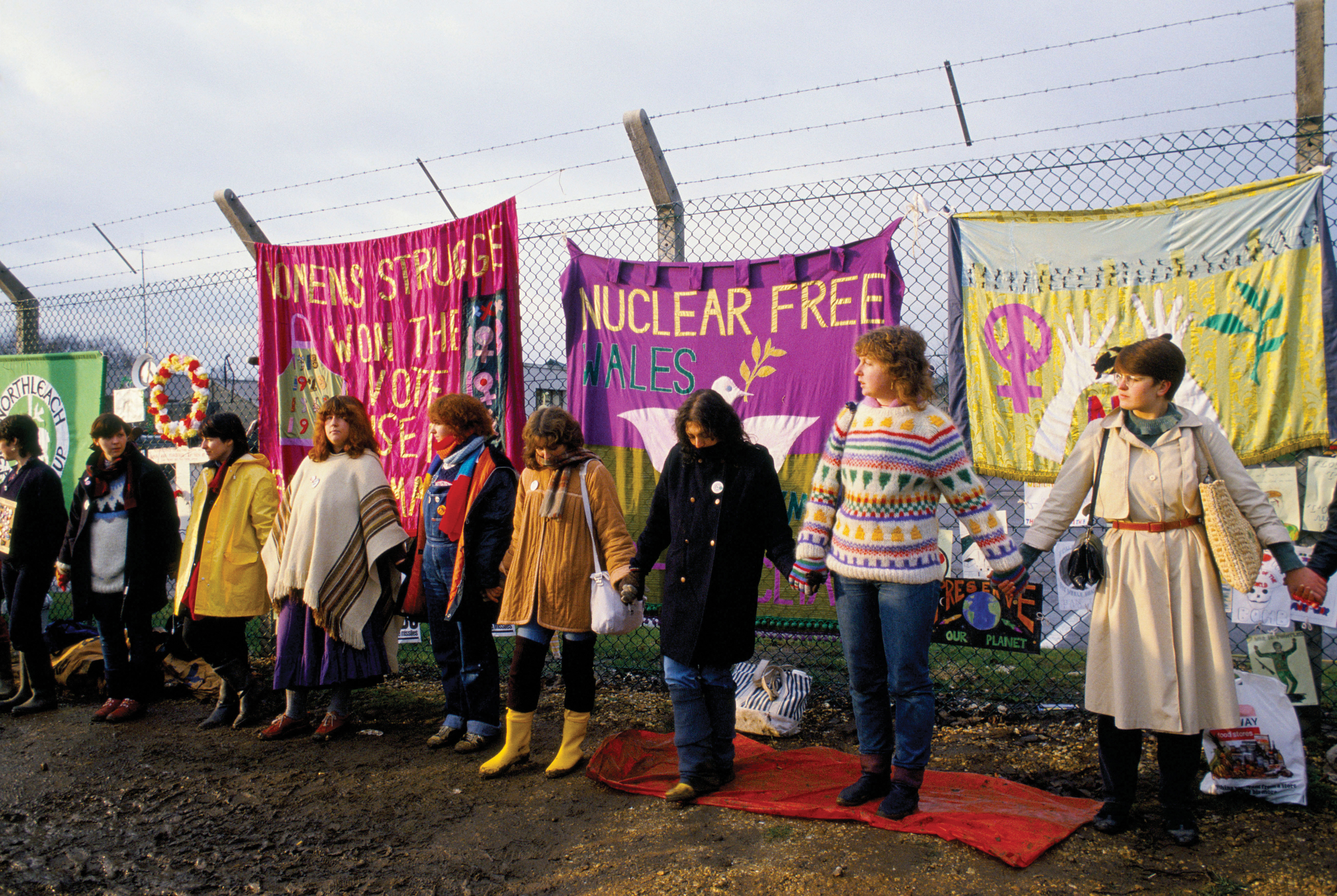
The Women’s Peace Camp blockades Greenham Common with an ‘Embrace the Base’ protest, 1982. Image: Homer Sykes / Alamy

The women who did leave home to take up space at Greenham did so at their peril – not only physically at the hands of the police but also reputationally throughout their towns and villages. They weren’t held up as icons by their children and husbands; they were lambasted for failing their families. 

And this weapon was liberally used by state and media too, shaming them into returning home and if they refused, shaming them on the front pages of national newspapers.  

Advertising helps fund Big Issue’s mission to end poverty

Yet they persisted. Through biting winters and heatwave summers, through prison and beatings and bailiffs and the nighttime assaults by local vigilante groups who tore through camp on motorbikes hurling buckets of blood and maggots. 

Despite every effort by the government to get the women to give up and go home, they stood firm. They crawled through brambles, bolt cutters down their boots to cut the fence, proving how poorly the bombs were defended. They threw carpets over barbed wire and danced on the silos. They sang and weaved and fought and held hands and were funny and refused to back down, and they won. 

When young people, overwhelmed by the challenge before them, ask me what can be done, I point them towards Greenham. Look, I say. Look what they did. Never underestimate the power of being consistently and creatively annoyingBelieve in your rage. There is nothing so powerful as an idea whose time has come. Greenham women are all of us and we are everywhere. 

Fallout by Eleanor Anstruther is out on 21 April (Empress Editions, £12.99).

You can buy it from the Big Issue shop on bookshop.org, which helps to support Big Issue and independent bookshops.

Do you have a story to tell or opinions to share about this? Get in touch and tell us more

Advertising helps fund Big Issue’s mission to end poverty

Change a vendor’s life.

Buy from your local Big Issue vendor every week – and always take the magazine. It’s how vendors earn with dignity and move forward.

You can also support online:
Subscribe to the magazine or support our work with a monthly gift. Your support helps vendors earn, learn and thrive while strengthening our frontline services.

Thank you for standing with Big Issue vendors.

Advertising helps fund Big Issue’s mission to end poverty

Do you know how Big Issue 'really' works?

Watch this simple explanation.

Recommended for you

View all
Striking photos show Israeli and Palestinian mothers walking barefoot through Rome to call for peace
Mothers from The Barefoot Walk. It's a global movement of Israeli and Palestinian mothers standing together to ignite hope and end the cycle of violence
Gaza

Striking photos show Israeli and Palestinian mothers walking barefoot through Rome to call for peace

The Roundhouse's 'critically important' role in punk: From The Ramones to making change in 2026
The Roundhouse CEO and artistic director Marcus Davey
Changemakers 2026

The Roundhouse's 'critically important' role in punk: From The Ramones to making change in 2026

Meet the community group taking on 'absentee landlords' to put empty building in hands of artists
A placard reading Bradford needs cash not cuts
Activism

Meet the community group taking on 'absentee landlords' to put empty building in hands of artists

I shrank my own economy to live a less capitalist life. You could do it too
Society

I shrank my own economy to live a less capitalist life. You could do it too