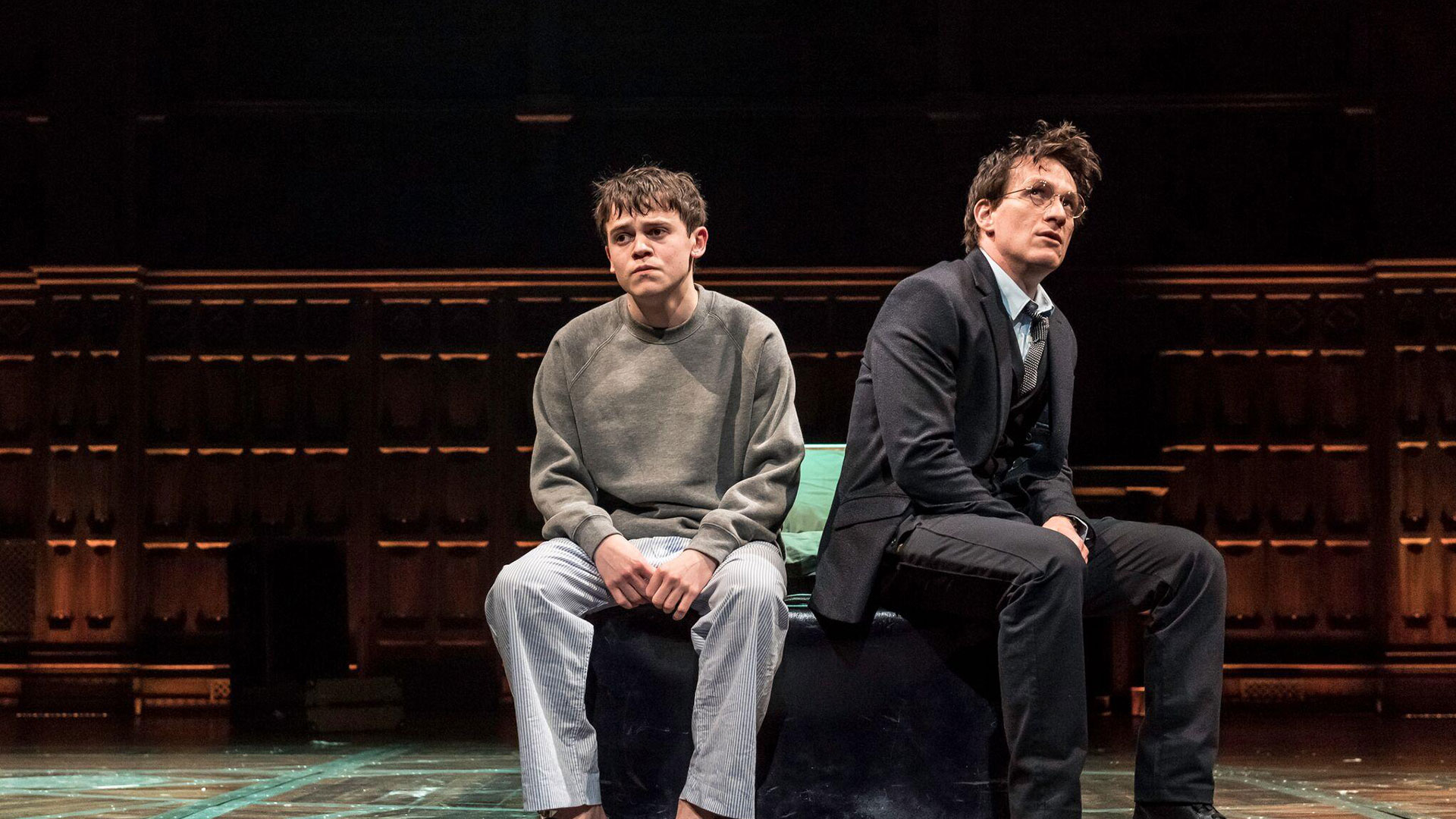
The play is always engaging but only intermittently exciting. The magic of the wizarding world conjured up on stage is often breath taking. Characters appear and disappear in a flash, things fly around. Other aspects of the staging are less impressive. The sets are evocative rather than revelling in the rich minutia that was always a joy of the books and films. The music too suffers in comparison to the sumptuous score from the films, a profound sounding chorus of airy vocals and thumpy beats – the kind of soundtrack you would expect over an advert for a solid German car brand or high definition TV.
For most of its close to five hour running time The Cursed Child is burdened by taking itself too seriously to allow anyone to have too much fun. Only in the last third does it find the right tone, an audience that has been gasping to giggle throughout finally getting relief. It underlines how pious and restrained the rest of the play has been and acts as a reminder that the success of Harry Potter was always in the spellbinding combination of a serious story delivered with a deft, light touch.
The Cursed Child is certainly not a play for children, and especially not one for Potter virgins – a working knowledge of the saga is essential to have a hope of following the plot. While the books were about love, loss and sacrifice, the major theme here is parenting. The books reflected the age of those reading, and since The Philosopher’s Stone was first published in 1997, many of the Potter generation will have become parents themselves.
Continue reading for free
Registration is free and takes less than 30 seconds.
Our supporters make Big Issue’s work possible. Join us to see the impact we’re having together and discover more ways to help people facing poverty access income, opportunity and support.
In the programme there is even an essay by consultant psychiatrist Dr Shirley Gracias, writing about “how childhood experiences can shape the adults we become”. She argues that, “Harry grew up knowing his mother’s love saved him. The young Voldemort on the other hand didn’t have this protection…no one gave him the sensitive and nurturing care that Harry experienced and consequently he had to adapt his relationship strategies to protect himself.”
Clunky conclusion suggesting children from orphanages will grow up to be snake charming Dark Lords aside (and overlooking the fact the Dursleys always told Harry that his parents died in a car accident), if the benefits of coming from a loving, balanced family is a major concern of the play then it is a critical flaw for Albus’ mother, Ginny, to be largely absent from proceedings. The strained father son relationship between Harry and Albus is explored in several emotionally fraught scenes while Ginny remains on the side lines, as she did in the books and films. Poppy Miller has a thankless task in an underwritten role that requires little more than for her to play a one-dimensional concerned mother.
A more fundamental flaw is that instead of forging new ground, the play revisits and revises the Harry Potter story as we know it. Without giving too much away, there is a time travel element, with ramifications that will be no surprise to anyone who has seen Back to the Future, although the play explores these possibilities with far less wit and verve.
Advertising helps fund Big Issue’s mission to end poverty
Though the special effects are impressive, the magic of Harry Potter was always in its story, its heart, its words. The climax of Rowling’s tale was not the Battle of Hogwarts or the epilogue, but the scene set in the spiritual version of King’s Cross Station where Dumbledore explained: “Words are, in my not-so-humble opinion, our most inexhaustible source of magic”. The genius of Rowling was to remind everyone about the potentials of the written word. A phenomenal world full of characters and fantastical creatures had been conjured up by simple words on a page and the act of imagining. The pen is mightier than the wand. The Harry Potter stories contained real magic.
Here that spark is lacking. Perhaps the fact Rowling has not written the play herself results in it seeming like a tepid cover version, without continuing or expanding the world of Harry Potter. The Cursed Child merely counts on the affectionate memories the audience already has. Each emotional climax (including the finale) relies on recycling an event from the books, but in the process of toying with their structure, the very foundations on which The Cursed Child is built are threatened and destabilised.
Jeopardising the outcome of Harry’s story and heartening happy ending, which took over a million words and many years to get to, feels exploitative. Maybe there is no happily ever after in real life – but that was what made Harry’s world more magical than our own.
As the curtain comes down, the audience whoops as if their school had just won the Triwizard Tournament, but the thrills have been in seeing some old friends again instead of undertaking a new adventure, witnessing a spectacle without it being spectacular. All was just ok.
Harry Potter and the Cursed Child, Palace Theatre, London W1
Picture credit: Manuel Harlan
Advertising helps fund Big Issue’s mission to end poverty
Join The Ride Out Recession Alliance
The Ride Out Recession Alliance (RORA) will develop and implement practical steps and solutions to prevent families losing their homes, and help people remain in employment.
Learn More