How did you feel watching the film for the first time? I found it really difficult. I had the weight of all the people who are dead. You have to remember, whilst all this was going on, we were right at the start of the Aids epidemic.
And you were one of the first people in the UK to be diagnosed… I had been diagnosed in October 1982. Really early. And it was a death sentence, it was dreadful. It was called HTLV3 when I was diagnosed and there was very little known about it. What was extraordinary and brilliant at that point – there was an amazing rapport with the doctors because they knew so little. But I had lived in New York in 1974 and had been to San Francisco in 1982, so I was getting a lot of information – not particularly positive, but it was as lot better than the misinformation the Murdoch press and tabloids were giving out.
Did you feel that fear? There was terrible stigma. I had a younger brother training to be a doctor so I was very fortunate. He spent part of the time at the Chelsea and Westminster HIV clinic. I could tell him I was HIV positive, and didn’t need to tell the rest of my family. I knew he could disabuse them if I got seriously ill. They died before I needed to say anything. I’m still here, which is incredible.
Continue reading for free
Registration is free and takes less than 30 seconds.
Our supporters make Big Issue’s work possible. Join us to see the impact we’re having together and discover more ways to help people facing poverty access income, opportunity and support.
Our 2020 Impact Report
The Big Issue has given more than £1 million support to Big Issue vendors struggling due to the lockdown restrictions. To mark the significant milestone, we have published an impact report, documenting the seismic shift the organisation has undergone in the past 12 months.
View Report
When and how did your involvement in politics and activism come about? In December of 1982, I tried to commit suicide but couldn’t bear the thought of someone having to clean up my mess. So I thought, ‘If I can’t kill myself I had better get on and live’. I saw in the gay press that there was going to be this Stand Together around Greenham, Burghfield and Aldermaston. This was 1 April 1983. There was a bus leaving from the Gay’s The Word bookshop. I thought that was a good point to start. I was full of trepidation, I wouldn’t know anybody there and that no one would want to know anybody who had this killer virus coarsing down their veins. But I arrived and it was amazing. There was a guy with this crazy mop of black curly hair, wearing extraordinary pantaloons and Wellington boots. We got together and his name was Nigel and that was it. We started a relationship and we are still living together all these years later. That is quite a tale in itself. Nigel was very politically active.
And how did a group of gay men and women from London join forces to support a small mining community in South Wales? Because my illness was a death sentence, one was always waiting for things to happen. But the important thing was to stay positive, keep busy, and anywhere there could be displacement activity, do it. So for me the miners’ strike was really important. It was such an important issue. I had been an actor, my first incarnation, and did a pantomime in Swansea at the Grand in 1972 during the first miners’ strike and the three-day week. The miners brought down the Heath government, which is one of the reasons Thatcher was so determined to thrash the NUM – for what they had done to her party, even though she didn’t like Ted Heath. That underpinned what was going on around the villification of the miners. For us, as gay men and lesbians, we understood the way the state could attack and oppress you. They were continually harassing gay men in any way they could. So in a way we were natural allies with the miners. And guy called Hugh Williams was a member of LGSM and came from the Swansea area. It was his suggestion that we support the South Wales miners.
What are your main memories from that time? Minibuses, lots of shaking buckets, and the trips to Dulais in South Wales, which were extraordinary. We were full of trepidation. We later found out there was a whole discussion over whether to accept the money, and there were all the jokes. But they accepted our money and invite us down. We had to have driving lessons so we could drive the minibuses, we hired two from Hackney Community Transport and 27 of us set off, got lost, and arrived at 1am. We missed the gig at the Miners’ Welfare – but Dai Donovan let us all sleep on his floor in sleeping bags. The next day, we went to the Miners’ Welfare, walked through an anteroom and double doors into the main hall – and as they opened, this hush fell. One’s heart just sank. But then somebody started applauding. Then the whole room started applauding and the ice was broken.
Advertising helps fund Big Issue’s mission to end poverty
I was a dancer, but not like Dominic dances in the film
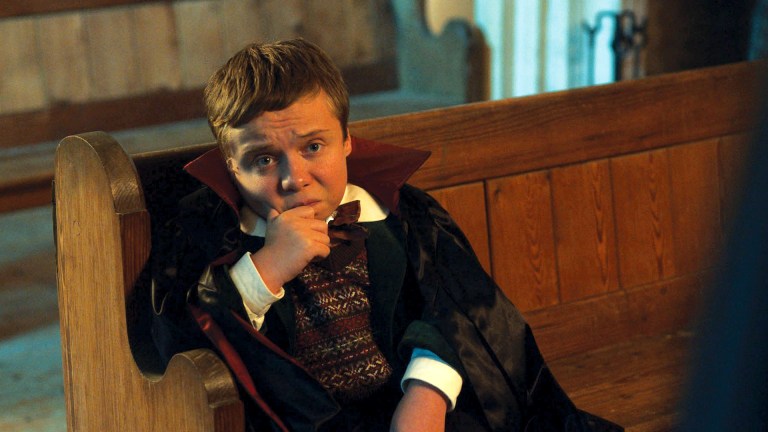
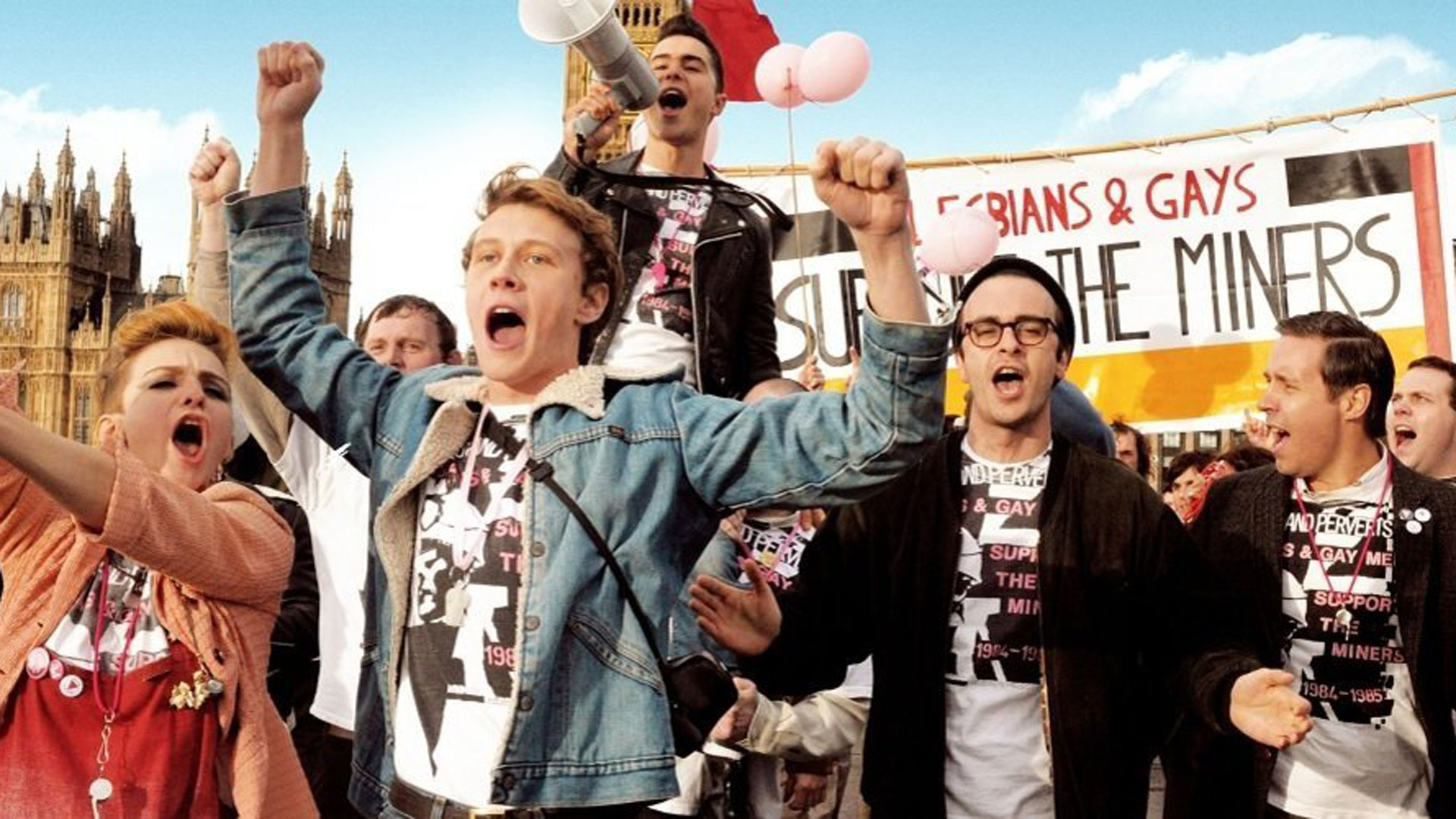
What were your relationships like with the mining community? They were amazing – the generosity of spirit. These people were being hounded and starved into submission, but whatever they had they shared. We had wonderful times – lots of humour and jokes. Cliff, played by Bill Nighy in the film, was lovely. A gently spoken miner, he was gay – it wasn’t out or spoken about, but everyone knew. He loved having us there. It was very special, spending time with him and he took the most amazing photographs – he always had his camera. One he did of us at Hendrid Falls, which he took us to – a single waterfall into a wonderful pool, where we would swim naked. There is another amazing one by a woman called Imogen Cooper, of me clapping my hands in glee – which inspired the dance scene from Pride. I was a dancer, but not like Dominic dances in the film [pictured above] – he trained for months to learn that. It was true, the Welsh Miners didn’t dance – but gay boys dance and the women would dance. So we were a breath of fresh air. The women were extraordinary, very strong. And Sian James [played by Jessica Gunning in the film] is a remarkable woman. What she has accomplished, in terms of going back to school then university and becoming MP for for Swansea East in incredible.
Did the creative licence the film took with your story bother you? What was important was to tell the story. What is clear from his telling is the kind of reason for why people did it. He has got the essence of communities coming together – and that when they do, you can achieve anything. The screening for members of LGSM and people from the Dulais community was an extraordinary coming together. At the end, Dai Donovan got up, thanked Stephen, Matthew and the cast and crew, for creating something we can show our children, grandchildren and great grandchildren so they can understand what this strike was about. For him to be able to say that means they caught the essence of the story.
Is pride something you feel about your story and the film? Oh, I felt such pride. The second time I saw it, I could actually watch it and was amazed. Every time I have seen it, and I have seen it a number of times, the scene with Jonathan and Sian in the hospital gets me. The tears start rolling down my face. It is crazy. It gets everybody, old or young. What is so mindboggling is that because of LGSM, the NUM first of all came on gay pride – they brought their brass band and marched with us and we lead gay pride that year. But then for the South Wales miners to put pressure on the NUM to use their block vote to get lesbian and gay men’s rights on the political agenda is phenomenal. The fact that the miners gave lesbians and gays their rights, you couldn’t make it up, could you?
Pride is out now on DVD