Advertising helps fund Big Issue’s mission to end poverty
Health

We all owe a debt of gratitude to the brave pioneers of anaesthesia

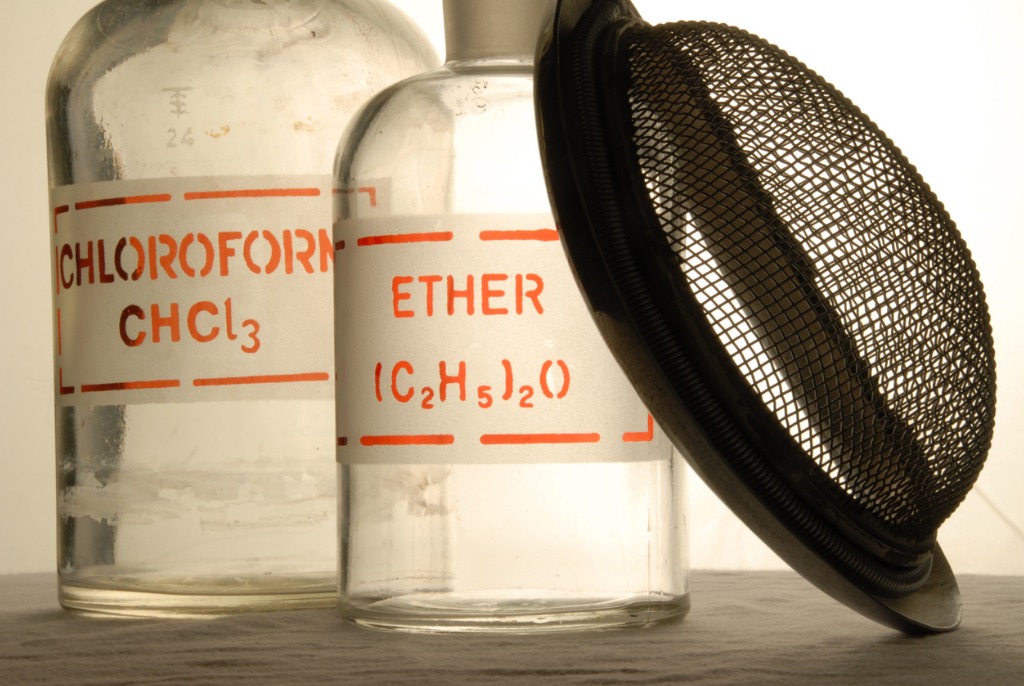
Ether, revolutionary as its effects might be, proved less than perfect. It had an unpleasant smell, caused airway irritation and had to be administered in a relatively large dose

Anaesthesia – the term coined by Oliver Wendell Holmes in 1846 following the discovery of ether – means lack of sensation. General anaesthesia is a drug-induced, controlled, reversible loss of consciousness that permits the performance of painful operations which could not be undertaken in the conscious state. Anaesthesia was undeniably a wonderful discovery, but the real wonder is that this medical treasure was ever uncovered at all, dependent as it was upon empirical knowledge gleaned via the highly risky means of self-experimentation.

The search for anaesthesia became something of a holy grail in medicine, seeking an answer to the vexing question of how a powerful narcotic poison might be administered to produce complete insensibility without significant risk to life. Poppy, henbane, mandragora, hemp and alcohol had all been used, but their effects found to be incomplete, inconsistent and frequently dangerous.

This is why we all owe a debt of gratitude to the brave pioneers who were not averse to performing experiments upon themselves, risking life and limb in their quest for a means of facilitating painless surgery.

William Morton breathed ether himself on several occasions before the first successful demonstration of ether anaesthesia at the Massachusetts General Hospital in October 1846. James Young Simpson, in 1847, was determined to find a ‘better drowsy syrup’ than ether and spent many a long evening after dinner sniffing tumblers of volatile substances, often achieving nothing more than a blinding headache and incapacitating dizziness for his trouble. Yet he persevered. Ether, revolutionary as its effects might be, proved less than perfect. It had an unpleasant smell, caused airway irritation and had to be administered in a relatively large dose, which was problematic when heavy glass bottles needed to be carried up three or four flights of tenement stairs. It was also flammable, which was potentially hazardous at a time when artificial light was provided by gas or candle.

On November 4, 1847, Simpson found what he had been looking for. He woke up under his dining room table, having lost consciousness after inhaling a substance called chloroform.

Surgeons took to ether and chloroform with a remarkable degree of rapidity, considering anaesthesia to be a great boon conferred on all of mankind. Midwifery was another matter. Concerns were raised about the wisdom of relieving what was considered to be a perfectly normal pain. Medical men as well as clergymen quoted Genesis: “In sorrow shalt thou bring forth children”, promoting the notion that anaesthesia in childbirth was anti-scriptural.

Advertising helps fund Big Issue’s mission to end poverty

There was also concern regarding the disinhibiting effects of anaesthesia. It was reported that under its influence women had used obscene language: language that they ought never have had the opportunity to hear, far less speak. This fact alone was deemed sufficient to prevent the use of chloroform in English women.

However, women in general had their own ideas upon the subject. Chloroform was used in many a confinement, Simpson having used it in 150 cases within a year of its discovery. When it became known that Queen Victoria had inhaled chloroform during the birth of her eighth child in 1853 — news that was initially suppressed by her medical attendants — any residual hostility faded.

Nonetheless, there remained those who held on to the view that there was impropriety in pain relief, implying an impious distrust of divine providence. In response to such concerns about lessening the pangs of child-bearing by anaesthesia, one lady was overheard to remark: “You need never be afraid that there will not be enough of suffering in the world.”

Marisa Haetzman is a former anaesthetist and medical historian, and half of crime duo Ambrose Parry, the penname of Haetzman and award-winning author Chris Brookmyre. Their first book, The Way of the Flesh, (Canongate) is out now.

Image: iStock

Advertising helps fund Big Issue’s mission to end poverty

GIVE A GIFT THAT CHANGES A VENDOR'S LIFE THIS CHRISTMAS 🎁

For £36.99, help a vendor stay warm, earn an extra £520, and build a better future.
Grant, vendor

Recommended for you

View all
Renowned heart surgeon Magdi Yacoub: 'It's essential in life, and in science in particular, to be humble'
Letter To My Younger Self

Renowned heart surgeon Magdi Yacoub: 'It's essential in life, and in science in particular, to be humble'

Most girls drop out of sport by puberty. Teenage athlete Issey Kyson is on a race to change that
Sport

Most girls drop out of sport by puberty. Teenage athlete Issey Kyson is on a race to change that

Most people with diabetes have faced shame and judgement: 'It's as voluntary as getting a cold'
Sam Buchanan on the red carpet promoting Amy Winehouse biopic Back to Black.
Diabetes

Most people with diabetes have faced shame and judgement: 'It's as voluntary as getting a cold'

This premature baby clothes business is helping newborns and parents one joyful baby vest at a time
Lorna Tallowin pictured with her son and holding Super Dinky clothing items
Health

This premature baby clothes business is helping newborns and parents one joyful baby vest at a time