Advertising helps fund Big Issue’s mission to end poverty
News

Illiteracy is high in prisons. Learning to read can reduce reoffending

A high percentage of prisoners struggle to read - but the stigma around illiteracy means many are reluctant to get help. Pioneering charity the Shannon Trust breaks barriers to education.

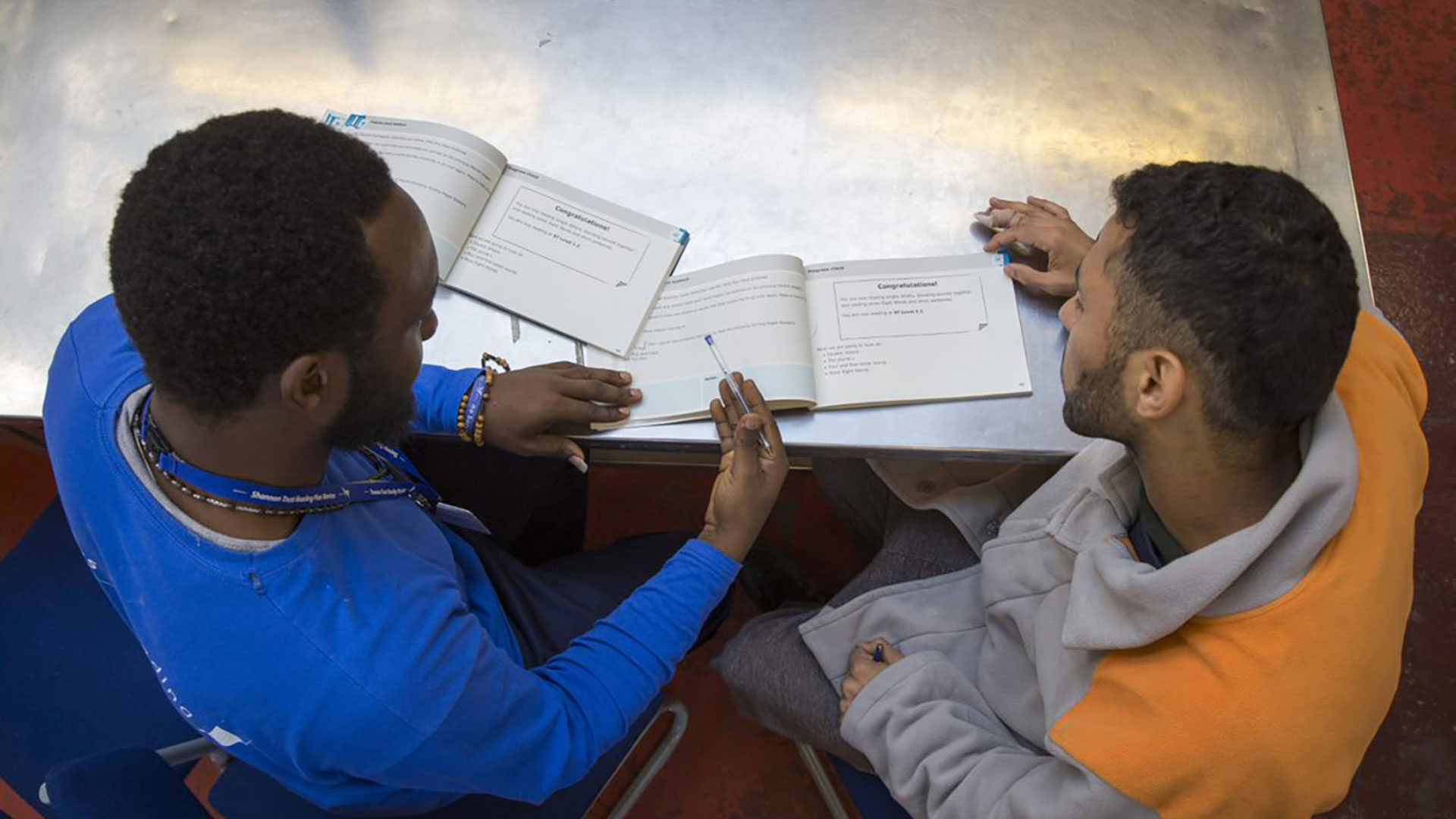
Tackling illiteracy in prison - man teaching another man to read

Learning to read is a gift for life for prisoners. Photo: Shannon Trust

It’s well understood that prisoners who stay in touch with their families have improved chances on release. 

But during the pandemic, like everywhere else, visitors have not been allowed. What makes it worse is that many of those on the inside are unable to read letters from home or write one back.

Ian Merrill, chief executive of the Shannon Trust, a charity that helps prisoners learn to read, says: “Fifty per cent of people in prison have a literacy level at or below that expected of a child leaving primary. Around 20 per cent of the total prison population read at a much lower level, where they’d struggle with the most basic tasks.” 

Finding a job on leaving prison is not easy, but it doesn’t take much to realise how much more limited people’s options are if they can’t read. Learning to read is an effective, achievable and yet relatively unrecognised tool for reducing reoffending. It can reduce prisoner stress and vulnerability, improve resilience, self-confidence and future prospects. 

Lockdowns have taken income away from hundreds of Big Issue sellers. Support The Big Issue and our vendors by signing up for a subscription.

Even before Covid-19, prisoners were often reluctant to admit being unable to read, often preferring to tick the same menu option and eat the same food every day rather than show vulnerability and ask someone to read the menu for them. Many have lived a life of bluffing to survive, and conventional education had clearly failed to reach them. 

Shannon Trust’s confidential, one-to-one mentoring by fellow prisoners and reading guides have helped to remove the stigma felt by prisoners learning to read. A combination of achievable goals, small steps and a non-judgemental approach allows every learner to go at his or her own pace.

Advertising helps fund Big Issue’s mission to end poverty

With Covid-19 halting movement and mixing within prisons, the charity’s methods had to adapt. The team began producing activity packs for prisoners with low-level reading skills to help with boredom during lockdown. They also produced a mentor training CD so that new prisoner mentors could still be recruited despite the fact that volunteers could not train them in person. Self-study video and digital options are being tested, so prisoners with access to DVD players or an offline laptop can also teach themselves.

“Being able to understand our audiences and innovate has become more important than ever, and we’re doing as much as we can with the resources we have,” says Merrill. “The funding landscape has changed rapidly due to Covid-19 and our income is less certain for the future, but we’re working hard to find ways to continue delivering our services.”

The evidence shows that learning to read benefits not only the learners – prisoners who, for the first time in their lives, can read a letter from home, understand a canteen menu, or fill in an application form – but the mentors benefit too. They find a new glow of self-esteem from the joy – no lesser word will do – that comes from knowing they have given a fellow inmate a gift for life.

Continue reading for free

Registration is free and takes less than 30 seconds.

Our supporters make Big Issue’s work possible. Join us to see the impact we’re having together and discover more ways to help people facing poverty access income, opportunity and support.

And the rest of us benefit, because prisoners who can read are less frustrated, more able to take advantage of employment opportunities, and more inclined to be productive members of society when they are at liberty again. 

If you’re interested in supporting Shannon Trust’s work, find out more at shannontrust.org.uk

Advertising helps fund Big Issue’s mission to end poverty

Do you know how Big Issue 'really' works?

Watch this simple explanation.

Recommended for you

View all
It's 10 years since BHS folded. How do we put the spark back into the British high street?
The site of the old BHS in Kirkcaldy has been spruced up by locals but remains empty
Community

It's 10 years since BHS folded. How do we put the spark back into the British high street?

NEET numbers fall but young people still face jobs crisis: 'This is not a turning point'
people walking
NEETs

NEET numbers fall but young people still face jobs crisis: 'This is not a turning point'

Can transforming closed pubs into homes offer a solution to the housing crisis? 
Keely Dalfen (second from right) with some of the team at The Brick
Housing

Can transforming closed pubs into homes offer a solution to the housing crisis? 

'Disabled people are having to work 10 times harder to live their life and pursue their dreams'
Bella Roberts
Employment

'Disabled people are having to work 10 times harder to live their life and pursue their dreams'