Advertising helps fund Big Issue’s mission to end poverty
Social Justice

Landlords urged to give up spare rooms to host refugees made homeless by Home Office

London boroughs are making use of government funding to stop refugees becoming homeless, after Home Office policies pushed refugees onto the streets

a tent on the street

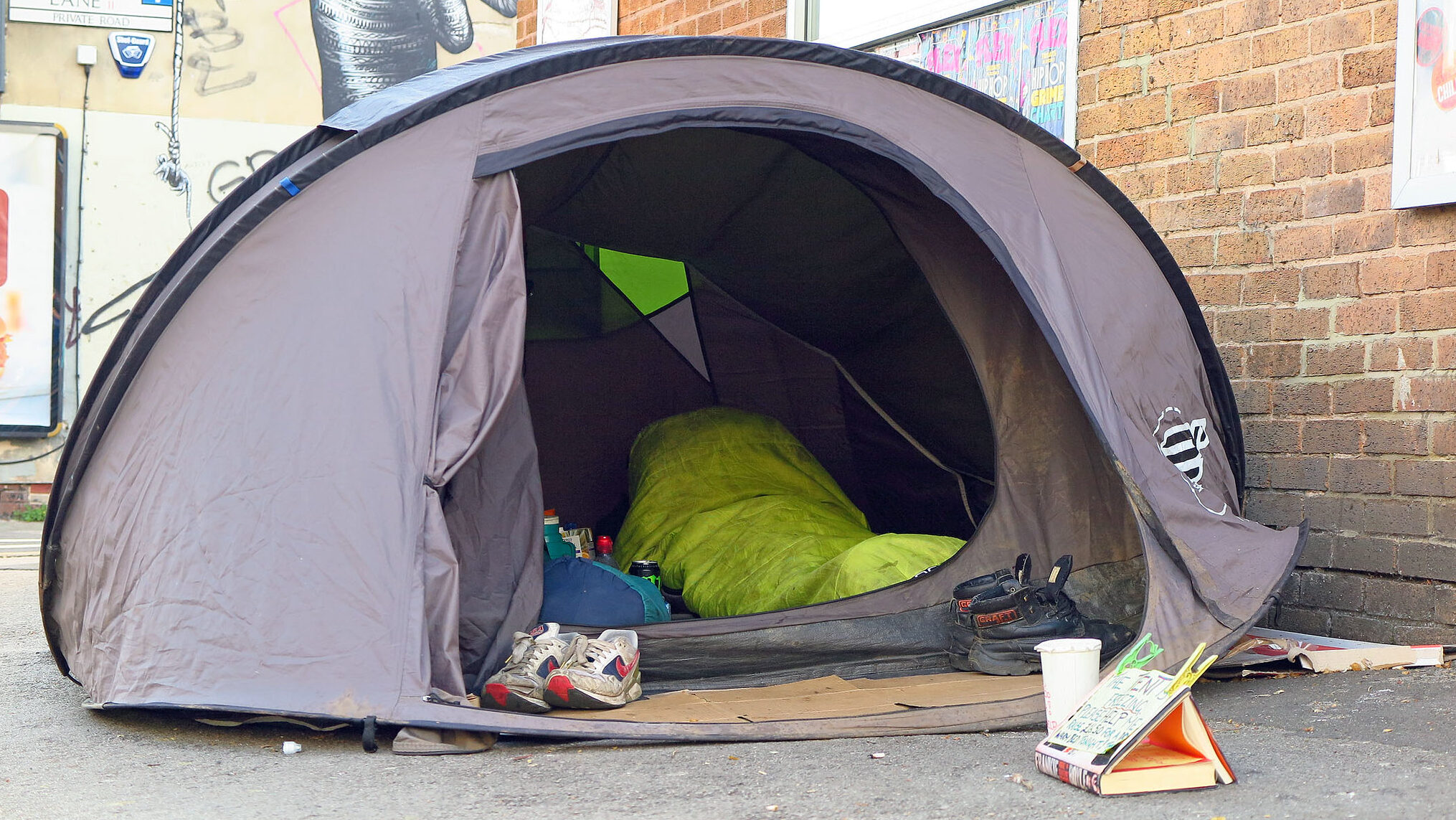
Thousands of refugees have been made homeless after leaving hotels in the past year. Image: Tim Dennell/Flickr

London landlords are being encouraged to give up spare rooms to help keep refugees off the streets after being evicted from asylum hotels.

In some London homelessness shelters, every guest has been a refugee recently granted status and made to leave asylum accommodation at short notice, said Jacob Dimitriou, England director of Housing Justice, one of the organisations behind the scheme. At least half of the bed spaces available in the capital are being used by asylum accommodation leavers, he added.

As the Home Office’s drive to clear the backlog forces refugees onto the streets in vast numbers, London boroughs are making use of existing funding from Michael Gove’s department, the Department for Levelling Up, Housing and Communities, for a new lodging scheme to deal with the impact.

“We’re absolutely clear that this is going to be a good solution for some people, but we’re talking nowhere near the numbers we have been seeing so far, and we’ll continue to see through the winter,” Dimitriou told The Big Issue.

“For some people it’s going to represent a good stepping stone to their settlement into British society.

“Good stable relationships can really support a person to progress away from homelessness.”

Advertising helps fund Big Issue’s mission to end poverty

Backed by the Greater London Authority and London Councils, the scheme hopes to help refugees form a network and avoid long-term homelessness

The first landlords have been registered to the scheme, and lodgers are expected to move in within a month. Costing around £170,000, the pilot will initially support 45 lodgers.

Michelle Binfield, London Councils’ rough sleeping programme director, said: “Boroughs are deeply concerned by refugees ending up rough sleeping on the streets of the capital after leaving Home Office accommodation, which adds pressure to local homelessness services that are already incredibly stretched.

“This pilot project ensures refugees have a roof over their head but also access to the wider assistance they need, such as around language and employment support. Through providing this range of support alongside lodging arrangements, we hope to prevent entirely avoidable homelessness and to help the refugees successfully settle into their new lives here.”

Funding given to the scheme covers landlord expenses such as painting rooms to make them habitable, while landlords themselves earn rent for the rooms, paid through universal credit granted to newly-recognised refugees.

Placements are designed to run for around six months, and landlords can register their interest for the scheme here.

The Department for Levelling Up, Housing and Communities has been contacted for comment.

Advertising helps fund Big Issue’s mission to end poverty

Do you know how Big Issue 'really' works?

Watch this simple explanation.

Recommended for you

View all
One in three terminally ill people miss out on benefits in the final year of their life
homelessness dying with dignity
benefits

One in three terminally ill people miss out on benefits in the final year of their life

The US-Iran war creates a 'perfect storm' for the UK's food supply 'hitting the poorest hardest'
Image of a woman working at a food bank
Social Justice

The US-Iran war creates a 'perfect storm' for the UK's food supply 'hitting the poorest hardest'

What would happen if the UK's volunteers stopped volunteering?
Volunteering

What would happen if the UK's volunteers stopped volunteering?

What does the end to the two-child limit on benefits mean for you?
Child poverty

What does the end to the two-child limit on benefits mean for you?