A disabled journalist has accused the government of making “secret cuts” after her Access to Work grant was reduced by 80%.
Emily Davison, who is legally blind, spent years applying for journalism jobs but felt that stigma around her sight impairment held her back.
“I was really struggling because I wanted to get into the industry… I feel that often there was that kind of stigma about my disability,” she told Big Issue. “Because sometimes, conveniently if I didn’t say that I was disabled for a job, I would find that I would be kind of more likely to get an interview.”
Five years after graduating, Davison secured a full-time reporting role at a local newspaper in south London.
With support from Access to Work (AtW) – a Department for Work and Pensions (DWP) scheme that helps disabled people stay in employment – she said she was able to “go for it”. But last month she was told her support worker hours would be cut from 37 a week to just eight.
Advertising helps fund Big Issue’s mission to end poverty
Advertising helps fund Big Issue’s mission to end poverty
The 80% reduction could force her out of work. “It was a bombshell,” she said. “It made my mental health really spiral – I was just so distraught.”
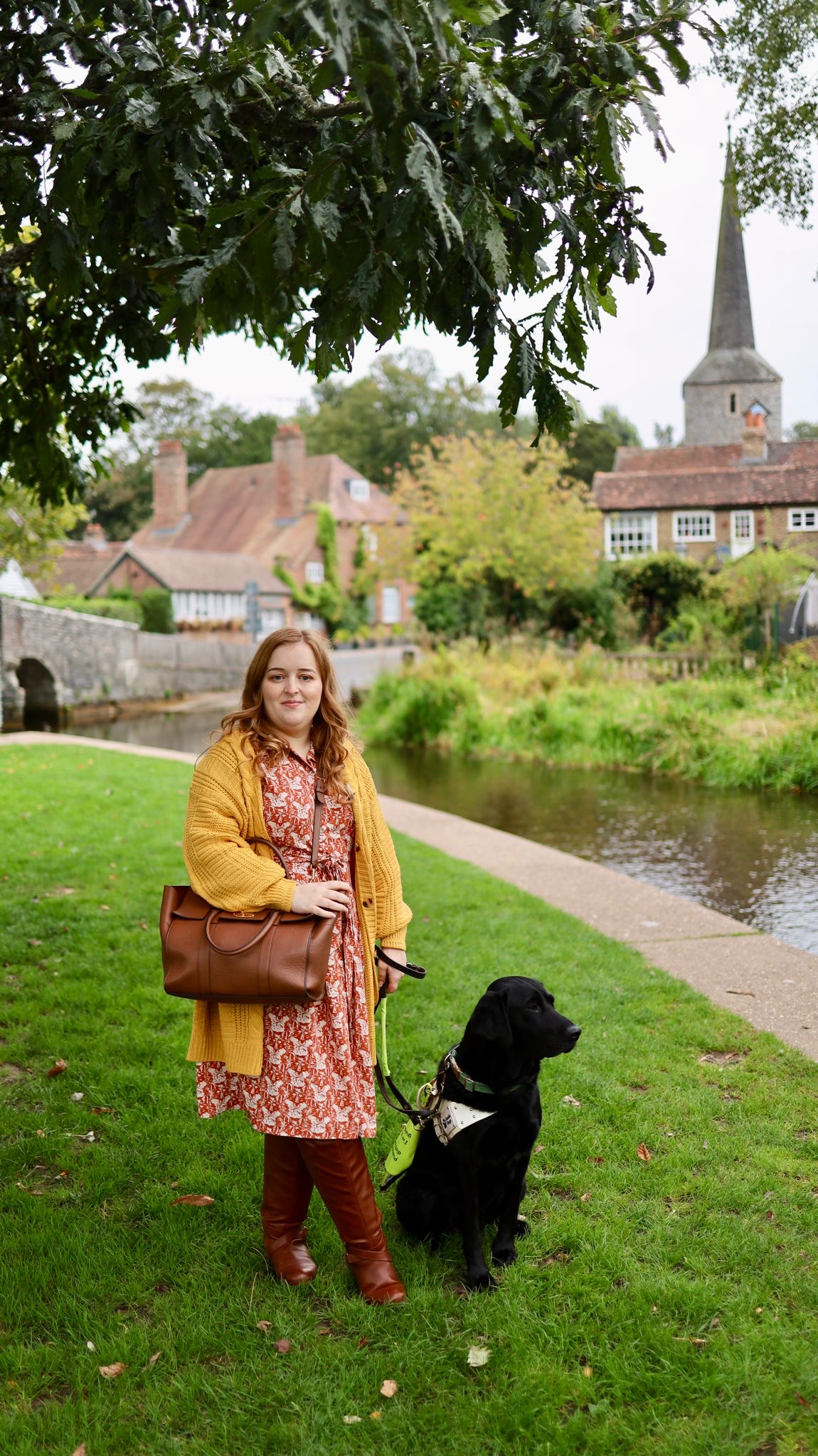
Emily Davison. Credit: Supplied.
Davison’s AtW support covers taxi journeys to and from work, a support worker and specialist equipment. Without the grant, she said she cannot afford any of these. Her support worker will also suffer the consequences.
“It was a real shock to me, but only that, it was a real kind of blow to me and my support worker. I’ve worked with him for a really long time and he’s lost his income. He’s a carer. What’s he supposed to do?”
Keep reading the journalism that powers our mission
Register free to continue and learn more about the stories, campaigns and the support we provide, helping people facing poverty across the UK.
There has been no official change to AtW guidance. But, as Big Issue has previously reported, disabled people say there is a growing pattern of reductions.
Since early 2024, claimants have reported significant cuts at the renewal stage. Rejections have also risen sharply, from 24% in 2023–24 to around a third of all applications made between April and October last year.
Davison said her case points to stealth cuts.
“They’re claiming that they haven’t changed the guidelines,” she told Big Issue. “But I don’t see how they can claim that … when my support has dropped so severely but my needs haven’t changed.”
Figures published by the National Audit Office (NAO) earlier this month showed the system under mounting pressure. Average processing times nearly quadrupled over four years, rising from 28 days in 2020–21 to 66 days in 2024–25, and reaching 109 days in November 2025.
Roisin Jacklin, policy lead at RNIB, said the scheme was “plagued” by delays.
“Some people [are] waiting over nine months for support which is putting their job at risk. Support worker hours and rates have also been cut when support has been renewed, which is a major concern too for those in work,” said Jacklin.
Demand has surged far faster than capacity, the NAO found. Applications doubled between 2018–19 and 2024–25, from 76,100 to 157,000, driven by “increased identification of mental health conditions and neurodiversity”.
Spending has surged accordingly, nearly doubling from £163 million in 2018–19 to £321m last financial year.
Against that backdrop, Davison said it was hard not to see the reductions as cost-cutting. But they directly undermining the government’s pledge to help disabled people into work, she said.
“People who are disabled, they’re not going to be able to sustain this,” she said. “If they’re having their hours and their support and grants cut, they’re going to be losing their jobs.
“If the government, are putting pressure on disabled people to, as they say, get out of benefits and into work, well then there has to be contingency that they can actually do that.”
Jacklin echoed those concerns.
“Cuts to Access to Work won’t deliver the government’s aim to support disabled people into work,” she said. “The support available through the scheme must be maintained. As Access to Work is reviewed, disabled people must also be able to have their say on any changes before these are brought forward.”
Davison has appealed her reduction and been told to apply for reconsideration – a process that can take months with no guarantee of success.
Meanwhile, official changes to AtW appear imminent. A government consultation closed at the end of June, with ministers now considering how to rework the scheme.
If she could speak directly to those in charge, Davison said she would ask one question: “What do you actually want of disabled people?”
She added: “Because, you know, we hear this rhetoric so often: ‘we want to get disabled people off benefits into work’.
“Don’t you think disabled people want to be in work? Do you honestly think any disabled person wants to be degraded and questioned and gaslit all the time? Because that’s what the benefits system can do to you.”
“We want to work. And we’re fed this narrative that we’re lazy… But if you’ve got someone who’s had their hours cut and they can’t sustain a job, what are they supposed to do?”
A DWP spokesperson said that Access to Work “supports thousands of sick or disabled people to start or stay in work, but the scheme we inherited is failing employees and employers.
“That’s why we’re working with disabled people and their organisations to improve it – ensuring people have the support, skills, and opportunities to move into good, secure jobs as part of our Plan for Change.”
Buy from your local Big Issue vendor every week – and always take the magazine. It’s how vendors earn with dignity and how we fund our work to end poverty.