


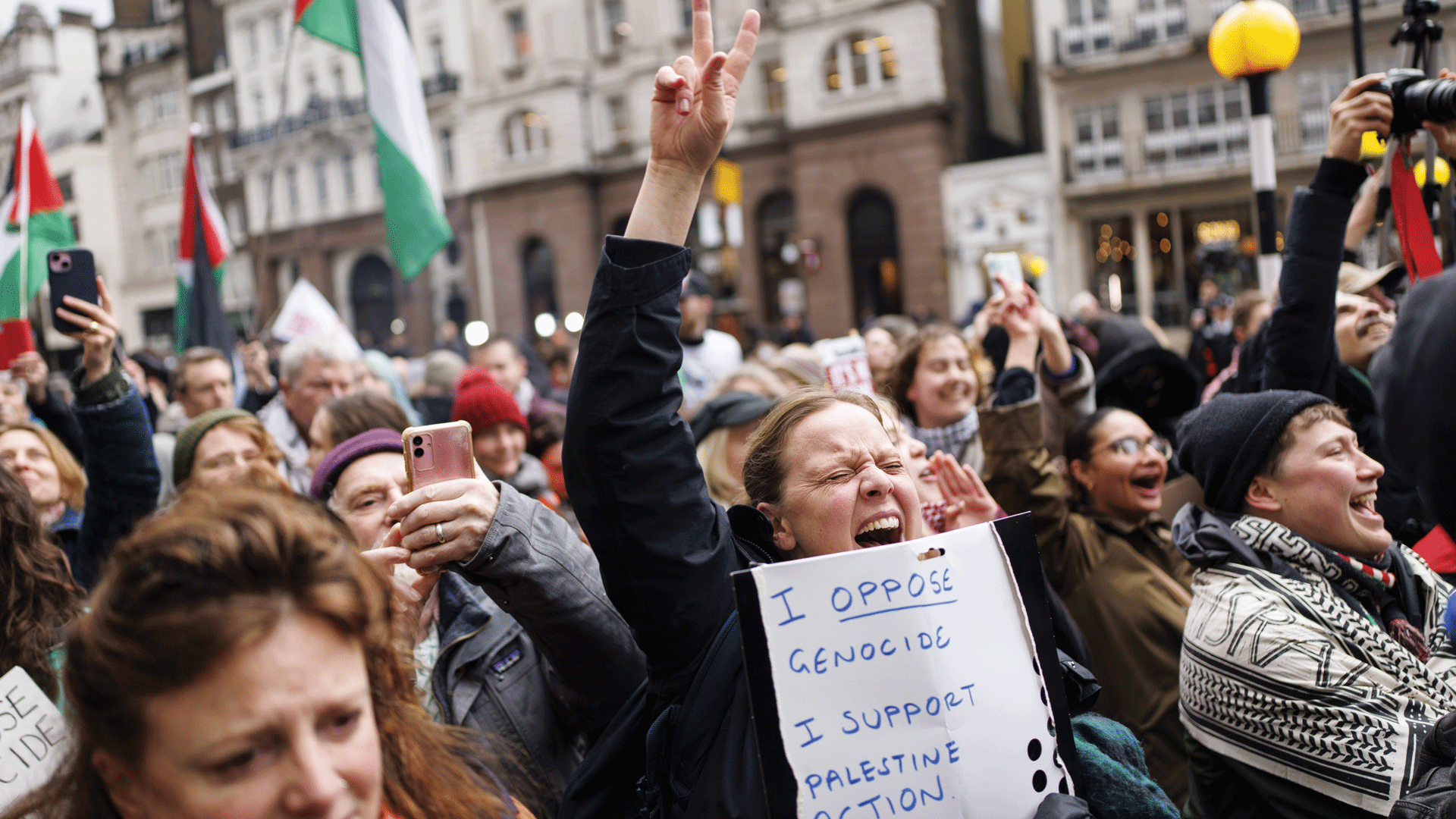
Three weeks ago, the High Court ruled that the proscription of Palestine Action was unlawful. The judgment provides helpful insight into some of the thornier issues posed by how proscription – and the counter-terror regime more widely – currently operates.
What the judgment didn’t say is also revealing: it was accepted that three of Palestine Action’s activities met the statutory threshold for terrorism (a low bar) but that this was not enough to warrant the rights-restrictive power of proscription, given 99% of their actions did not meet the definition of terrorism.
While the judgment is an important victory (for now, government intends to appeal), the court did not specify what proportion of technically terrorist actions would justify the use of counter-terror powers.
The relevant part of the definition in the Terrorism Act 2000 covers an act (or threat of an act) involving serious damage to property, designed to influence a government to advance a political, religious, racial or ideological cause.
This potentially captures a huge range of activities, from toppling the Colston statue at a Black Lives Matter protest to filling US bomber engines with nuts and bolts at RAF Fairford to protest the Iraq War. Crucially, these types of protest or direct action have (rightly) never been treated as terrorism in the UK, despite potentially being technically terrorist under the statutory definition.
The definition of terrorism is intentionally broad. It was designed to capture more behaviour than terrorism alone. That overbreadth was presented to parliamentarians as acceptable because ministers, police and prosecutors had exercised their discretion well in the past.