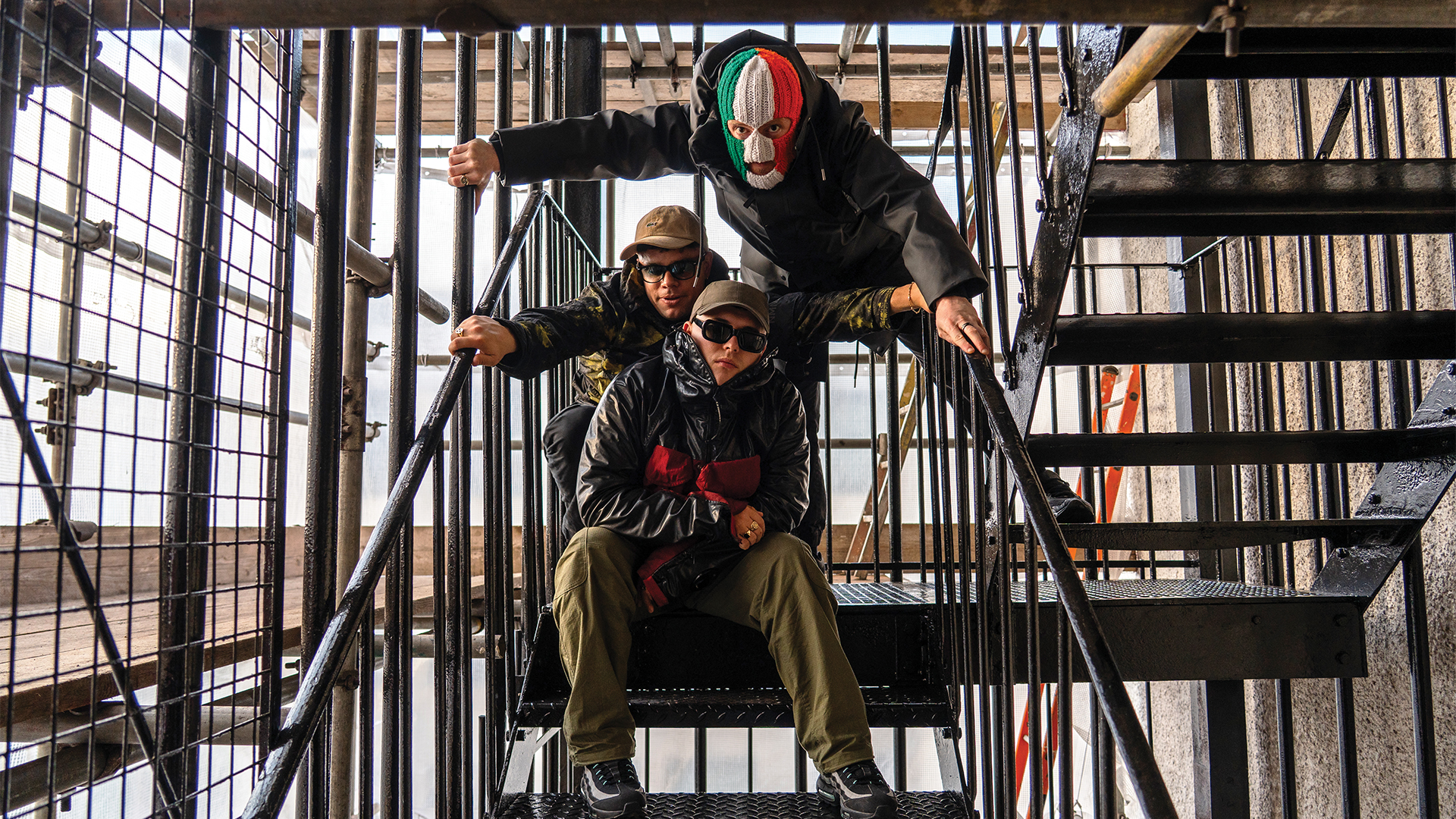
JJ Ó Dochartaigh can’t be with us today. That’s DJ Próvaí, the tricolour baclava-wearing teacher turned musical provocateur and third member of Kneecap. While I’m sitting down with Mo Chara and Móglaí Bap in central London, Ó Dochartaigh, following the photoshoot, has had to zip back to Ireland. Because this morning he’s working on an Irish language version of SpongeBob SquarePants. His exact involvement is unclear, even for his bandmates, but the fact that he’s doing it at all feels incredibly Kneecap. Expect the unexpected, subvert whatever you think you know.
We’re in the fantastically chaotic and well-appointed office of their record label in the heart of Soho. They’ve been in town for a couple of days, priming the pumps for the arrival of their album. They’ve been enjoying their time – heads are a little furry. They’re wolfing down bacon rolls. Mo Chara in particular is feeling it. He wears dark glasses for most of the interview.
Really, you couldn’t blame them for blowing off some steam. The Belfast/Derry trio have been carried on a whirlwind for the past year, becoming lightning rods for moral panic and Westminster governmental banning calls. It was “a storm, right in the eye of storm”, says Naoise Ó Cairealláin, 32, (Móglaí Bap), the founder member.
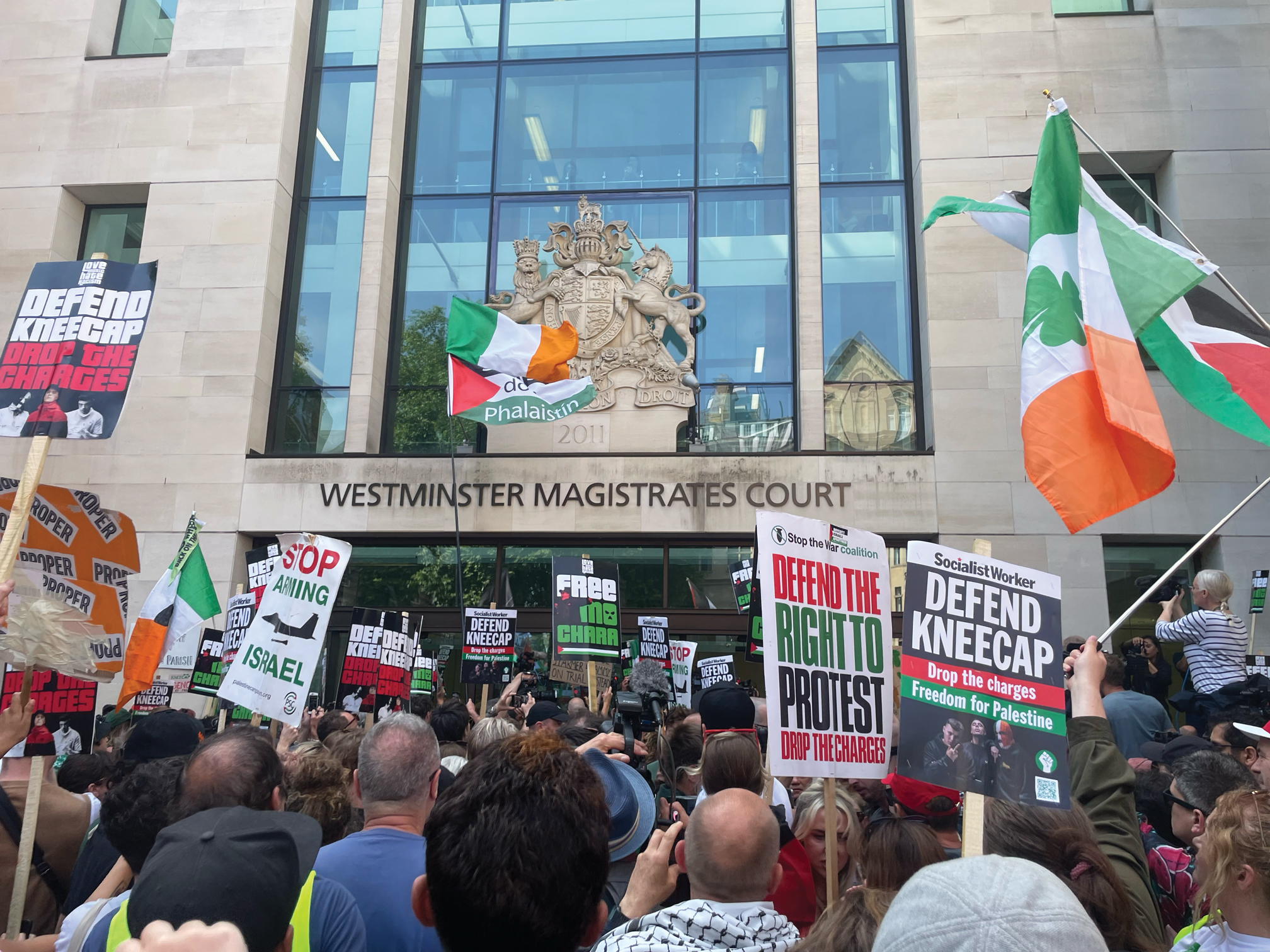
There has been an aborted trial on terrorism charges, after Liam Óg Ó hAnnaidh, 28, (Mo Chara) was accused of showing support for a proscribed terror group by grabbing a Hezbollah flag tossed onstage by a fan at a show in London in autumn 2024.
Mo Chara supporters outside court, August 2025. Image: Toby Goodyear
The government’s appeal against a judge’s decision to throw out the charges, on a technicality, was lost at the beginning of March.
Owing to the band’s commitment to Palestine and opposition to Israel’s military campaign in Gaza, they have been accused of antisemitism, something they strongly reject. Hungary banned them. So did Canada. Ongoing controversy following a highly charged set at the 2025 Coachella festival led to visa problems blocking US performances, where they had been at a tipping point and heading to major success.
Advertising helps fund Big Issue’s mission to end poverty
Advertising helps fund Big Issue’s mission to end poverty
There was personal sadness too. Móglaí Bap’s father, Gearóid Ó Cairealláin, an Irish language advocate, playwright, and foundational in the rise of the Irish language in Belfast, died in December 2024. The band went from Oscar longlists, a Bafta and other film festival awards for their self-titled semi-autobiographical origin story to being public enemy number one, facing ignominy and a long jail stretch, all in a matter of months.
Meanwhile, Spotify revealed that by the end of 2025 they were bigger than The Beatles in Ireland.
Read more:
Keep reading the journalism that powers our mission
Register free to continue and learn more about the stories, campaigns and the support we provide, helping people facing poverty across the UK.
That’s a lot going on. If he could go back, would Mo Chara have picked up the flag?
“Ah see, it’s one of those things,” he says. “I don’t think my lawyer would be too happy me mentioning anything about it. When you’re playing a gig it’s impossible to be perfectly conscious all the time. I don’t remember all – and that’s not just from drink, that’s pure adrenaline. I can’t be completely responsible all the time.”
“Studio was our time to process stuff,” says Móglaí Bap. “You’re doing tunes and you wouldn’t really know what you’re saying in a song until you hear it back. Getting through the last year is a big part of it. Sometimes what you’re feeling you don’t know until time passes. We’re Irish. We have this innate inability to complain too much. It’s something in the DNA.”
Advertising helps fund Big Issue’s mission to end poverty
“Yes,” says Mo Chara, “Take some time away from the madness. Sit down and go through your mental folder and process things then. If you think about it too much every day, it’d get the best of many people.”
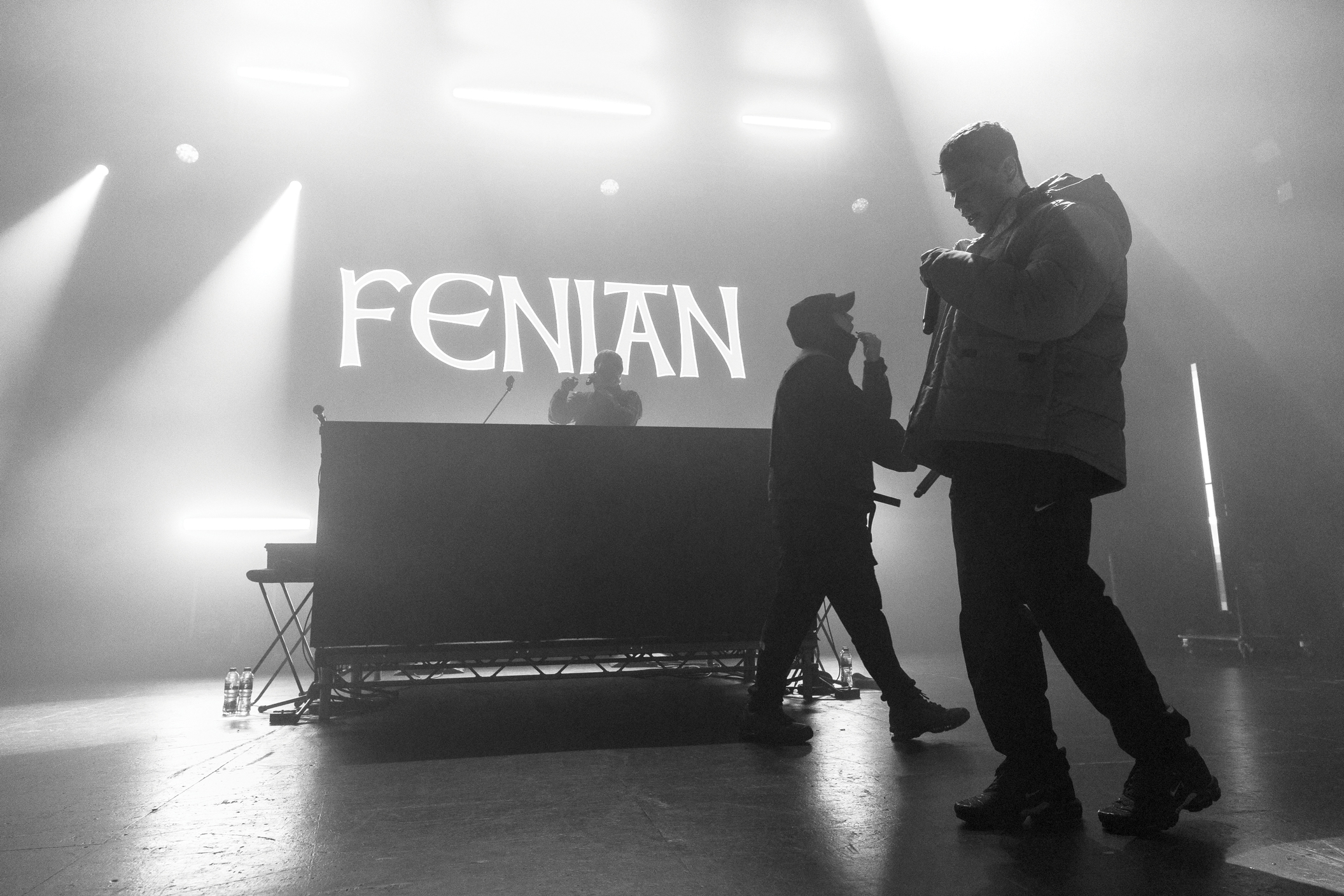
Kneecap in concert, O2 Academy Birmingham, 27 November 2025. Image: Sachin Jethwa / Shutterstock
The album, Fenian, coming in April, is a step forward for Kneecap. The curious thing about them was how quickly they became Kneecap, an idea and quintessence that is bigger than the three members. They have their own gravity. It’s not about self-aggrandisement; rather it’s distilling something in the ether that nobody else could find.
The idea of Irish language hip-hop could have been a gimmick but instead makes absolute sense. Móglaí Bap first planted the seeds in 2016 when he heard Mo Chara played guitar and spoke Irish. He was involved in an Irish language festival in Belfast and was trying to do something new. Mo Chara’s interest at the time ran to Oasis and The Stone Roses.
“People wouldn’t maybe know that, but that’s that was my kind of music that was, you know, suede Adidas, and fucking bucket hats everywhere I went.”
It was a moment for him when Noel Gallagher, a man proud of his Irish heritage, showed up at a Kneecap show at Glastonbury in 2024, and loved it. They kept in touch. That got Mo Chara tickets to Wembley to see Oasis last summer. “I love High Flying Birds too. It was really validating that he liked us.”
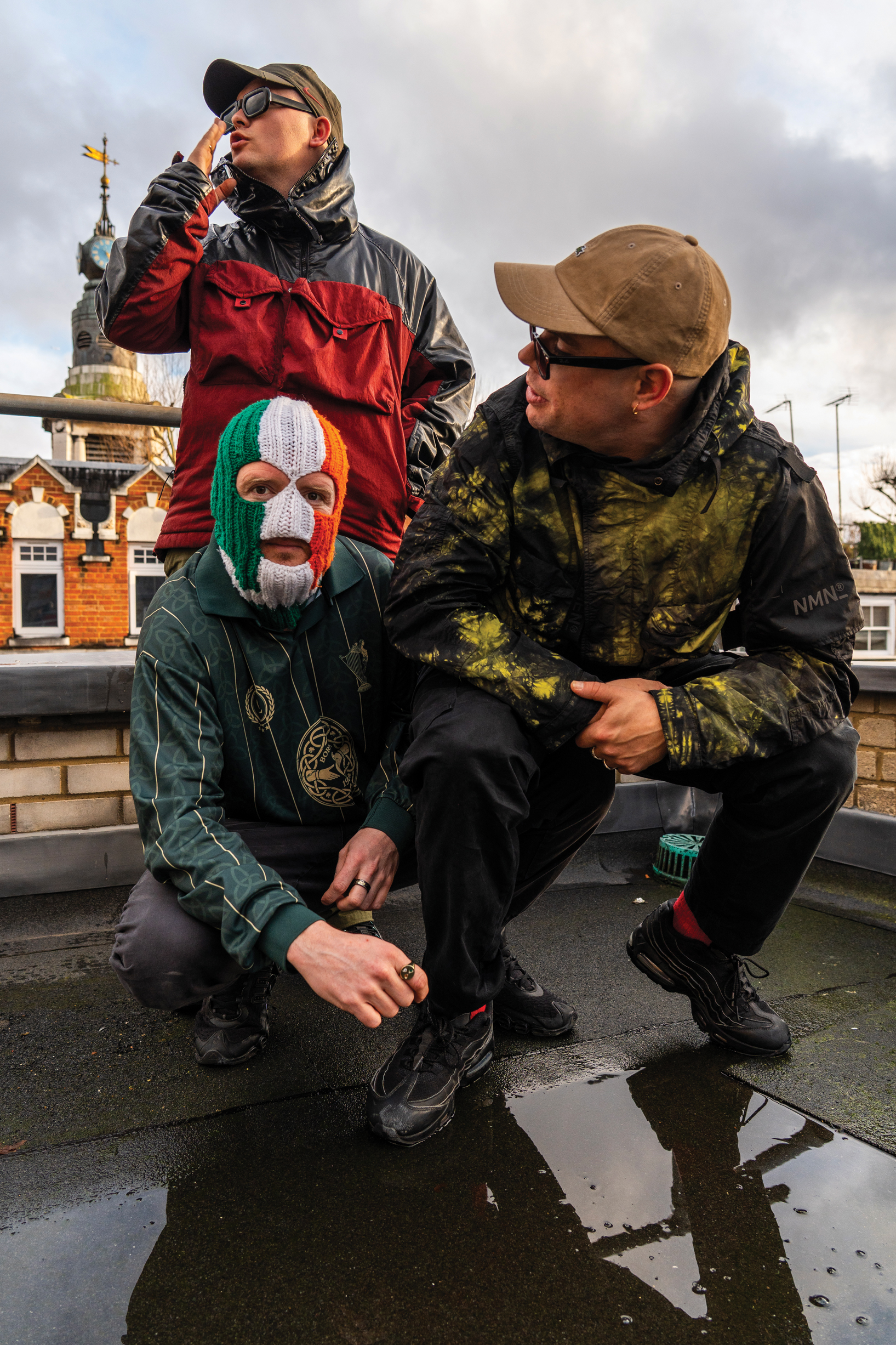
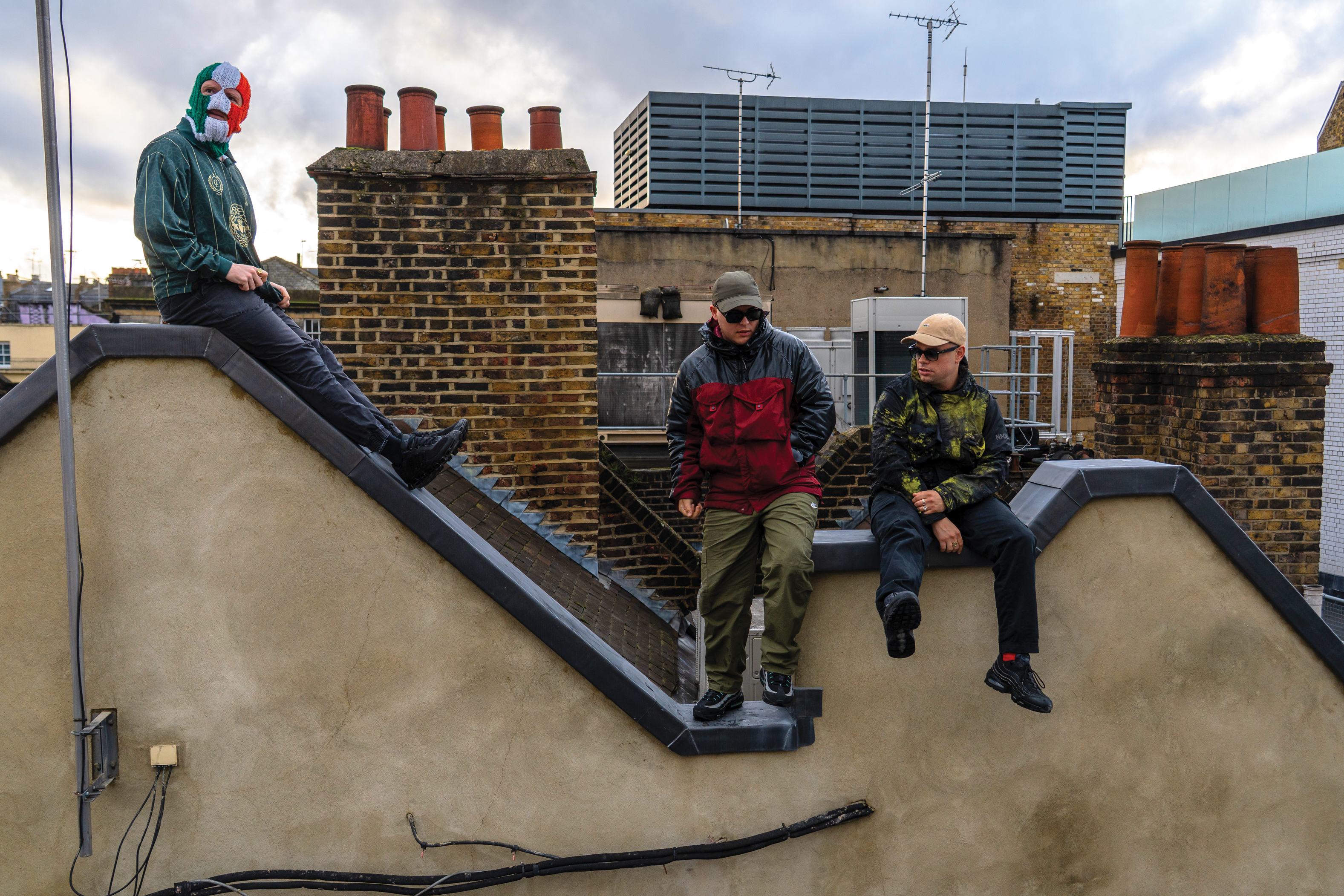
Image: Toby Goodyear
Móglaí Bap and Mo Chara’s vocals are unique. When they begin you know immediately it’s Kneecap, a world like no other. They have also walked a steady line through the political and confrontational.
Advertising helps fund Big Issue’s mission to end poverty
Coming from west Belfast they know that words are loaded, both in English and Irish. Their first single CEARTA (Rights) was about language rights, but also about being young and getting wasted. They were immediately pushing their own way.
They have been lambasted for perpetuating Troubles-era perceptions of the north of Ireland, for weaponising Republican language that has, for many, moved on and they are dismissed in some quarters as thuggish, Buckfast-swilling Class A-necking louts.
But that is way wide of the mark. They carry what they do with quick wit and smarts. They’re satirists who punch up, going after both what they see as colonial imperialists and also the racketeering paramilitaries who still hold sway in many Belfast communities.
In the track HOOD, ‘lowlife scum is what they say about me’ is a constant refrain. In it is the idea that Kneecap are exactly the sort of young people paramilitaries would take action against. The band name, remember, is taken from Troubles-era punishment shootings. They’re not celebrating it, but challenging it. They mock and they ridicule. It’s a motif through their film too. Right from the start of their career that challenge it has been there. Get Your Brits Out, an early big moment, is funny and absurd and tackles local politics.
And now, the album Fenian – another word to take back; used pejoratively for years against the Irish and then more pointedly against the Catholic population in the north. Reclaimed, it’s a badge of honour.
It’s a much more measured and contemplative album than previous releases, a maturing perspective bruised by what has happened. They worked with indie super-producer Dan Carey, whose credits include Black Midi, Black Country New Road, Geese, Wet Leg and Fontaines DC. He is, says Móglaí Bap, a genius. “He’s really out there and clever, and we’re very simple. So it was like just meshed together perfectly his complexity and our simplicity.”
Advertising helps fund Big Issue’s mission to end poverty
It features Éire go Deo, essentially meaning Ireland Forever, a celebration of those who came as imprimaturs of the use of modern Irish language, particularly in the north. Móglaí Bap’s father is among them. And the record moves, through moments such as Carnival – about, says Mo Chara “the carnival of distraction – what was happening to us, unfortunately, against our will, we were sucked into this carnival, and every minute that I was broadcast or talked about was another minute when they could be doing real journalism” – through a couple of bangers like Big Bad Mo and Irish Goodbye, a plaintive lament of sorts featuring Kae Tempest.
“We never thought of it like the idea of developing it or being a proper artist, because we were in that frame of mind when we first started that this isn’t a thing that is possible, like doing hip-hop in Irish, but coming to this album, we definitely wanted to delve deeper into that, the musicality side of it,” says Móglaí Bap.
He says after his mother saw them in the early days she asked if he had any other plans to fall back on. “With my imposter syndrome it’s like, really validating. We were trying to get with Dan for years, and maybe that does give us the confidence ourselves to delve deeper.
“The first track kind of sets the tone for what we’re trying to do. And then we maintain the Irish language, instead of going another direction and doing like, 12 English pop songs or something, paying homage to the people who kind of came before us and laid these foundations and gave us the opportunity to do this.”
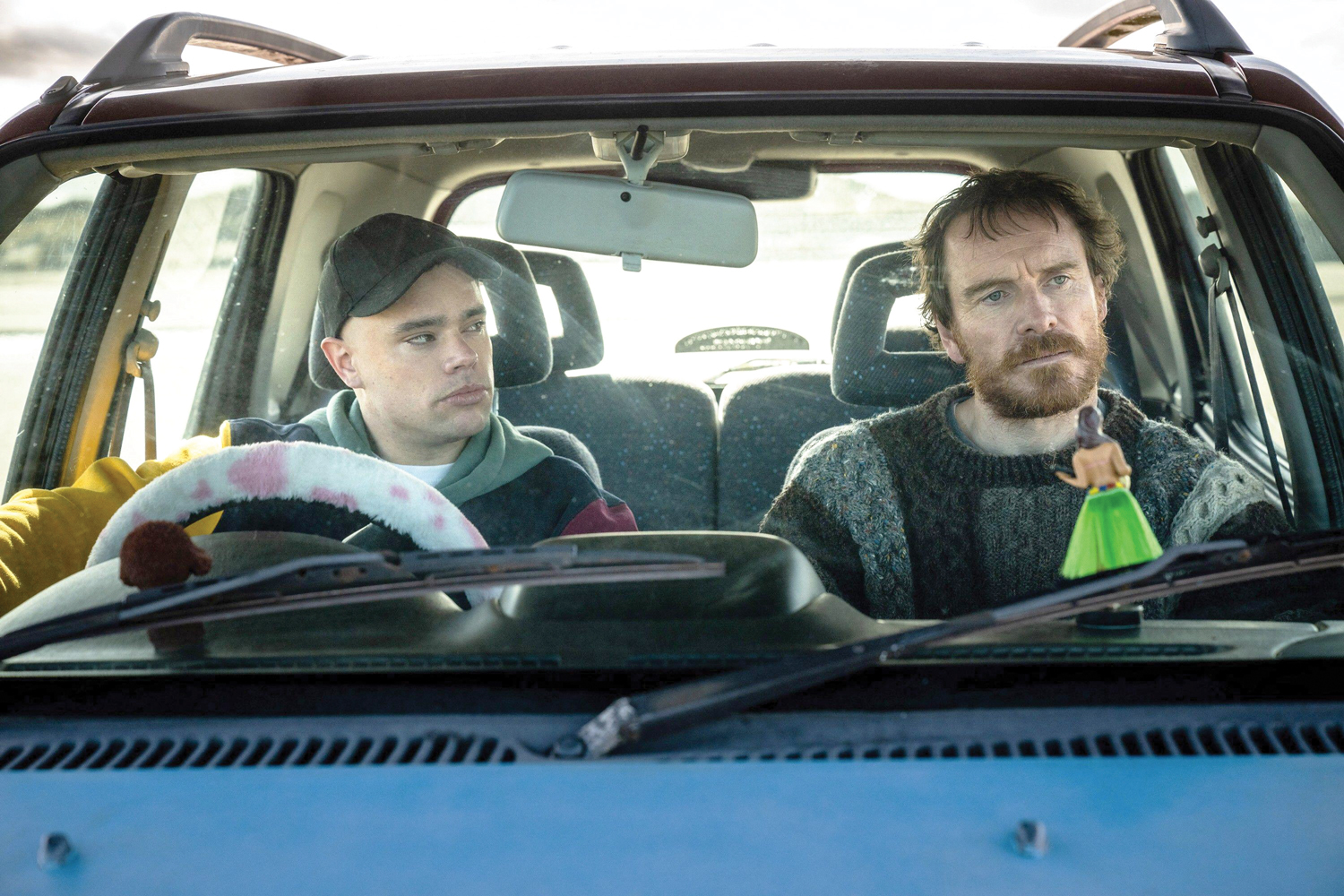
Móglaí Bap with Michael Fassbender in Kneecap. Image: Everett Collection Inc / Alamy
Really, at heart, as with all of Kneecap’s work, it’s an issue of identity, how to preserve and build the Irish language that then becomes inclusive for all, not exclusive for some. Their bold approach has helped energise Irish language learning across the island.
“Kneecap are rooted in the reality of young people,” Conchúr Ó Muadaigh of Irish language association Conradh na Gaeilge recently told The Guardian. “Kneecap reflect the life and diversity of young people through the medium of Irish. But it’s not an academic language. Young people in their thousands are gravitating to them because of their authenticity.”
Advertising helps fund Big Issue’s mission to end poverty
Other minority languages across Europe are keen to find their own Kneecap. The authenticity element is key.
“Initially why we started,” says Mo Chara, “is because we all spoke Irish together and felt like there wasn’t something that represented, reflected our way of life as young Irish speaker in Belfast. So whenever we decided that we were starting this group, it was a natural process, we wrote in Irish, it was how we socialised. The Irish language, as sold to people, was sanitised.
“They want the Irish language to be innocent, something palatable. For a long time, we think, Irish people have felt such shame about their language. That’s what 800 years of colonialism does. But I think people have had enough of that sentiment. People are proud to be openly abrasive. We’re happy to shake the foundations of the Irish language.
“Language is such a foundation for a strong identity. It’s not only Catholics or Protestants, whoever else. Everybody in Ireland has this. You know, the Irish language is there for them. It’s a long process, and this is a thing happening, you know, we recognise in the movie, this process of decolonisation is a thing that is happening all around the world, because colonisation happened in a lot of countries, and we see a lot of solidarity with the Basque people or Welsh or Aboriginal Australia. It feels like there’s a hunger for people to reclaim something that was taken away.”
Image: Toby Goodyear
So do they feel a responsibility for keeping the language alive?
“A perceived responsibility is our privilege,” says Móglaí, “know what I mean. Because of where we’re from, in the north, we know the history of the language and what people went through. My granny didn’t know anything about the language. She’s from the Falls Road and knew more about the Queen. They were denied that privilege of learning the language. So we have that, and that connection to those who came before.”
Advertising helps fund Big Issue’s mission to end poverty
Irish language rights remain a place of conflict in modern Northern Ireland, seen by some on the unionist side as a means of pushing them out.
Previously, Ó Dochartaigh has been clear that a way to a United Ireland, a Kneecap hope, is about bringing both sides along. Not so long ago, Kneecap won a court case against the Westminster government after Kemi Badenoch, then business secretary, had blocked a £14,250 arts grant to them. They split the award evenly between youth groups working in the Catholic and Protestant communities of Belfast.
“I think the Irish language has to be pushed into a place that works for everybody, yes. And that’s a very important thing, because that’s what we share together in this island and it has been here for such a long time,” agrees Móglaí.
Playing Wembley Arena, September 2025. Image: Capital Pictures / Alamy
Identity and nationhood brings us back around to the issue of Gaza and Israel. It is a big, big issue for Kneecap. It’s possible to hold the view that Jewish people have the right to be in Israel and that Palestinian people have the right to be in Palestine. So, where on this do they sit exactly?
“Look, we’re from the north of Ireland,” says Móglaí Bap. “We know about fucking religious conflicts, people using religion as a way to murder, maim and all this stuff. We have gone through that as a country. We won’t discriminate against anyone for their religion. But there are illegal settlements that are deemed illegal by international human rights bodies, who are educated in this area who say this. There’s an ICJ arrest warrant for the Israeli prime minister. Internment is there with people in jail for years. But it’s nothing to do with religion. We are against any discrimination in any form.”
“The thing with antisemitism is it’s on the rise again,” says Mo Chara. “It’s a real issue. It’s terrible. But when you start labelling bands and people who speak out against Israel as antisemitic, what you do is water that term down. We are not antisemitic.”
Advertising helps fund Big Issue’s mission to end poverty
They are Kneecap and they will remain defiantly so.
Fenian is released on 24 April. The band headline Crystal Palace Park In London on 27 June.