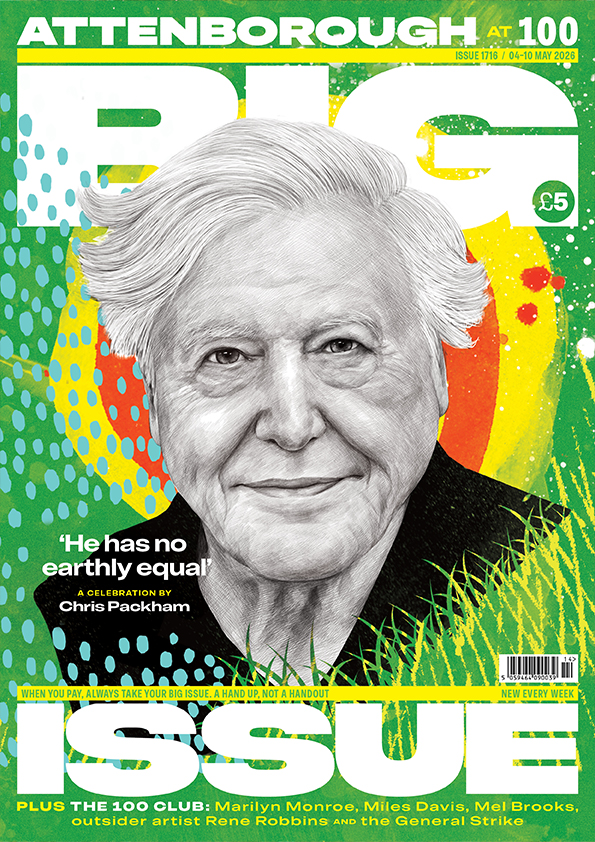
David Attenborough by Chris Packham: 'I don’t think he has an earthly equal'
Big Issue Ambassador Chris Packham writes about the unassailable legacy of his friend and role model
by: Chris Packham
8 May 2026
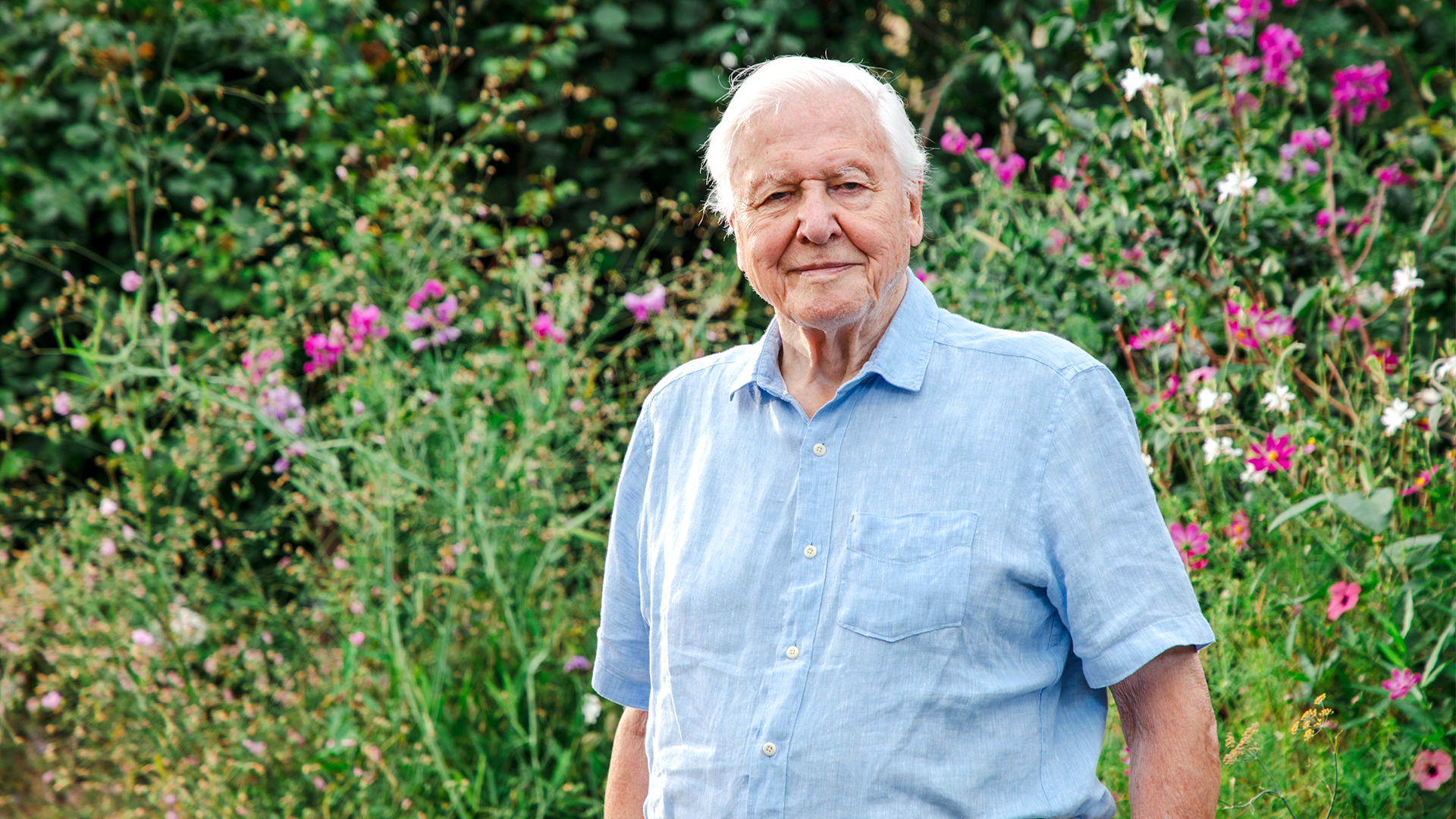
David Attenborough. Image: Nathan Small / BBC / Plimsoll Productions
Share
I’m going to go straight to the hyperbole… I don’t think that any person in the entire history of our species has made such a significant contribution to engaging people and developing a love for all of life on Earth as David Attenborough. His contribution to global awareness and conservation is unparalleled in the history of our species.
As a broadcaster, I don’t think he has an earthly equal. I know some famous American broadcasters have had enormous popularity as chat show hosts and so forth, but I’m going to pin my flag to the mast of a science communicator who’s been telling the truth, who is trusted, who is loved, and whose stories have engaged generations of people.
Lastly, but equally important from my perspective, he’s a really nice bloke who is always keen to share his passion for natural history and everything else with everyone. I’ve seen that in action every time we have met. The enthusiasm is impossible for him to contain. So he makes time for everybody. There are any number of very high-profile public figures – from music, film, sport, politics or whatever – that are hugely influential, but when you meet them, they’re not what anyone would call nice people.
So for him to be so completely relatable, someone who is essentially the same on TV and off, is fantastic. These credentials set him apart.
David Attenborough’s legacy over these decades of making programmes that have been seen around the world is phenomenal. He brings veracity, authority and integrity to everything he does. And those are things you can’t manufacture.
If I was offered a job on a cookery programme, I could learn a script, learn how to make the dish, do everything to convince the audience that I know what I am talking about when adding this spice or that flavour. But ultimately, the audience would see it was a charade.
Advertising helps fund Big Issue’s mission to end poverty
Advertising helps fund Big Issue’s mission to end poverty
That’s why it is a credit to the BBC that they still employ experts in their field – whether they’re cooks, gardeners, historians or natural historians like us. The benefit is that the audience believe us. They know we’re speaking from the heart. I do television as a vocational thing. I’ve been offered things over the past 10 years where I could see a lovely part of the world, but if there is no vocational outcome I turn it down.
Because we’re in a climate and biodiversity crisis. So I’ve got to make every moment I’m communicating with the audience count. And that truthfulness is perceptible to viewers. So when it comes to David, we know the truth is he would be talking about this stuff even if he wasn’t on camera.
Keep reading the journalism that powers our mission
Register free to continue and learn more about the stories, campaigns and the support we provide, helping people facing poverty across the UK.
There are people in my business that never go birding. They never go out looking for stuff. And they don’t collect skulls or pick up feathers. But that’s what me and David do. That’s our life. We just happen to do it on TV.
He started out in the 1950s. There were technical difficulties with cameras, it was difficult to film wildlife and travel was not so easy. But as equipment moved forward, and it was easier to travel, he did one thing, which unfortunately is fading from wildlife TV now: and that is storytelling.
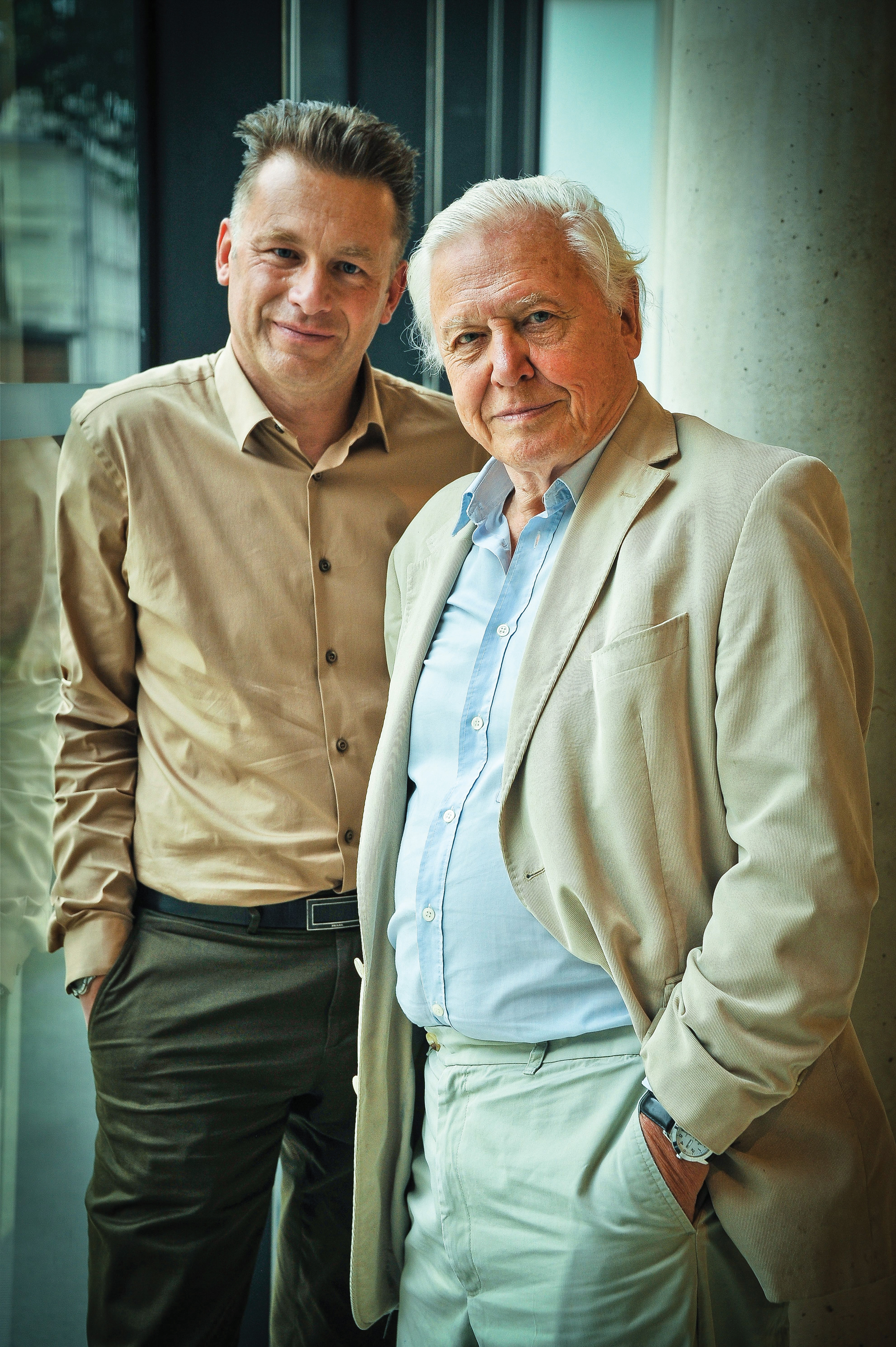
Packham and Attenborough in 2012. Image: Mike Lawn / Shutterstock
My generation was brought up on David telling us stories. He would tell us little stories that would unite into a bigger story in an episode. And, over the course of the series, he would tell us the biggest story. And that’s why we were engaged. He took us on a journey.
Advertising helps fund Big Issue’s mission to end poverty
I see a move away from that into sequences randomly cut together – and to me it looks like wildlife pornography. There’s no depth to it. There’s no love in it. The pictures might be remarkable, but it’s like TikTok. One thing after another. All surface, no feeling.
But David has always told stories. So we feel involved because, ultimately, humans like telling stories. And let’s not forget that he was writing them himself. Someone hadn’t just flown him to a jungle and told him what to say. We don’t work like that. I don’t work like that. We make up our own words in the moment. And that gives him the capacity to do another important thing – to show or tell how he feels.
I get an emotional reaction to what I see. So if you’re writing it yourself, you’re able to communicate to the audience the way you feel about it. And we know he loves this stuff.
I can’t remember the first time I saw him on TV. I wasn’t fond of wildlife TV when I was a child – I wasn’t good with TV in general, I always wanted to be doing something else. Then I was into punk rock so TV was the last thing on my mind.
But I did used to like watching great broadcasters like Carl Sagan, Jacob Bronowski and Alan Whicker. They were great communicators – Sagan is the only one who holds a torch to David Attenborough.
I have two stories about my first times meeting David – and neither of them are good!
Advertising helps fund Big Issue’s mission to end poverty
I won a prize for photography in around 1982 and my sister was studying fashion. She’d made my girlfriend at the time the most astonishing coat jacket with a skirt underneath it – very Blade Runner, really out there, it was clear my sister was shining in that field. It was cream with maroon piping and at the after party, David came over to say congratulations again. He was carrying a glass of red wine… and I don’t need to tell you what happened next! I knew I was in big trouble with my sister.
The second time, we met professionally. I was working as a cameraman and got a job filming some birds in Florida. I was massively into cars, and when we got to the hire car place, they didn’t have an estate car to put all my gear in.
So I chose this monstrous, gas-guzzling Trans Am with a big V8 engine. I loved it. Drove up the freeway too fast. Might have been stopped by the police a few times. When I got to the Archbold Biological Station, I pulled into the car park and there was the producer, a cameraman and David.
The producer said, “What the hell’s that?” I just beamed and said, “It’s a Trans Am!” David thought it was hysterical. The producer less so.
That night, we got very drunk on gin. I was trying to explain the virtues of punk rock, and he was trying to tell me that opera was better! We stayed up really late and hit it off straight away.
I have such a huge respect for him. Obviously. But I never expected it to be reciprocated. Why should it be? I’m the pupil, he’s the mentor. But he gets the fact that I have supported Just Stop Oil and Extinction Rebellion and cause trouble and sue the government and all that.
Advertising helps fund Big Issue’s mission to end poverty
Years ago, he said to me: “I have figured it out, Chris. I know what’s going on. You’re an agent provocateur. And that’s your job.”
I was saying to him, come on, do that too. But it’s about finding a niche. And we come from different generations. We approach things in different ways. He grew up with Glenn Miller and opera; I grew up with The Clash. And that’s going to impact our outlook in terms of how we approach things. So he has spoken calmly to presidents around the world, I may have just been in a government minister’s office having a heated discussion! But I think that mutual respect comes from a shared love for the natural world and a desire to protect it.
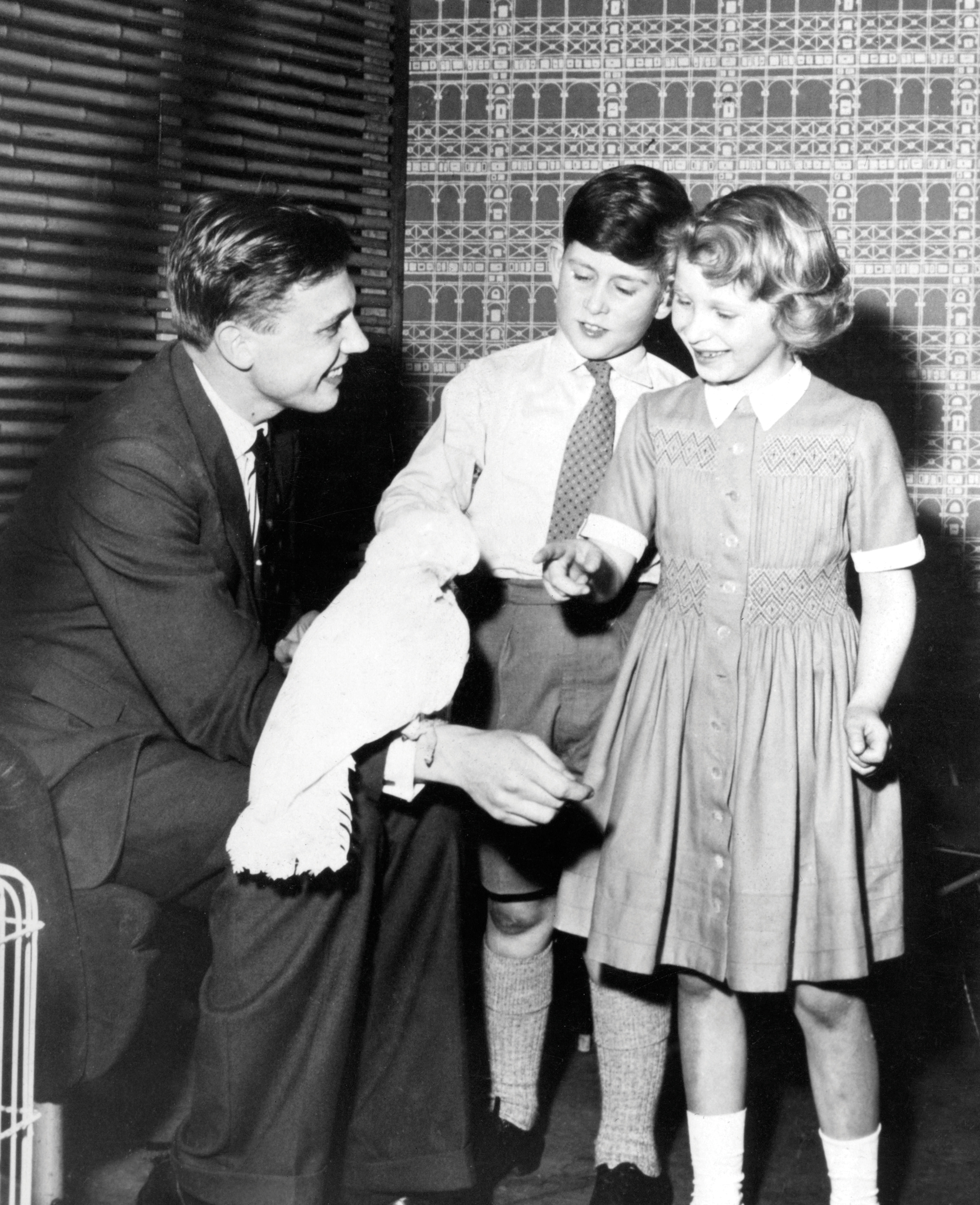
David Attenborough at the BBC in 1958 with Prince Charles, Princess Anne and Cocky the cockatoo. Image: PA Images / Alamy
David Attenborough is turning 100. He has witnessed even more loss of wildlife than I have, and that causes him an enormous amount of sadness and worry. Because he loves life.
We have lost over 70% of the world’s wildlife since 1970 and he’s witnessed that and it comes at a personal cost. But it’s also a motivator. Because if you love it, you don’t want to lose it.
For a long time, his belief was that the best way to protect life was to teach people to love it. And that was his mission. His programmes were about engagement, getting people to go ‘wow’ in their living rooms about places they were never going to see and animals they would never meet.
But it got to a tipping point. It was probably a very personal thing, we all have those moments in our lives where all of a sudden we wake up and we’ve got to change. Maybe it was something he read or something he saw but he started to speak out on those issues.
Advertising helps fund Big Issue’s mission to end poverty
Like me, he’s compelled to tell the truth. So he doesn’t mince his words. He speaks very forthrightly about issues.
He and I are also about the only two figures in that environmental sector who have spoken about human population, because the minute you do people jump up and down saying you want to euthanise people. So he has been brave and bold in speaking up on issues and taken them to audiences no one else could reach.
After his speech to COP26 in Glasgow, I asked him how he felt it went. He said it went really well and I said, “But they didn’t listen, did they?” His reply was interesting: he said, “No, they listened. They just woke up the following morning and forgot.”
So there’s a real sense of sadness and injustice. Because when the world’s leading science communicator is given a platform like that and they tell the truth, it shows incredible stupidity and ignorance for world leaders to ignore him. It is a total failure in their duty.
But David Attenborough will always be on the right side of history.
Advertising helps fund Big Issue’s mission to end poverty
Change a vendor’s life.
Buy from your local Big Issue vendor every week – and always take the magazine. It’s how vendors earn with dignity and move forward.
You can also support online: Subscribe to the magazine or support our work with a monthly gift. Your support helps vendors earn, learn and thrive while strengthening our frontline services.
Thank you for standing with Big Issue vendors.
Advertising helps fund Big Issue’s mission to end poverty