

Privatisation in the 1980s and ’90s was a flagship policy of the Thatcher era. The country’s utilities, along with two million council houses, have since been sold off. According to its proponents, privatisation would lead to greater efficiency, raise investment, promote competition and ultimately lead to a property owning, shareholding democracy. Unleashing the private sector and rolling back the state was to bring innovation.
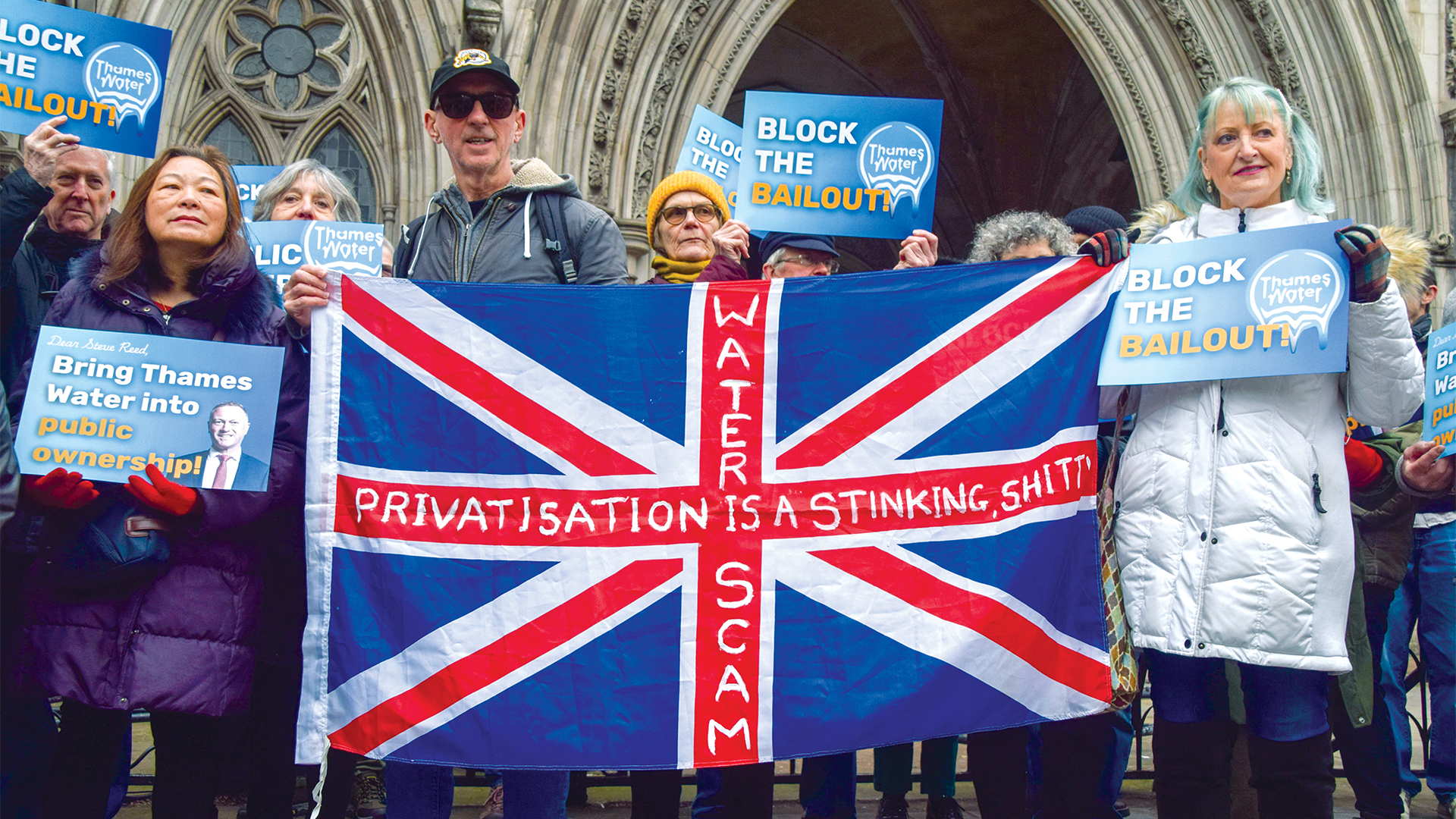
Some 40 years on, water, energy and social housing are all in crisis. Rivers and seas are polluted with sewage, 12 million households (over 40%) struggle to pay their energy bills, and some local authorities are close to bankruptcy due to the cost of temporary accommodation. The consequences can be dire. People die in cold homes.
England has the highest rate of homelessness of all developed countries. An all-party parliamentary group found temporary accommodation contributed to the deaths of 104 children in the past six years.
Get the latest news and insight into how the Big Issue magazine is made by signing up for the Inside Big Issue newsletter
But while many people struggle to make ends meet, at the other end of the system privatisation created some very attractive investments. The world’s largest asset manager, BlackRock, has shares in all these sectors – our water companies, our property developers, our electricity networks. Macquarie, an Australian bank which used to own Thames Water, now owns Southern Water, Cadent Gas and the National Gas Transmission network. CKI, a Hong Kong-based conglomerate, owns Northumbrian Water, gas networks and Superdrug. And so it goes on.
Foreign governments own much of our power generation, and China, Abu Dhabi, Kuwait and Qatar’s sovereign wealth funds have stakes in our energy and water companies. Private equity firms such as Blackstone are expanding their rental portfolio to take advantage of the fact that people will be consigned to renting for longer and maybe will never be able to afford to buy their own homes.