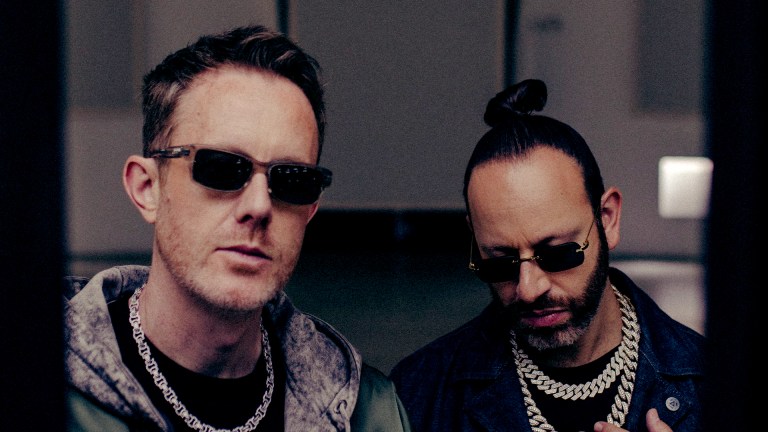
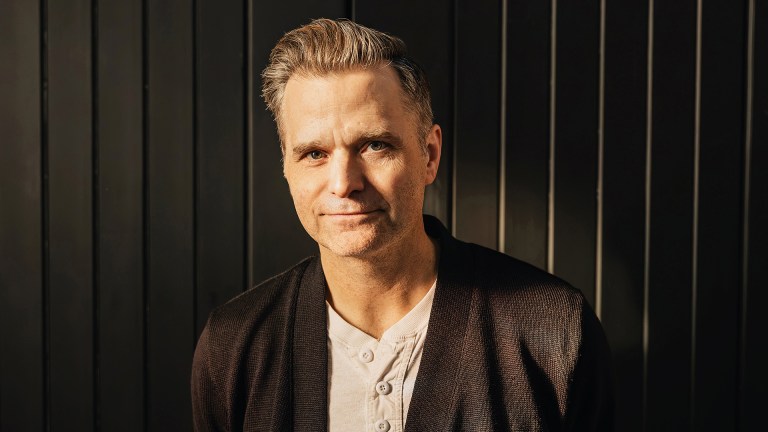
From planning release campaigns to casting actors for music videos, liaising with merch suppliers and making sure the pyrotechnics go off at the right moment during shows – to say nothing of writing and recording music – The Reytons try to take care of just about every job by themselves, big or small. After their show at Clifton Park, Yerrell and his wife even went back the next day to make sure all the mess had been cleaned up properly. “Because we grew up around there,” he reasons, “that’s our park.”
With a new album and a world tour in the offing for the year ahead – as well as another round of activity for their community-focused initiative The Reytons Grassroots Foundation (more on that in a bit) – Yerrell is in the thick of an especially busy moment when he speaks to Big Issue. In changed days for the music industry, it’s undoubtedly fair to say that he is far more au fait with a spreadsheet than Mick Jagger ever needed to be in his time. Yet Yerrell wouldn’t have it any other way.
“Monday morning is my favourite time of the week,” he enthuses. “I love coming in, sitting down at my desk and planning everything we’ll do in the week ahead. I’m just so grateful. We’ve already surpassed everything we thought we would achieve as a band.
Keep reading the journalism that powers our mission
Register free to continue and learn more about the stories, campaigns and the support we provide, helping people facing poverty across the UK.
“This year for me, it’s all about just enjoying it, because it might be the last year we ever have, you never know.
“I’m not sure what Mick Jagger did back in his day. I just know that if I want something done, I have to do it myself.”
Read more:
Yerrell grew up in a former coalmining village outside Rotherham, the son of a tradesman. He had little education when he dropped out of school and started trying to break into music, whether by playing open mic nights or busking on the streets.
“I honestly tried every band, every genre, every kind of means to try and get music out there,” he says. Working under the solo pseudonym Jay Mya, he made some inroads with hip-hop-influenced club music, including supporting Professor Green on his UK tour in 2011, but it ultimately came to nothing.
“I spent a lot of time failing, and learning how to get it wrong, and learning how to get your heart broken by these major labels,” Yerrell reflects. “People that would have meetings, and then never call you again, or promise you the world then change their mind, because they found somebody better.”
It all led Yerrell to commit to a different path in 2016, when he and future Reytons bandmates guitarist Joe O’Brien, bassist Lee Holland and drummer Jamie Todd first got together to “write something for fun”, as he puts it. Namely, spiky, wordy rock songs inspired by the working-class communities, nights out and characters they knew firsthand around South Yorkshire, and by the sounds of some of the many world-beating rock bands the Sheffield area has produced before them.
“You’re not from New York City, you’re from Rotherham”, the sneeringly quotable lyric from Arctic Monkeys’ song Fake Tales of San Francisco, could practically be The Reytons’ mantra, so steeped is their music in civic pride.
“We thought hopefully if we’re really true to ourselves and it’s really organic, then we’ll just find people,” Yerrell recalls. “We just set up a new Facebook page and shot a music video for Slice of Lime, and honestly, it was one of the most bizarre moments of my life. We uploaded it that night, wrote a little copy saying we’re The Reytons from South Yorkshire, and then three days later, it had like, 100,000 views and it had gone viral.
“There’s moments when you look back on your life,” Yerrell adds, still sounding like he can’t believe it even now, “and go, all right, OK, what just happened?”
Their first gig was at Sheffield’s Plug club as a support act; their second was headlining the same 350-capacity venue and it’s been onwards and upwards ever since. They’ve self-released three albums to date – the second of them, 2023’s What’s Rock and Roll?, went to number one and the third 2024’s Ballad of a Bystander, reached number two.
A fiercely loyal local following has been key to all of this – Official Charts Company data shows that nearly half of The Reytons’ physical album sales happen in Yorkshire. But the rest of the world is gradually catching on too, with their 2026 world tour set to visit the USA, Japan, Australia and Europe. Albeit in some territories in venues a tiny fraction of the size of the arenas they play in the UK. “We’re four guys from Rotherham,” Yerrell reminds me, in response to that point.
“If we weren’t in a band we never would have got to go to America, let alone play shows there. If just 10-15 people are there singing along, I’m impressed already.”
Ever mindful of how far they’ve come and how fortunate they are to be there, the band set up The Reytons Grassroots Foundation with a very broad mission statement to “level the playing field” by “creating opportunities at grassroots level across sport, music, art, and other creative sectors”. In its first year, it saw them help put free football strips on 50 different teams at grassroots level across the UK.
Their 2026 programme will see them expand their support to help all from boxers, singers, drummers and graphic designers with grants of money, as well as mentorship, industry contacts and exposure.
Longer term, Yerrell wants to work in schools, opening kids’ eyes to jobs in music, sport and the creative industries not just in the public eye but backstage and behind the scenes too. As he puts it, the goal is “to bridge the gap between people and opportunity” in a way that cuts across traditional class barriers. No bad thing in a world in which, according to research from leading UK educational and social mobility charity the Sutton Trust, younger adults from working-class backgrounds are four times less likely to work in the creative industries compared to their middle-class peers.
“No one were ever really there for us to give us these opportunities,” says Yerrell. “But when people are given opportunities, great things can happen.”
The Reytons’ new album A Love Letter to a Broken Town is released 24 July. They tour the UK in October
Do you have a story to tell or opinions to share about this? Get in touch and tell us more.
Change a vendor’s life.
Buy from your local Big Issue vendor every week – and always take the magazine. It’s how vendors earn with dignity and move forward.
You can also support online:
Subscribe to the magazine or support our work with a monthly gift. Your support helps vendors earn, learn and thrive while strengthening our frontline services.
Thank you for standing with Big Issue vendors.