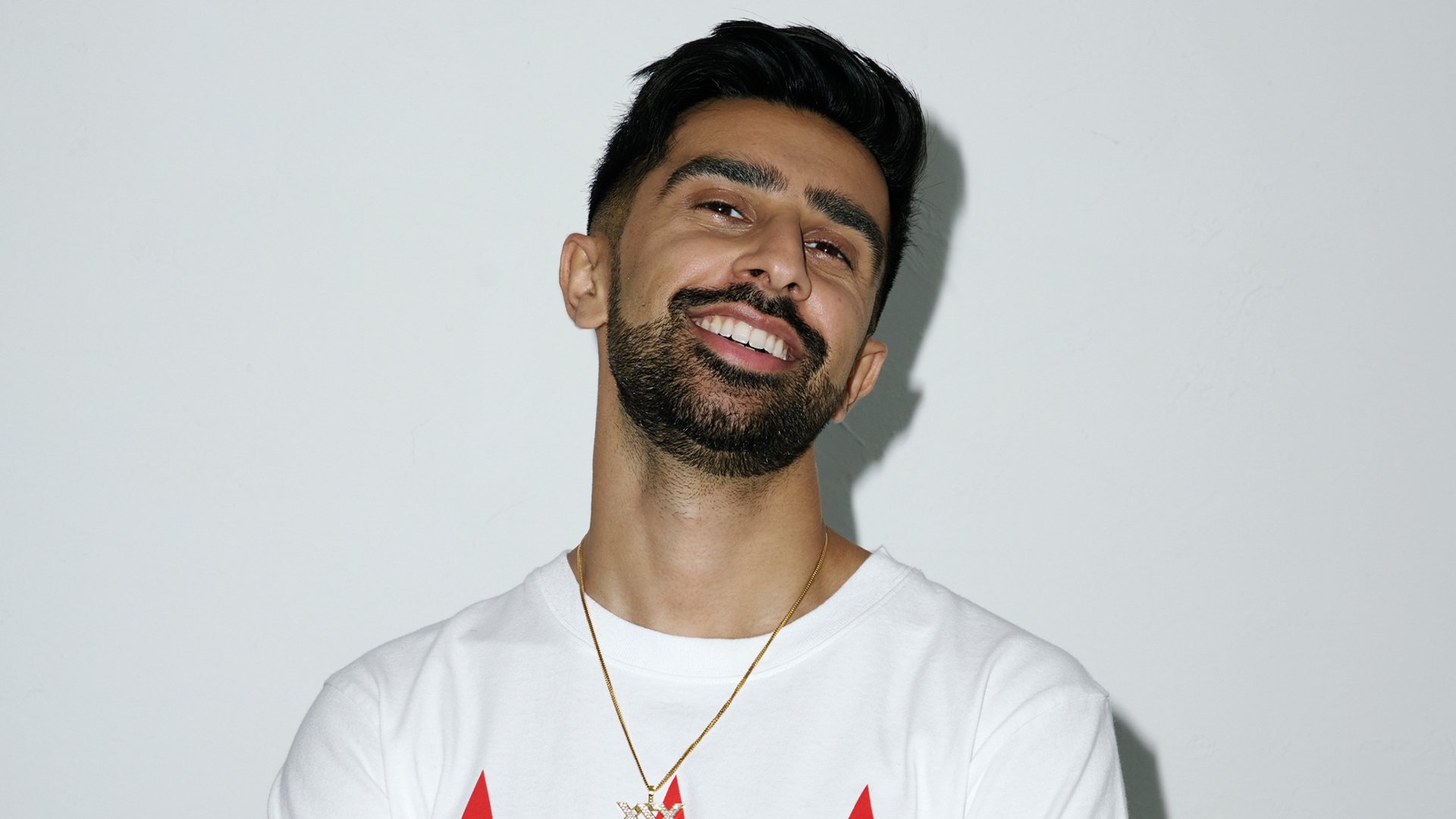
Sidemen's Vikkstar: 'We have a responsibility to our audience to act as positive role models'
As part of the Sidemen, Vikram Singh Barn has been at the vanguard of the creator revolution that upended traditional popular entertainment. Can Vikkstar keep calling the shots as he enters the music industry?
A 30-year-old man is explaining, from a position of strength, how he’s managed to shift the balance of power in the television industry. “The traditional media, they want to come to us,” Vikram Singh Barn says. Barn is talking about InSide, the reality TV show created by the Sidemen and now running on Netflix. Better known as Vikkstar, Barn began making Call of Duty videos in his bedroom over 15 years ago. Now he is one of the figures reshaping the entertainment we consume – and its future.
“If you look at TV in recent years, they’re now carving out a space for an online creator to be in all of their shows,” he says. After all, the most recent I’m a Celebrity… winner was streamer Angry Ginge. “The traditional media, they want to buy into our world, they understand that’s where media is moving.”
But, he adds: “I don’t think they’ll ever be able to have the same advantage we have, because we built it all ourselves from the ground up, but it is something that they can engage themselves in more and work with people like us more.”
In 1978, Bill Rasmussen was fired by the New England Whalers, an ice hockey team. It was the spark which led him to set up a TV network covering sports in the state of Connecticut. Rasmussen teamed up with his brother and a couple of business associates and soon landed on the newfangled method of distributing television via satellite.
What he created changed the way people around the world watch sport, and brought in advertisers to cable TV on a new scale. As of this February, that company – ESPN – is worth about £22 billion.
If you squint, you can see a decision made by a group of British YouTubers in a similar light. Barn, alongside fellow YouTubers Simon Minter (Miniminter), Josh Bradley (Zerkaa), Tobi Brown (TBJZL), Ethan Payne (Behzinga), and JJ Olatunji (KSI) combined their audiences in 2013 to form the Sidemen. Harry Lewis (W2S) joined a year later. They were early movers in a creator revolution. Barn gave up a place at UCL to pursue YouTube, putting out a video every day for about eight years.
Advertising helps fund Big Issue’s mission to end poverty
Advertising helps fund Big Issue’s mission to end poverty
“Fortunately, for all of us, we had what it took, and we were able to outlive thousands of other creators who struggled to transition through all the different periods of YouTube,” he says.
The years since have seen them sell out Wembley Stadium, raise millions for charity, and expand into the worlds of vodka, cereal and restaurants. They now command an audience of almost 40 million subscribers.
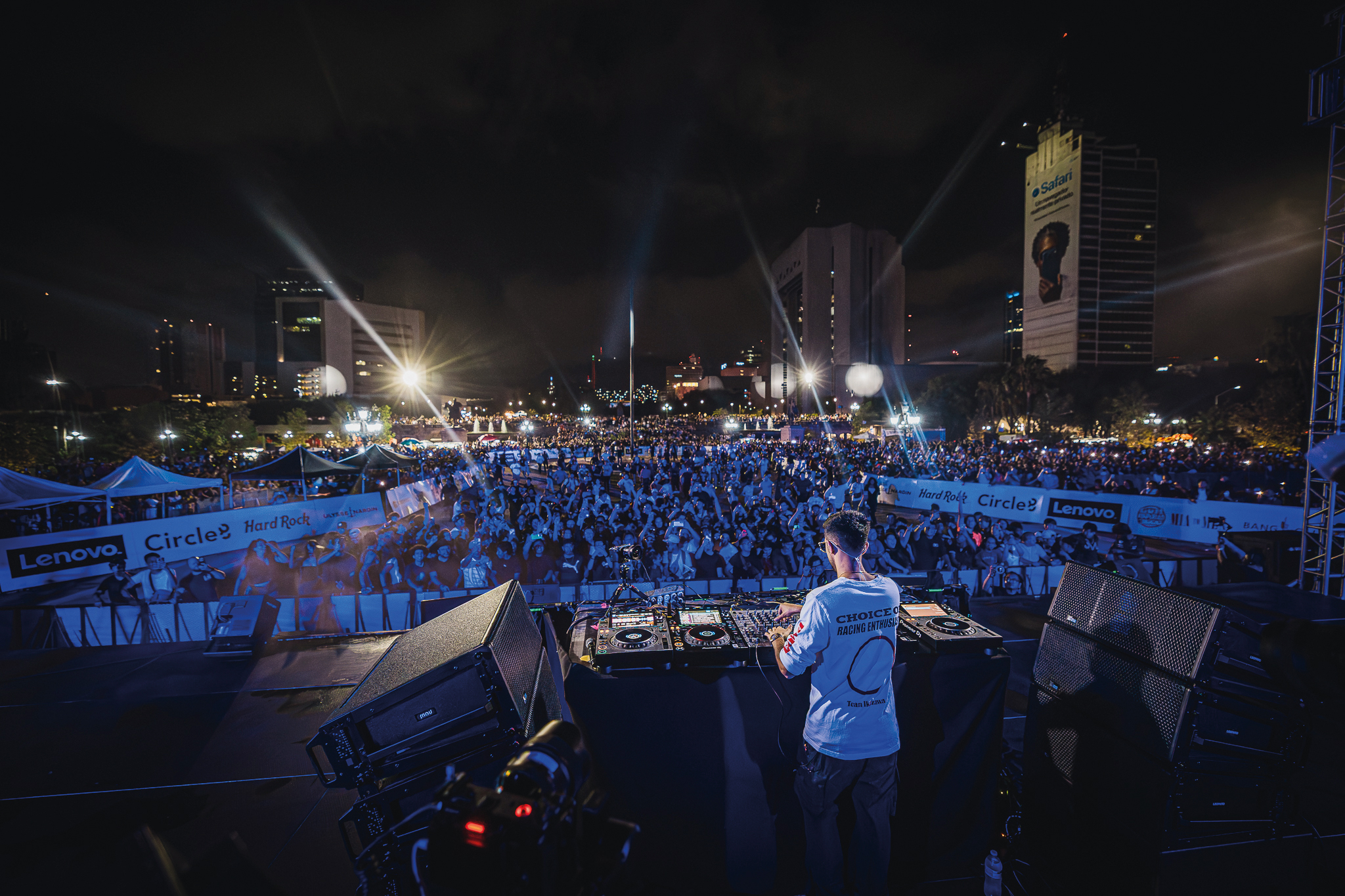
Vikkstar headlining the Gumball 3000 Rally, Austin to Monterrey, on 8 June
The mainstream wants a part of it: Netflix acquired their reality TV show. KSI is now a judge on Britain’s Got Talent. Barn’s music career is taking off and he’s playing a gig at the British Grand Prix, having worked with Steve Aoki, Afrojack and JME. Meanwhile, traditional broadcasters are fighting irrelevance. For a hint of a potential future, look at how Mr Beast’s Beast Games series has made the jump to normie viewing for Amazon Prime.
Keep reading the journalism that powers our mission
Register free to continue and learn more about the stories, campaigns and the support we provide, helping people facing poverty across the UK.
As Barn speaks to Big Issue, the group is at an inflection point. At the end of May, KSI – the central figure, to whom the others were initially the ‘sidemen’ – announced he was quitting the collective. Not that Barn will be particularly drawn on that. “We have a very stable structure set up for the group,” he says. “Our ambitions are to continue creating fantastic content, and we have everything in place to do that.”
KSI’s departure made headlines; its impact a very 2020s version of Robbie quitting Take That. There’s a difference beyond the obvious, though: Recording-wise, Take That were [initially] active for five years, Spice Girls for just four. They’ve even been together longer than The Beatles. So why have the Sidemen lasted where their cultural ancestors – of a fashion – had a shorter shelf life?
“I think it comes from the management position. I think a lot of boybands were created from talent shows,” Barn says. “The management ran a lot of the business, whereas with the Sidemen, we’ve been running the business with management sitting underneath us, so we sit as equal shareholders of the business with all control and voting rights and decision making. I think the right people with that power create something very strong.”
That ownership and control is something Barn comes back to – he says their reality show is the “first time that someone has owned an IP that goes on to Netflix”. When he revealed his diagnosis of Crohn’s disease in 2024, it was the fact the talent called the shots which helped him navigate the condition. If he needed to leave shoots early, or couldn’t make a commitment because he was in and out of hospital, it was fine. “It was a situation where we’ve built the business as friends before business managers.”
Barn is speaking to Big Issue ahead of a gig at the British Grand Prix, and the release of his new single – Bigger Than Dreamers – billed as an alternative World Cup anthem. This is how he sees it: “It’s giving people something that they can enjoy, that’s what music’s about, it’s saying, hey, I made this, I like it, I hope you like it too, so that was the thinking behind it.”
As he explores music, Barn is finding that the dynamic which saw the Sidemen flourish – ownership, control – does not as easily translate to being a newcomer recording artist.
“I’m foraying into the music industry, and it can be a wonderful place, and it can also be a not so nice place with a lot of people trying to take advantage of the creatives,” he says.
To that end, he has not signed with a music label or distributors. This means relying on his own audience (4.3 million followers on Instagram, 7.6m on YouTube) to get the music out there.
“In remaining independent, I feel like I’ve protected myself from a lot of the issues that arise with the distributors of music having too much control, but I’ve definitely seen it, and it often doesn’t make sense to me,” he says. “I sometimes see the music industry as quite archaic and confused.”
When it comes to the business of watching things, Barn believes the people with the big bucks are waking up. “There is a large part of the advertising and marketing world that don’t realise that this viewership shift has happened from traditional media to digital media,” he says.
“We’re seeing a change, but it’s still early, funnily enough, and we’re seeing the budgets increase on our side of the pond.”
Barn is keen to emphasise that the content he and the Sidemen make is an escape. As a 30-year-old, he’s grown up online. The government has just announced a social media ban for under-16s as part of an online safety drive. Many members of Vikkstar’s audiences could be impacted.
He already recognises the responsibility that his platform brings.
“I think that as an online creator there is a responsibility to present the right messages and, unfortunately, I think that also, as online media has increased in its pure quantity, going down attention-seeking, dramatic click-baiting routes has led to harmful media being put out that can really, even if it isn’t intended to cause harm, can cause harm.
“We feel we have a direct responsibility to our audience to act as positive role models.”