

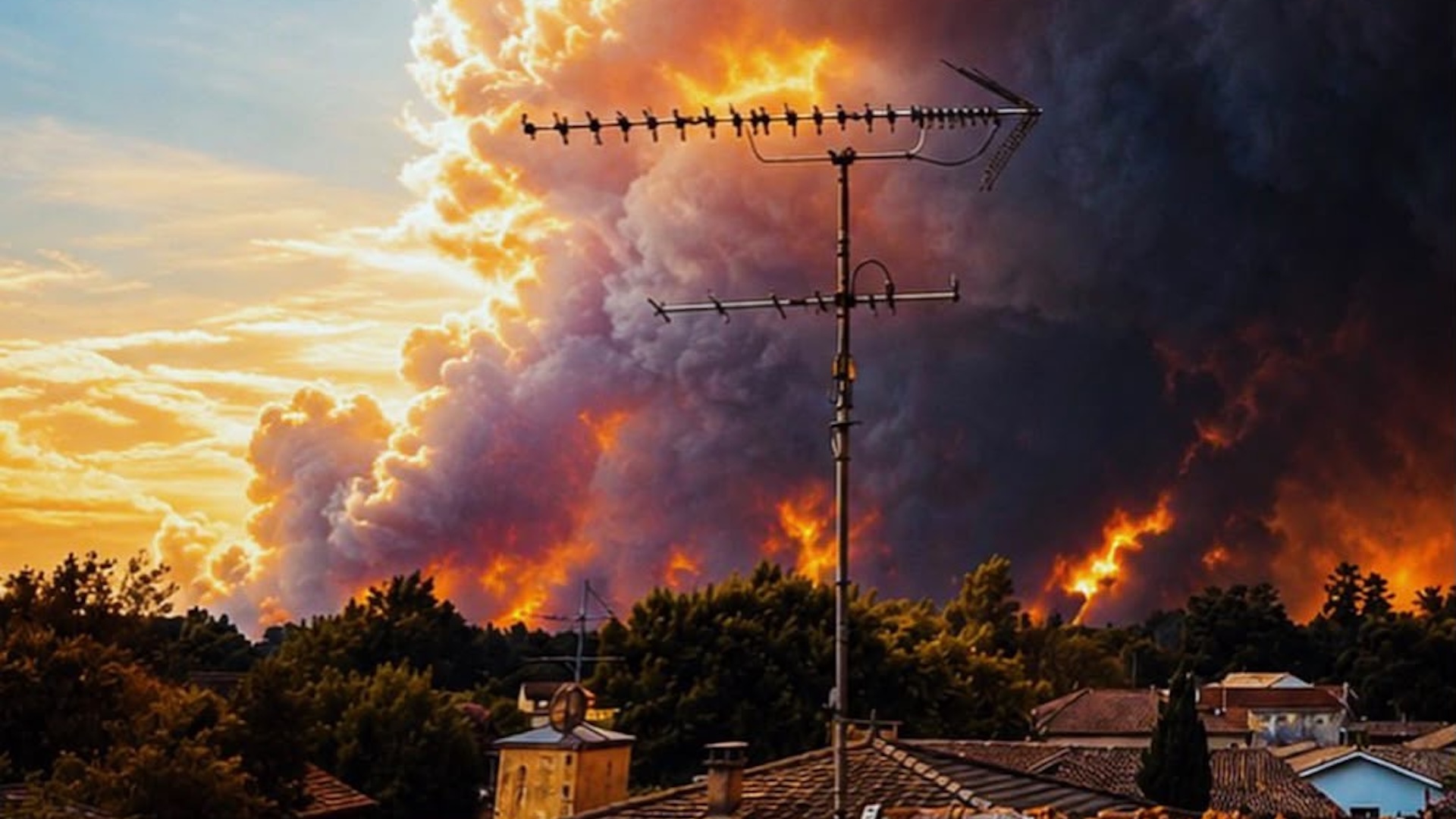
On Saturday morning last week, I was evacuated from my home in the Bordeaux metropole, in the south-west of France. The sky was black, the air was thick with ash, and all around me, people were getting into their cars, gathering their belongings. They fled the suburbs and the coast, carrying what little they could, their faces set with the particular fear of not knowing whether there would be a home to return to.
I am a daughter of this region. As a child of war refugees, not fully French, not fully Algerian, but entirely rooted in this soil, I learned my identity here, among the pines of the Landes and the long yellow beaches of the Gironde. On school trips with my public school, I learned to name the trees, to read the ecosystem, to love it. Our regional identities, which struggle to survive in France today, are inseparable from these hectares of forest, these lakes, this water. They run in our veins and bind us to our land more surely than any flag or passport. The toughness of our elders, and their generosity, was forged among the vineyards of our beautiful south-west, the same land where our terroir (our sense of place), our myths and our legends were born, and where our streams are now dying.
So how can I not feel rage?
Read more:
- A data centre is uniting bugs and bikers to fight Google: ‘We demand you replace what you destroy’
- Why do people live 14 years longer at one end of Leeds’ famous Otley Run pub crawl than the other?
- Andy Burnham wants to end rough sleeping. These new statistics show the challenge he faces
As I write this, more than 220,000 people have been evacuated in the Gironde region alone, and regional authorities say at least 240 homes have been destroyed. Many of our brothers, uncles and fathers have joined the ranks of the firefighters and the farmers facing flames that devour our land and our memories along with it.
And this is not one bad summer. According to WHO Europe, wildfires destroyed 2.2 million hectares across the region in 2025 alone, up from 1.4 million hectares in 2022, a trajectory that tracks rising global temperatures with grim precision. Now hold that against another number: as my community breathes smoke and watches its forests burn, TotalEnergies has just announced $11.2 billion in profit over six months. That is a 72% jump in net income, lifted by higher oil prices during the war in Iran. For the second quarter of 2026 alone, the company reported adjusted net income of $6.03 billion, up 68% on the same period last year, driven largely by stronger refining margins.