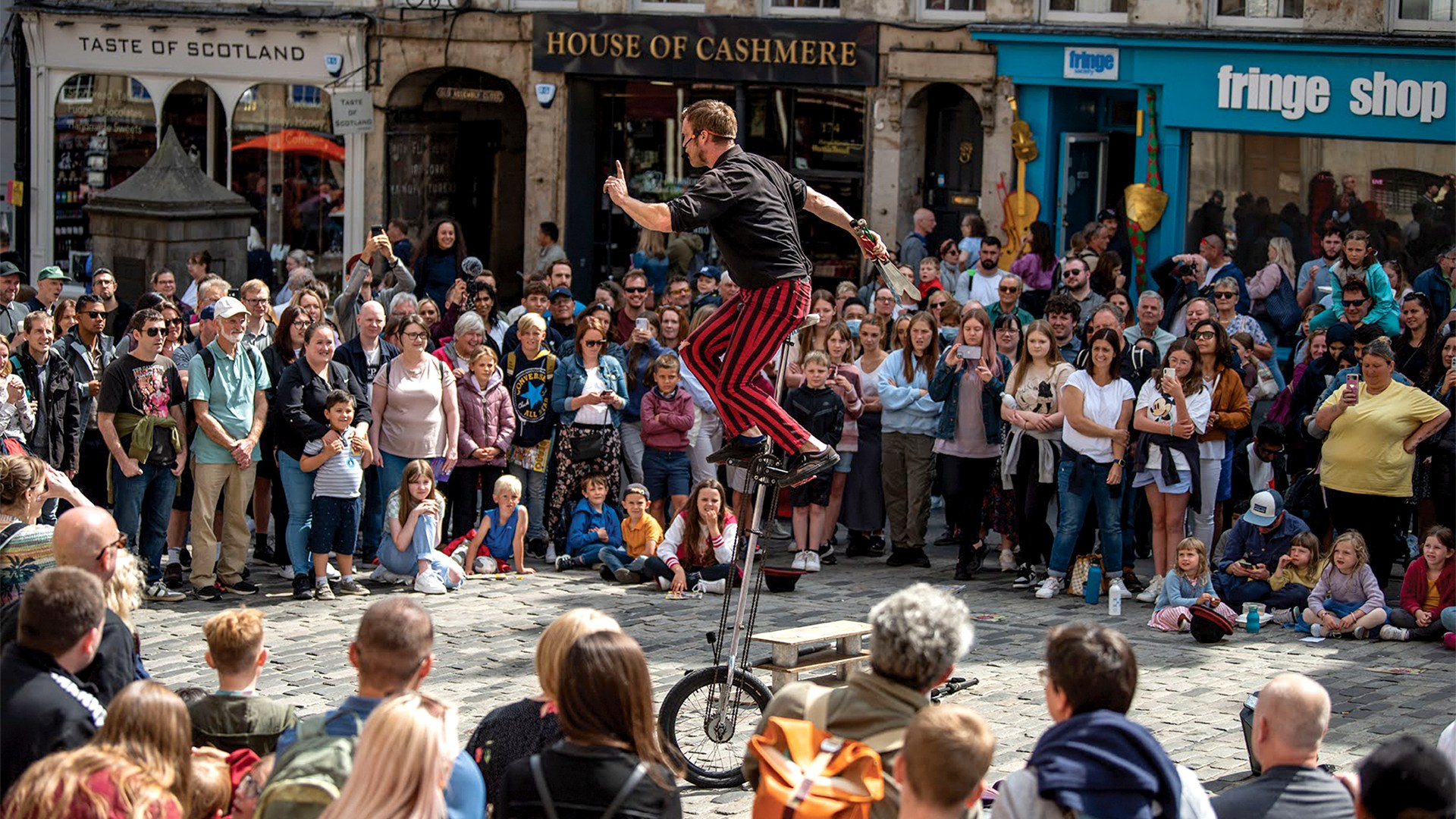
A street performer at Edinburgh Fringe. Image: David Monteith-Hodge. Image: David Monteith-Hodge
Share
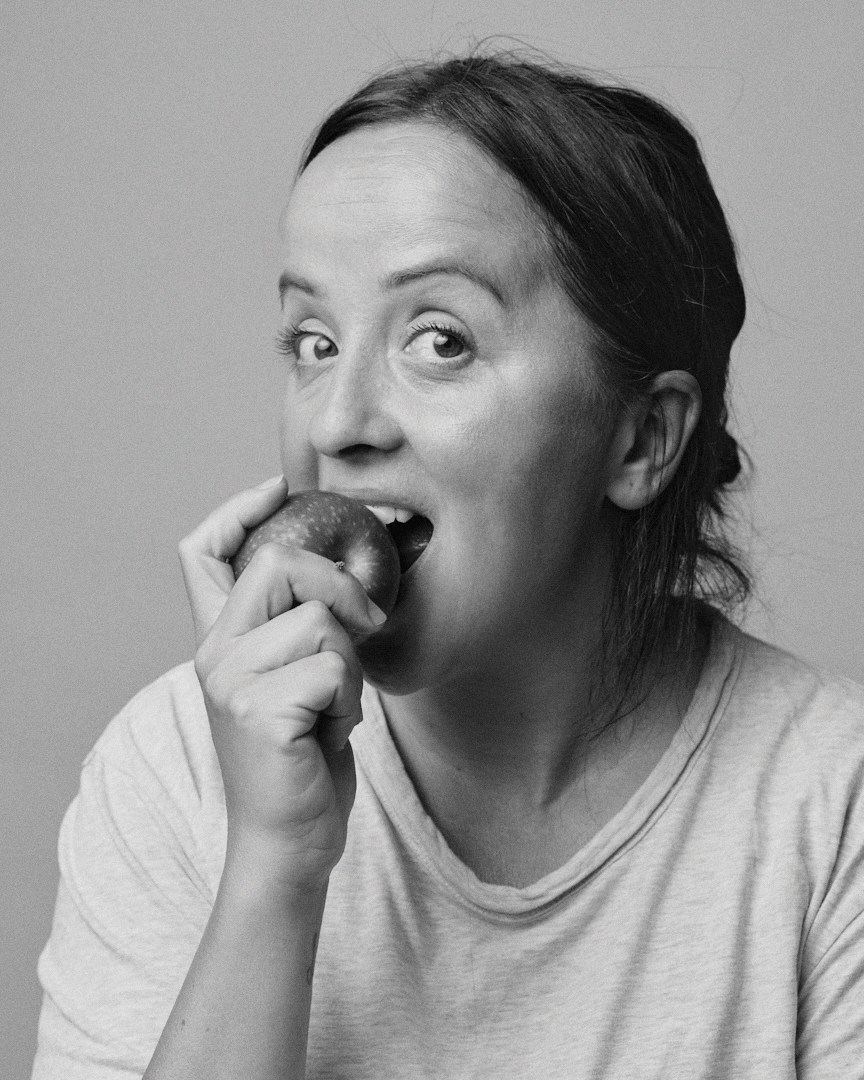
This month, comedian June Tuesday was all set to open her new show, 00s Throwback Party, a confessional and very funny trawl through her emo youth, in a karaoke room beneath a cafe in Edinburgh’s Old Town. She has no agent or producer and, as she puts it, “absolutely no money”.
Home is a budget hotel on the Cowgate. “One and a half grand for a two-star hotel on a street with six nightclubs is brutal, but it’s also all I can afford,” she says.
The show is part of the Laughing Horse Free Festival, where audiences pay what they want. It will still cost Tuesday around £2,500 before she earns a penny, without counting a month’s lost income from regular circuit gigs. That, she reckons, is the floor: a free show, the cheapest digs and travel, flyers she designed herself, no venue hire, paid marketing or PR. She applied for funding this year and didn’t get it. She is going anyway.
The biggest question about the Fringe isn’t how it got so expensive. It’s why acts still move heaven and earth to go.
The Edinburgh Fringe, which runs until 31 August, is the world’s largest arts festival and perhaps its most democratic. Anyone who can find a venue can perform; last year it swallowed 3,893 shows – stand-up, theatre, dance, circus, magic and spoken word – featuring an estimated 25,000 artists. Some make a profit; others treat it as a loss leader. For most, breaking even is an achievement. As the Fringe Society’s own 2023 AGM minutes put it, “if making money is your objective, it is not likely to happen”.
The real killer is accommodation. Every August, a city already facing a housing shortage absorbs an influx of performers, crews, media and audiences. Evidence submitted by the Fringe Society to the Scottish Parliament shows that the cost of renting a room for a month-long run rose by between 185 and 291% from 2018 to 2024. From July, Edinburgh’s visitor levy will add 5% to the first five nights of any paid stay within the city.
Advertising helps fund Big Issue’s mission to end poverty
Advertising helps fund Big Issue’s mission to end poverty
At Queen Margaret University’s Fringe Village in Musselburgh, way outside the centre, a private room in a shared six-bedroom flat costs £1,260 for four weeks – more than twice the term-time price.
The PR gets paid. The venue gets paid. The bar staff get paid. The security gets paid. The promoter gets paid. The flyerers get paid… But the artist pays to perform
Comedian Luisa Omielan came in through a door that has been closing ever since. When she started, she worked three jobs a day – at a bar, on a post round and packing at Wilkinson’s – despite having a first-class performing arts degree.
Edinburgh felt out of reach. Then older comics told her about the free-show model: pub rooms without a hire fee, with donations at the door. The only test was whether you could make a crowd laugh. “For me, it was access. It was democracy in real time.”
Keep reading the journalism that powers our mission
Register free to continue and learn more about the stories, campaigns and the support we provide, helping people facing poverty across the UK.
In 2012, her show What Would Beyoncé Do?! opened on that model with no team or PR and became one of the decade’s defining Fringe hits through word of mouth alone, with queues around the block. It proved the free model could sustain a hit. It paid, too: the bucket took up to £500 a night. In the following years, she moved to paid venues and took on the machinery needed to fill a bigger room: producers, PR, marketing and flyers. Costs for such shows can easily clear £15,000.
Omielan hasn’t returned since 2023 and isn’t sure she will again. The maths stopped working. Not only is accommodation brutally expensive, squeezed audiences no longer wander into unknown shows on a whim. Punters are likely to spend “20 or 40 quid on the two shows they know will be good, because that’s their hard-earned money,” she says.
Something harder to measure has gone too. Because people can’t afford to stay centrally, they commute, and what once felt like a 24-hour festival has contracted.
“All the things that used to feel like they lasted until dawn now feel like they’re done by midnight,” says Tuesday. “The man in a tiger costume reciting Shakespeare at one in the morning now does it at nine.” There is more to see than ever, and smaller windows in which to see it. Everyone else’s invoice, meanwhile, still gets settled.
As Omielan points out: “The PR gets paid. The venue gets paid. The bar staff get paid. The security gets paid. The promoter gets paid. The flyerers get paid… But the artist pays to perform.”
The Fringe Society, which administers the festival but neither programmes shows nor controls venues or housing, is not pretending there are easy solutions.
“The Fringe can be a substantial investment in an artist’s career, and it isn’t right for everyone,” says Chris Snow, head of artist services. “Cost increases are being felt across the Fringe community, venues, producers and artists, and for some it’s becoming harder to make it work.”
Snow points to registration fees, frozen since 2007, and Keep It Fringe, the Society’s bursary fund, which has made more than 400 awards since 2023. “But these initiatives are always funding-dependent.”
Which is where it comes unstuck. Tuesday received £2,500 from Keep It Fringe last year, when the fund supported 180 shows. This year it supported 16. The public funding that enabled last year’s awards was not renewed at the same level; this year’s reduced fund is supported by donations. Set against 25,000 participating artists, it is a sticking plaster.
“Last year it was able to be about creative freedom, and now it’s about the bottom line,” Tuesday says. With a safety net, a quiet afternoon didn’t matter; she could experiment, fail and learn.
“This time, if I get four people in, there’ll be a little alarm bell in my mind going: oh…”
So why take it on? For established acts, Edinburgh is an industry shop window. For those starting out, it compresses years of trial and error into a month. A newer artist can perform the same unfinished show 25 nights running and learn on the job.
“There are people who are willing to give you the grace to try something,” Tuesday says. Asked whether she enjoys it, she is careful. “I enjoy having done it.”
“That’s what Edinburgh is brilliant at,” agrees Omielan. “It gives you the opportunity to practise and to fail. And people don’t realise that artists need the opportunity to practise and fail.
“Every night of the week you could go on a different type of stage in front of a different type of audience and play.”
Pricing newer or less established acts out threatens the training ground that makes the Fringe unique. Omielan has no patience for anyone writing the place off, though.
“You do it because you love it. Because it’s a calling. Because it’s an addiction,” she says. “Give artists tighter and tighter circumstances and restrictions, and guess what? We’ll figure it out.
“I have faith in every generation of new comics that at least one of them will work it out. They shouldn’t fucking have to. But they will.”