Why we made controversial Channel 4 documentary The Experiment
Mat Fraser writes exclusively for the Big Issue about Channel 4 documentary The Experiment, a "carefully constructed social experiment which seeks to discover if the British public can be persuaded by ideas drawn from Nazi ideology"
by: Mat Fraser
21 Oct 2026
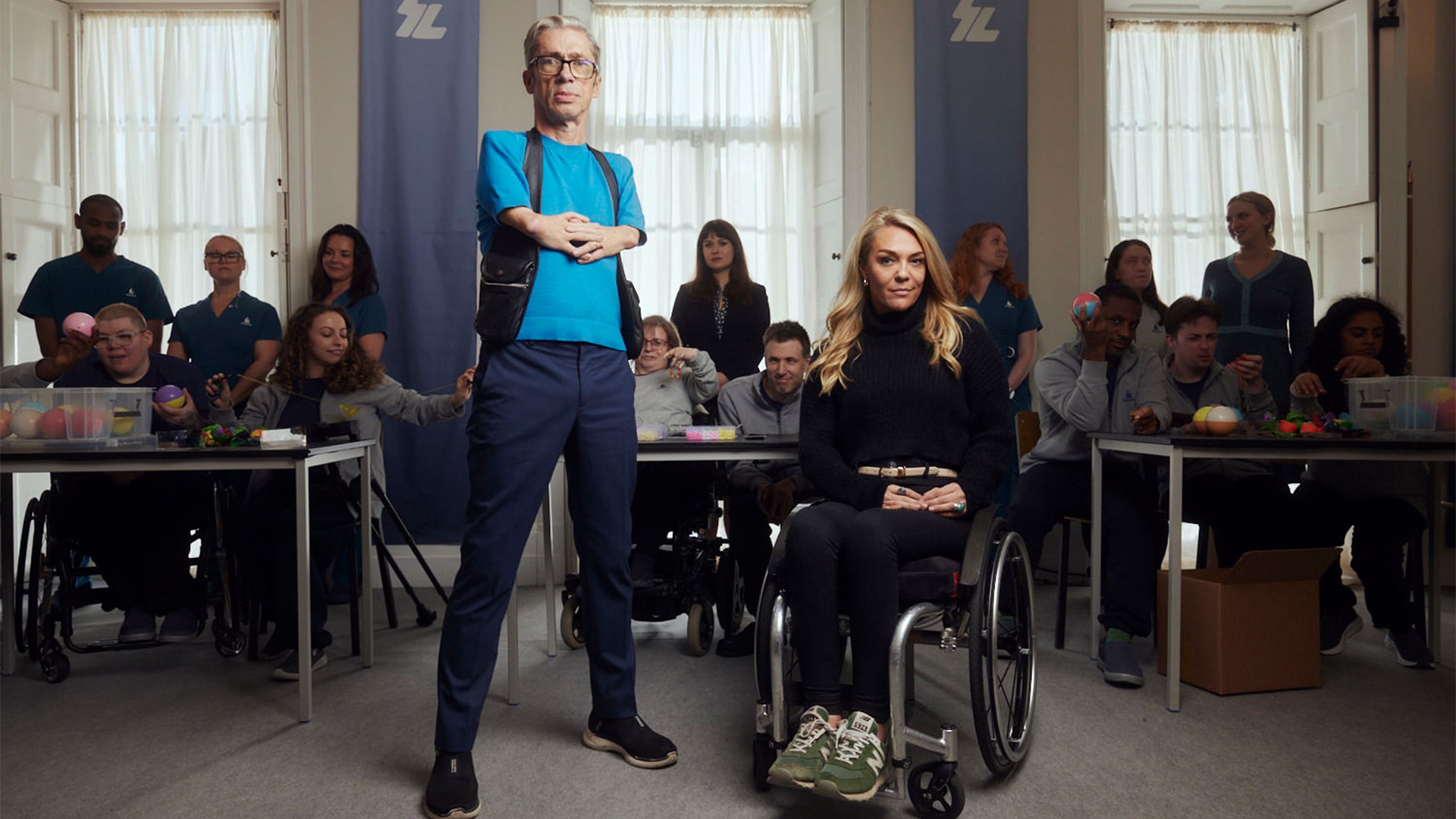
Mat Fraser and Sophie L Morgan front C4 doc The Experiment. Image: Channel 4
Share
For the last 30 years, I’ve wanted the public to know about a terrible part of human history, the Nazis’ secret mass killing of disabled people, with their experiment Aktion T4 – a secretive ‘euthanasia’ program. Now acknowledged by Holocaust museums and scholars, it has been added to the understanding of the Nazis, but it’s still generally unknown, and has never been explored on TV. Until now.
My friend Richard Butchins – a disabled documentary maker – was commissioned by Channel 4 to tell this story, and he wanted me and Sophie L Morgan, TV presenter and disability activist, to be involved.
Underlying this tragedy was the culture that allowed it to happen. We wanted to explore that, to make people understand just how easily those attitudes could become mainstream and lead to something much more sinister – even in today’s society.
It began with children: in August 1939 all German physicians were required to report any “severe mental or physical” disabilities of newborns, to go to special paediatric clinics – which were actually killing centres.
Then they focused on disabled adults in institutional settings. Carefully designed questionnaires, appearing to merely be gathering data by their design and accompanying cover letter, were given to all public health officials, public and private hospitals, mental institutions, and nursing homes for the chronically ill, and old people.
Emphasising patients’ capacity to work versus conditions of the patients (sound familiar?), a respected group of medical professionals – a phrase disabled people have learned to fear – identified those they deemed of having “a life not worth living” and, beginning in January 1940, they were removed, sent to these killing centres, and murdered.
Advertising helps fund Big Issue’s mission to end poverty
Advertising helps fund Big Issue’s mission to end poverty
Having used lethal injection and starvation previously, they began a new method of gassing their victims, which proved much more efficient. Six of these institutions were established across Germany.
Shortly after arriving, victims were stripped of clothes, jewellery, personal items like a toothbrush, or picture of a loved one, to be given ‘showers’. Using pure bottled carbon monoxide gas, they were murdered en masse in these chambers, then cremated. Their ashes – often just scooped from a big pile – were collected by staff into urns and returned to their families with falsified causes of death on certificates.
Between January 1940, and August 1941, a total of 70,273 disabled people were systematically murdered by German medical staff, all trained doctors, nurses, and admin staff, under the order of the Nazi regime.
Keep reading the journalism that powers our mission
Register free to continue and learn more about the stories, campaigns and the support we provide, helping people facing poverty across the UK.
Despite the Nazis’ significant efforts to conceal these murders, word got out. Eventually, on 3 August 1941, the bishop of Münster publicly protested the Aktion T4 killings, and Hitler ordered an end to the programme. Tragically, the systemic murder of disabled people continued in secret, with the final death toll believed to be between 275,000 and 300,000.
Directed by Richard, Sophie and I found ourselves being toured around one killing centre, Hartheim Castle and Museum, near Linz in Austria, Hitler’s homeland. It’s a hideous, oppressive, ghostly historical site of the ‘hidden holocaust’; the mass murder of our people.
Rows upon rows of victim’s personal artefacts – combs, cups, glasses, and tribute plaques from relatives – made it intensely personal. But most shocking of all, was a room filled floor-to-ceiling, with 30,000 names of every disabled person that was killed there. Walking through the space, I was overwhelmed with indescribable grief, terror and sadness all at once, which distilled into anger.
We came back to the UK, harrowed, and determined. This must never happen again. What can we possibly do to help prevent it?
Propaganda played one of the largest parts in this, and the Nazis were the masters of it, making a series of posters and films portraying institutionalised disabled people as being costly burdens to the state, with no value of production. They were called “useless eaters”, taking resources that “healthy” German Aryans should be using.
Relentless negative imagery sat alongside short, brutal and powerful phrasing – it was their speciality, and it worked a treat. These methods of propaganda convinced the German general public about those ‘useless eaters’, which in turn enabled the Nazis to perpetrate this savage mass murder.
Richard, Sophie and I all agreed that it was not enough to merely show history, but we needed to explore why this propaganda messaging was so convincing. We created a carefully constructed social experiment, to discover whether the British public could be persuaded by ideas drawn from Nazi ideology if they were presented as progressive solutions to the challenges facing some disabled adults today.
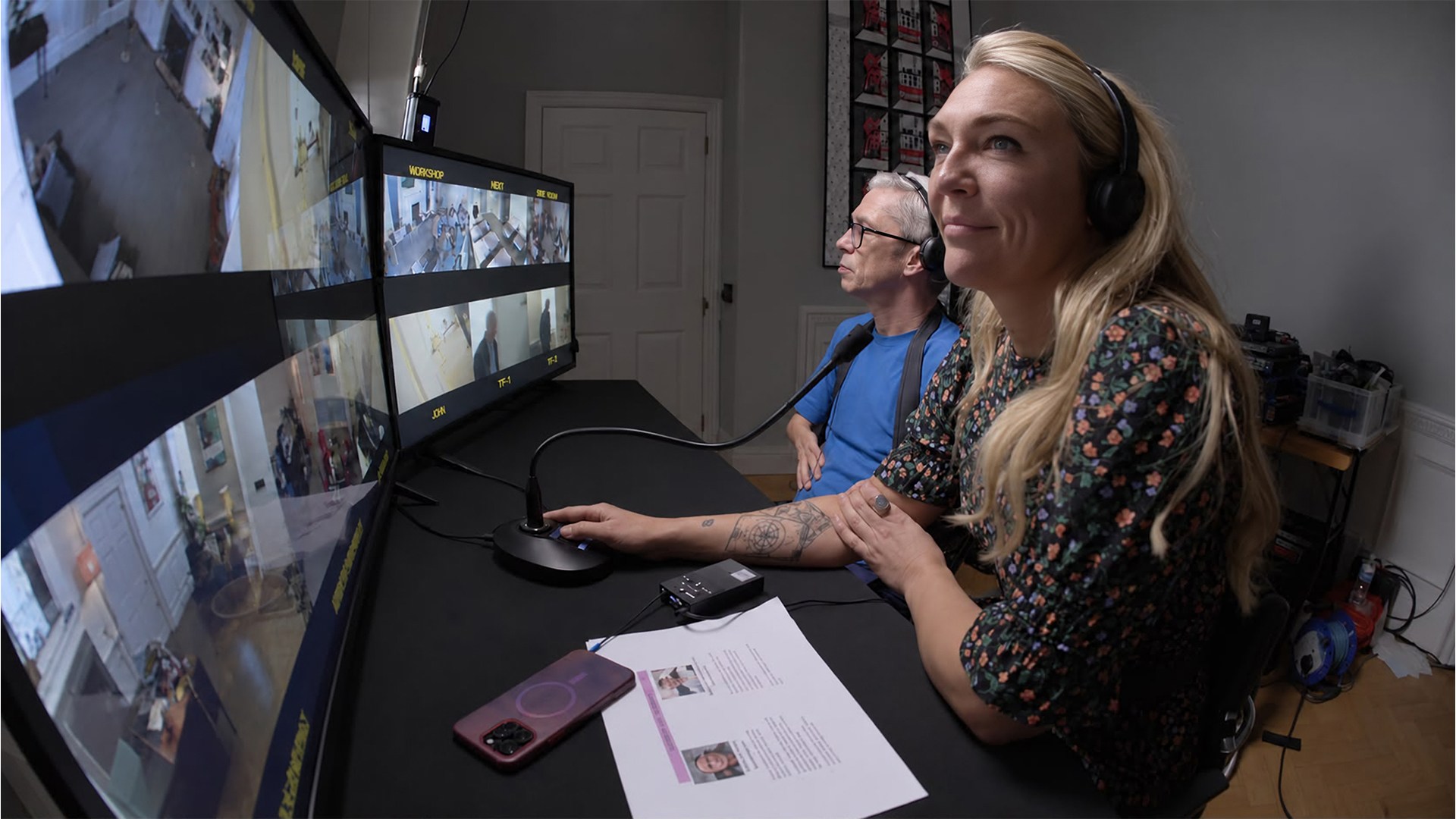
Mat Fraser and Sophie L Morgan making The Experiment. Image: Channel 4
Our experiment was to create SegriLife House – a ‘progressive’ residential facility and a new model of supported living. Complete with professional branding, corporate messaging and convincing promotional materials, members of the public, our guests, were invited to tour the home, meet the residents and tour the facilities
However, SegriLife is not real, and the truth behind the ideas is drawn from the segregation, devaluing and murder of disabled people by the Nazi regime.
Throughout the experiment, we worked with Graeae Theatre Company and Access All Areas, companies of disabled and neurodiverse actors. The wonderful disabled actors agreed to portray the residents of this fictional care home, and already used to experimental theatre as they are, in a hard scenario they were professional, convincing and 100% committed.
Throughout the experiment, every interaction between our actors and the members of the public was captured by cameras, while Sophie and I watched from backstage. Our guests, who believed they were assessing a genuine supported-living facility and were unaware of the historical origins of the ideas presented to them, were asked to share their views on the facilities. Once the experiment had concluded, they were fully informed of its purpose and given the opportunity to reflect on and discuss their reactions. In doing so we were able to investigate whether echoes of a troubling past can still be felt today.
The Experiment leaves me worried for disabled people’s future in this austerity UK we’re still in, perhaps with a glimmer of hope, and a reminder that community is everything.
But what did our guests make of the facilities? If you want to know, then you’ll have to watch The Experiment.
The Experiment is available to stream now on Channel 4