We are paying for the climate crisis with lives and homes. The Nepal-Tibet floods must spark action
"This is an injustice. We did not start the climate emergency that has engulfed us. We cannot continue to pay for it with our lives, our homes, and our hopes," writes Nepali climate justice activist Shreya K.C.
by: Shreya K.C.
3 Sep 2026
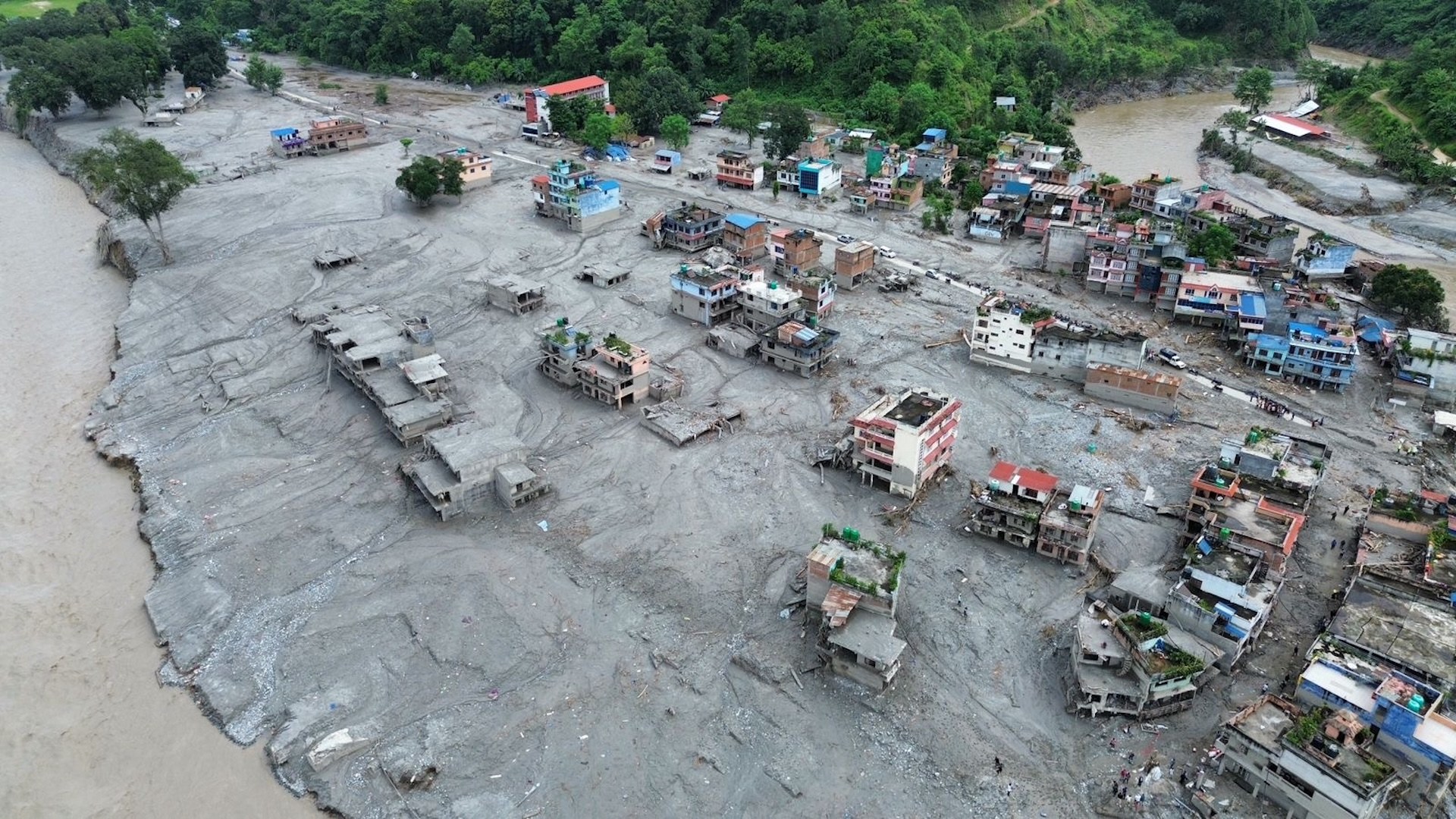
Catastrophic flooding on the Nepal-Tibet border has killed more than 1,000 people and left nearly 4,000 missing. Image: Devighat Nuwakot and Trishuli Bajar Nuwakot
Share
What happened in Nepal and Tibet is the scene of a climate crime. Those responsible are fossil fuel companies and polluting countries, and they must be held accountable.
After a week of the catastrophic floods and landslides that struck northern Nepal on the morning of August 26, what remains are families mourning those who will never return, desperate rescue efforts, humanitarian aid, and overcrowded hospitals.
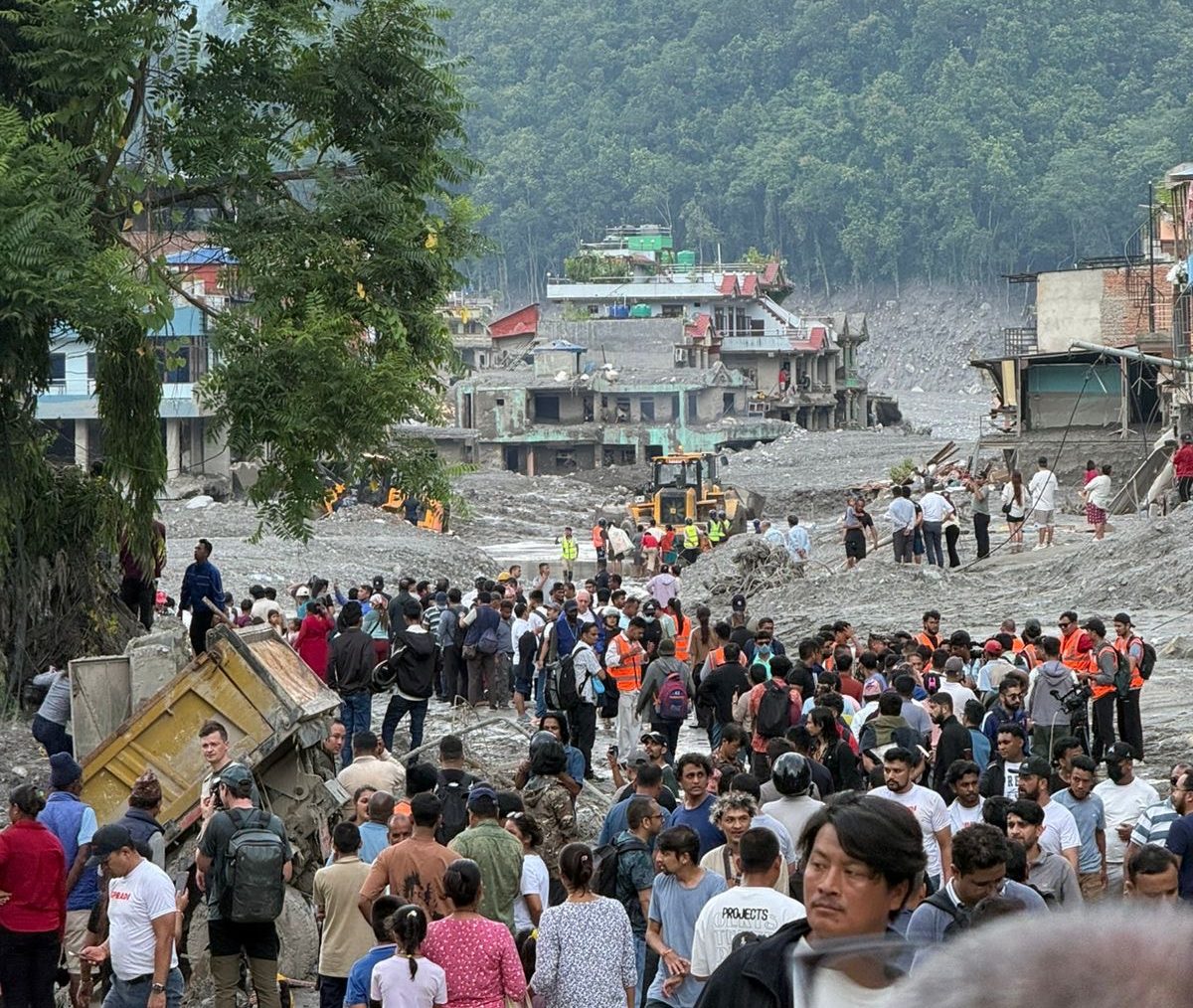
As of 2 September, more than 1,000 deaths have been confirmed. As many as 11,800 people have been rescued. Nearly 4,000 people remain missing, including many tourists and pilgrims who were heading to Lake Gosainkunda in Rasuwa. At least twelve hydroelectric power plants have suffered massive damage, while more than 40 bridges have been destroyed.
The floods occurred ahead of the Janai Purnima festivities, which mark the end of the rice planting season, and Raksha Bandhan, when sisters tie a protective bracelet around their brothers’ wrists, wishing them a long and healthy life.
But this year, the festive spirit is missing. We often quote the poem by the national poet Madhav Prasad Ghimire: “How can we grow taller if the Himalayas themselves cease to exist?”
Advertising helps fund Big Issue’s mission to end poverty
Advertising helps fund Big Issue’s mission to end poverty
Nepal is a mountainous, landlocked country. Yet it suffered what seemed like a Himalayan tsunami.
Initial studies have concluded that a rock and ice avalanche on the north face of the Langtang Himal (7,245 m) was so violent that it triggered a 4.4-magnitude earthquake. Then, a mass of rock and ice rushed downstream with unprecedented force and speed.
The underlying cause is clear: rising temperatures have accelerated glacial retreat and the thawing of permafrost, destabilizing the very mountains that sustain and protect us.
Keep reading the journalism that powers our mission
Register free to continue and learn more about the stories, campaigns and the support we provide, helping people facing poverty across the UK.
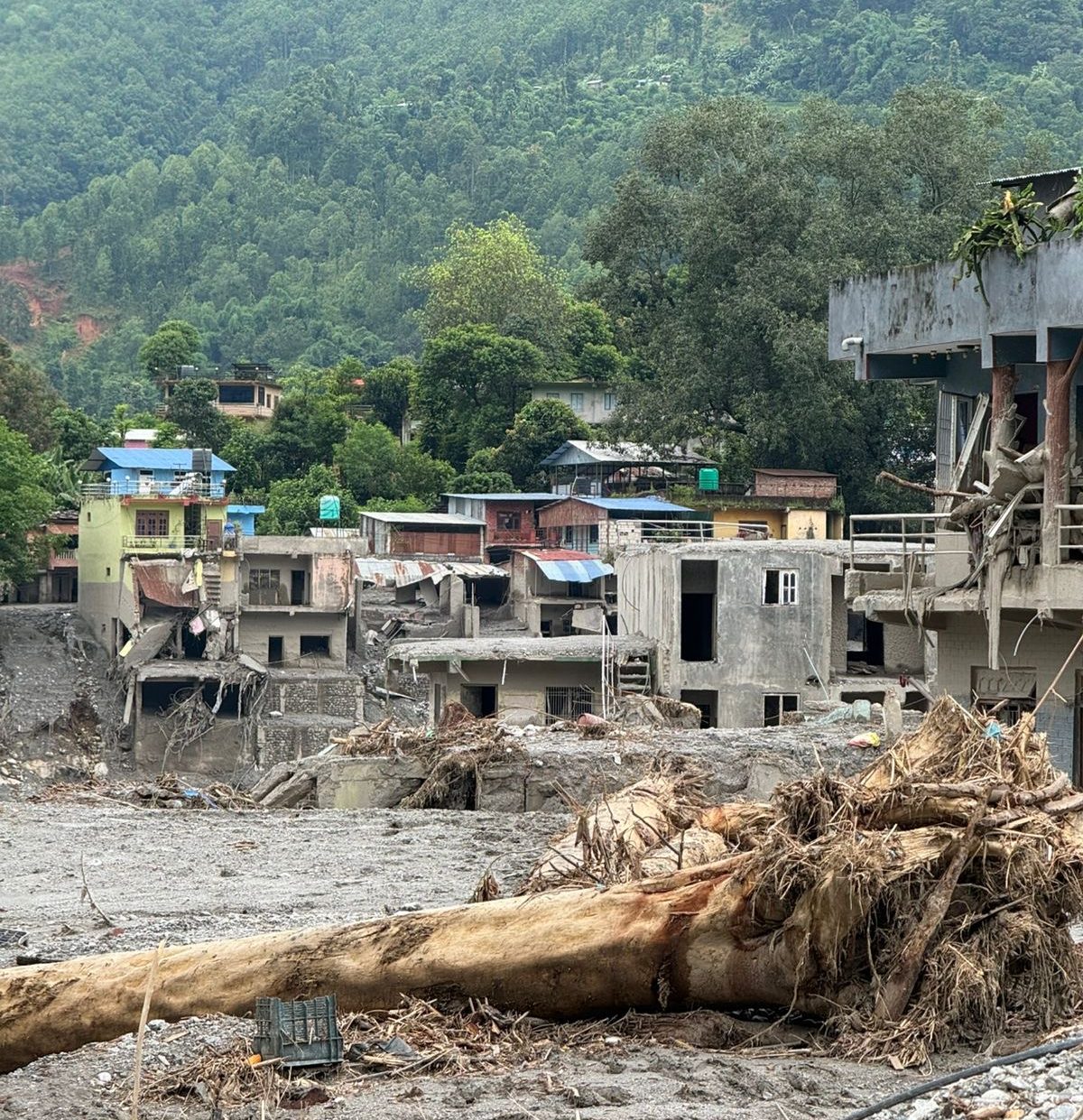
The disaster has massively impacted local infrastructure. Image: Devighat Nuwakot and Trishuli Bajar Nuwakot
Unfortunately, disasters like this are not unexpected. Science has warned time and again that, as we approach the planet’s tipping points, extreme events will become increasingly frequent and severe.
Last year, 18 people lost their lives in a flood caused by the overflow of a glacial lake into the Bhotekoshi River—the very same location where the recent floods originated. In 2021, the Melamchi flood claimed the lives of at least 17 people and destroyed the Melamchi water supply project. Families who lost everything—including their homes—are still waiting for compensation. When I traveled to Melamchi last year, the area still looked as if the floods had occurred just a week earlier.
The hardest-hit districts, Rasuwa and Nuwakot, are also among those where it takes decades just to build schools, hospitals, bridges, and roads. Every disaster of this kind wipes out decades of progress and development.
Nepal has made tireless efforts to promote climate adaptation and resilience. More than 45% of the country’s land area is covered by forests. We have achieved near-universal electrification thanks to clean hydropower generation. Early warning systems have been implemented in many riverside communities, where residents receive alerts during heavy rains and anticipated floods.
Despite this, we are repeatedly struck by unimaginable devastation.
It has triggered a humanitarian crisis. Image: Devighat Nuwakot and Trishuli Bajar Nuwakot
This is an injustice. We did not start the climate emergency that has engulfed us. We cannot continue to pay for it with our lives, our homes, and our hopes.
To make this worse, climate finance is provided in the form of loans at market interest rates, which only exacerbates the debt crisis.
The most vulnerable countries, including ours, have been demanding new, accessible, grant-based financing for more than three decades to prevent, minimize, and address loss and damage.
The Loss and Damage Fund, established in 2023, has less than $800 million. The actual need is projected to be $400 billion per year.
For us and for many other affected communities around the world, climate justice means addressing who created this crisis and who is being forced to pay for it. The countries and corporations that have profited enormously from centuries of fossil-fuel-driven growth cannot continue to shift this burden onto communities.
Those on the front lines of the climate crisis cannot wait another year, another COP, or another decade to receive funding.
What we demand is not aid, donations, or charity, but justice and compensation.
Those who have contributed most to this crisis and who have the greatest resources cannot look the other way.
Polluters must pay for the chaos they have inflicted on us.
Shreya K.C. is a climate justice activist from Solukhumbu, Nepal, who works as the Advocacy Working Group Coordinator for the Loss and Damage Youth Coalition.