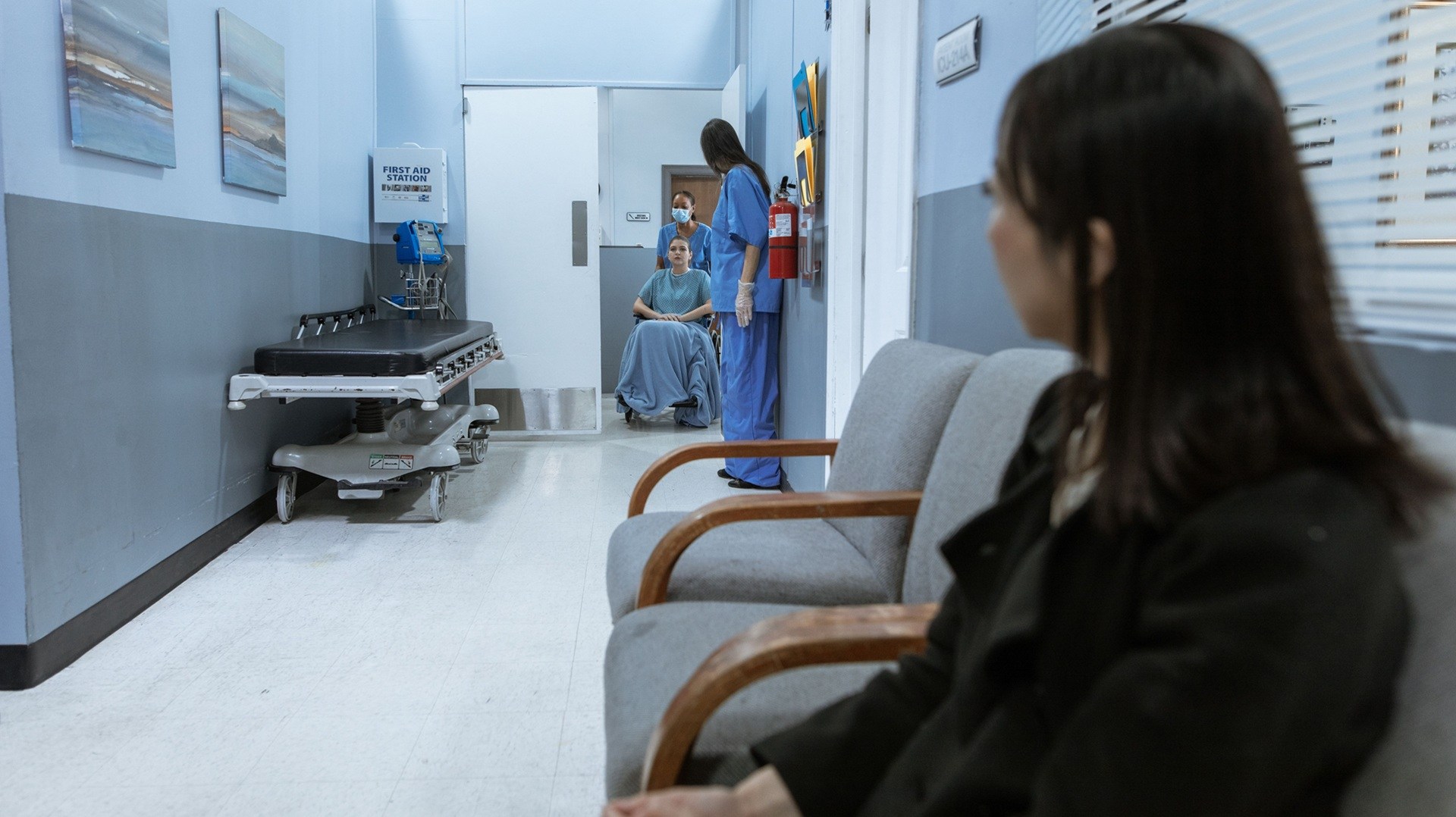
“Hospital staff told us that many of the patients they see have tried to contact their local authorities for help in the past,” the report reads. “But often, they have not been able to speak to a housing officer, or they find that they are unable to access homeless support.”
Staff reported that “some [homeless people] visited with the main goal of finding support related to their homelessness.”
Hospital staff end up turning these attendees back to local authorities, with mixed results. Often, people end up back where they started: faced with an online form to fill in.
Keep reading the journalism that powers our mission
Register free to continue and learn more about the stories, campaigns and the support we provide, helping people facing poverty across the UK.
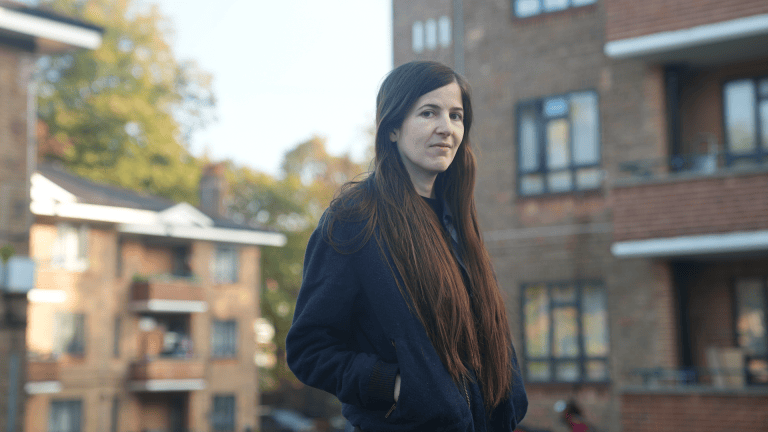
“Hospitals have a legal duty to refer anyone who it comes to their attention is homeless,” Underwood said. “So we’re trying to look at gathering data on those duty to refer forms that are sent by hospitals to local authorities to say that this person’s homeless, they need help, because local authorities don’t always jump to act on those, and they need following up, and then the local authority say the person needs to fill in an online form to get back on again.”
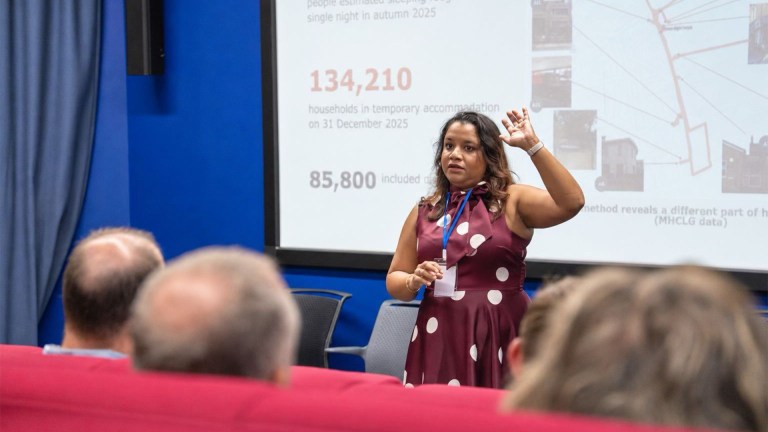
This presents a serious problem for people who can’t use the web or the phone easily, said Florence Manders from the Public Interest Law Centre (PILC).
“Not everyone is computer- or tech-literate, so there’s an access issue here,” she said. “Often, the only alternative to an online form is a telephone service, which is arguably just as exclusionary. It often requires spending time – up to two hours in some cases – on hold. That in itself requires stamina, as well as the ability to take two hours out of your day, often in the middle of the working day.”
Underwood’s report found that of London’s 33 boroughs, only three offer a publicly advertised service where people experiencing homelessness can visit, under any circumstances, to make a homeless application without first needing to book an appointment. At least 10 LAs ask people to first contact them by completing an online application form, while most others ask people to first reach out by telephone or email.
PILC believes that this kind of exclusion might be illegal. Working on behalf of a client who “struggles to communicate on the telephone,” they are currently challenging Croydon Council in the courts. Croydon closed their walk-in homelessness service last year.
This means that people seeking support need to go online or call up the council first – and the first words they are likely to hear are: “Your call is now queued. Please continue to hold.”
This polite-yet-infuriating refrain will be familiar to anyone who has tried to arrange a GP appointment, pay council tax, or get in touch with a utility company. But when vulnerable people with chaotic lives hear it, it might be enough to make them hang up.
When Big Issue rang the borough’s housing phone line, it took 33 minutes for someone to answer.
On 7 July 2026, the High Court granted permission for a judicial review of Croydon Council’s decision to close its walk-in homelessness service. The case will be heard next year.
The outcome could potentially “change how the other boroughs across London provide their homelessness services,” Manders said.
“If the court rules in our favour, other London Boroughs without walk-in services would be open to legal challenge on this point – it could be incredibly influential to how other boroughs operate and offer their services.”
A spokesperson for Croydon Council said that the appointment-only system would “help manage rising demand,” without compromising the council’s legal duties to support those who approach it for advice about homelessness.
“The changes made do not prevent residents from accessing services. Housing applications continue to be progressed successfully, and face to-face assessments remain a feature of our service,” they said.
“The outcome of the High Court hearing on 7 July was concerned with permission to proceed with the judicial review claim. The matter remains to be finally determined.”
The council is opening a new location – Cavendish House – for in-person appointments with our housing needs and homelessness service.
Why are all these homelessness services closing?
Last year, Labour’s homelessness strategy set a long-term goal that no one would be discharged from a public institution – like a prison or a hospital – into homelessness.
Since Andy Burnham assumed the role of prime minister, that ambition has been expanded. The new PM has pledged to offer all people rough sleeping in England a route off the streets by Christmas, backed by £442 million.
But if people facing homelessness can’t easily access support, it risks undermining efforts to address rough sleeping.
It’s not all the fault of local authorities. They are processing thousands of applications for housing support each day, and housing stock, budgets and capacity are all stretched to breaking point.
Councils are spending far more on homelessness than they used to and getting worse outcomes for it. Local authorities’ homelessness spend hit £2.8bn in 2024-25 – more than double what it was in 2009-10. Temporary accommodation is eating up budgets: net spend on it has gone from £70.3m in 2009-10 to at least £1.3bn in 2024-25, a more than 19-fold rise.
A Big Issue investigation last month found that a large portion of council homelessness prevention funding has been spent on temporary accommodation instead.
London carries a disproportionate share of the strain: 19 of the 25 councils with the highest rates of households in TA are in the capital.
Councils increasingly can’t offer face-to-face help because they’re consumed processing a swelling caseload with a shrinking slice of budget left for anything that isn’t crisis response.
London mayor Sadiq Khan has invested heavily in tackling rough sleeping specifically – his planned network of ‘Ending Homelessness Hubs’ will offer direct support to people who are rough sleeping, he claimed last year. There are four of these ‘hubs’ already open.
But they provide street homelessness outreach, a different tier of the system to the statutory homelessness application process that’s disappearing face-to-face at borough level. That covers anyone who is or is about to become homeless, not just those already rough sleeping.
Council service closures push people towards other services, said Manders – hospitals, libraries, GP surgeries: “any other services that work with marginalised or vulnerable people.
“The path towards becoming a digital-only world has had very few obstacles… everything moves online and people get left behind. Where services have a legal obligation to provide certain assistance, this should be challenged.”
Underwood and her team couldn’t quantify exactly how many people presented at hospitals after the closure of face-to-face services: hospitals have a ‘duty to refer’ anyone who presents as homeless, but keep data in a variety of different ways, making it tricky to retrieve through freedom of information requests.
But it’s clear that numbers increasing, and that is linked to the closure of face-to-face services, Underwood said: “We definitely know from speaking to people, from their anecdotal evidence, that it’s happening more and more.”
Do you have a story to tell or opinions to share about this? Get in touch and tell us more.
Change a vendor’s life.
Buy from your local Big Issue vendor every week – and always take the magazine. It’s how vendors earn with dignity and move forward.
You can also support online:
Subscribe to the magazine or support our work with a monthly gift. Your support helps vendors earn, learn and thrive while strengthening our frontline services.
Thank you for standing with Big Issue vendors.