Linnea Berthelsen in Darkling. Image: Alex Brenner
Share
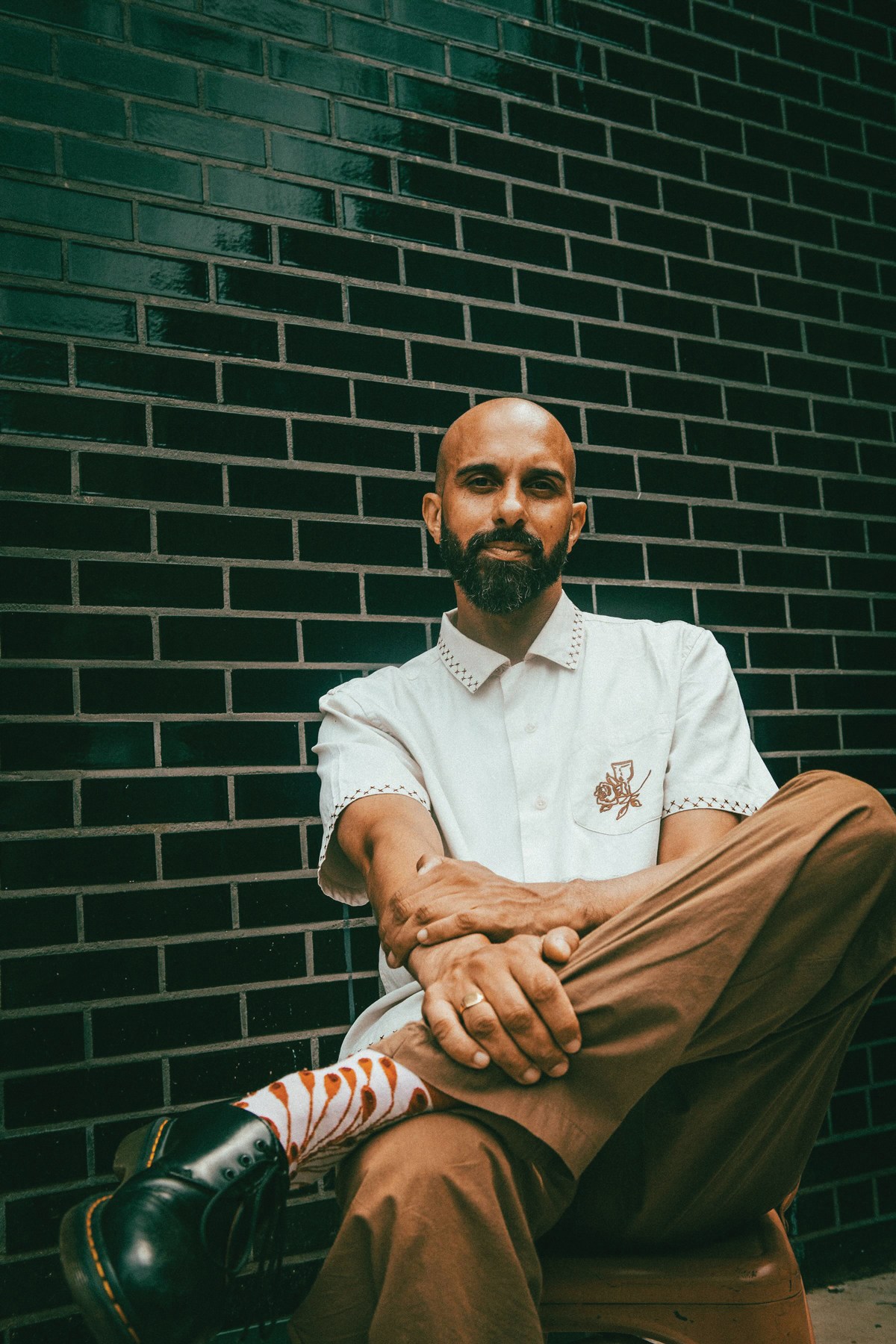
The Bhopal disaster in 1984 injured more than half a million people in India when they were exposed to toxic methyl isocyanate gas following a leak from a fertiliser plant. The exact number of deaths is uncertain. It’s the world’s worst industrial accident. In a new Actors Touring Company and Bush Theatre co-production, Olivier Award-winning Matthew Xia directs Stranger Things star Linnea Berthelsen in Darkling, Titas Halder’s play exploring the human cost of environmental catastrophe.
Big Issue: What did you both know about the tragedy before you started this?
Linnea Berthelsen: I knew very little. My parents remembered the media coverage. I had a long chat with them and their friends about it. I knew a lot about the Chernobyl disaster – it had been part of my school curriculum.
Matthew Xia: I had never heard of the disaster before. So often, the world moves on from tragedy, particularly when it affects poorer communities. The more I learned about Bhopal, the more I understood that it was not a single, finished event, but something whose effects have continued on, through illness, disability, contaminated land and water, and an ongoing struggle for justice.
We hear about disasters like this on the news unsettlingly regularly – but then they fade from the headlines. Is that where art should take over?
LB: I’d say that they are two different things. Both are equally important, but just different ways of engaging. Great journalism truly has the ability to educate us, open us up to unsettling stories and even prime us to go and take action. And ultimately, great journalism saves lives, but like you mentioned, it moves on.
Advertising helps fund Big Issue’s mission to end poverty
Advertising helps fund Big Issue’s mission to end poverty
In my humble opinion, what art has the ability to do is to stay with the themes for a bit longer: explore a story through visceral, sensory experiences that asks to connect to our memories, or experiences we have. We are all bound and shaped by the same types of experiences of injustice, fear, love and hope and I think art can really connect the dots.
MX: I don’t think art takes over from journalism, but it can exist beyond the timetable of the news. The news moves on; the people living with a disaster cannot, and too often once the attention-grabbing headlines disappear, questions of responsibility disappear with them. In Darkling, we spend time with one woman across an entire lifetime, so Bhopal stops being a distant event or statistic and becomes part of someone’s body, family, memory and future.
Read more:
Keep reading the journalism that powers our mission
Register free to continue and learn more about the stories, campaigns and the support we provide, helping people facing poverty across the UK.
MX: Because the central ethical question – whose lives are considered expendable in the pursuit of profit? – has not gone away. Bhopal wasn’t simply a terrible industrial accident. It was a catastrophe made possible by corporate cost-cutting, inadequate safety measures and a dangerous double standard, in which protections that would have been expected in the west were not afforded to a poorer community in India. We still see profit protected and risk outsourced, while responsibility becomes dispersed between multinational companies, governments and regulators.
LB: We see all of these man-made disasters piling up. It’s absolutely devastating. In Nepal, in China, last summer in Europe. People are affected by events that could have likely been prevented.
Advertising helps fund Big Issue’s mission to end poverty
Where is what happened in Bhopal happening today?
LB: Bhopal, like any other disaster, is so specific, and devastating in its own way. But I think corporate greed, man-made disasters and injustice happen all around the world. We see people crying, asking for help every day on the news, on our phones.
Image: Chege Shots
MX: The first and most honest answer is: in Bhopal itself, where communities are still living with contamination and fighting for adequate healthcare, clean water and justice. An immediate contemporary parallel can be found in Kenya, where lawyer Kelvin Kubai and campaigners are pursuing legal action against the government, its regulator and several multinational agrochemical companies over highly hazardous pesticides, including paraquat, which is banned in the EU. That case asks a painfully direct question: why should a chemical considered too dangerous for people in Europe be acceptable for workers and communities elsewhere?
What lessons can we learn and apply today?
MX: Multinational companies must owe people the same duty of care everywhere in the world. Regulation has to be enforced, warnings must be acted upon and corporations must remain accountable for the full life of what they produce, even when ownership changes, executives move on and the harm continues across generations. Governments and consumers also need to confront what we owe the people hidden within global supply chains. The show asks the audience to recognise that witnessing shouldn’t simply end with sympathy; it should sharpen what we are no longer willing to accept.
LB: I think that the brilliant Matthew Xia and Titas Halder show how laughter and lightness plays an important part, even within the darkest of stories. You have to be completely available to the emotional roller coaster of this play. But ultimately, I think we can learn about the “silent structures” that dictate our lives. The vulnerability of our own ignorance, I suppose. Darkling is a cry for help, understanding and justice and I think that the play reminds me, one day, it may be me who needs help, and I can only hope that someone will respond to my call.
Advertising helps fund Big Issue’s mission to end poverty
Darkling is at the Bush Theatre, London until 24 October, then tours Birmingham, Oxford and Manchester until 14 November