Advertising helps fund Big Issue’s mission to end poverty
News

In war-torn South Sudan, a meal costs a New Yorker $348.36

The 2018 edition of the WFP’s 'Counting the Beans: The True Cost of a Plate of Food Around the World' index underscores this clear correlation between food affordability costs and political stability and security

How much would you expect to pay for the most basic plate of food? The kind of thing you might whip up at home – nothing fancy, just enough to fill you up and meet a third of today’s calorie needs. A soup, maybe, or a simple stew – some beans or lentils, a handful of rice, bread or corn?

In the rich Global North (studies use New York as an example) such a meal would cost almost nothing to make: 0.6 per cent of the average daily income, or $1.20.

In parts of the developing world, by contrast, food affordability can shrink to the point of absurdity: in South Sudan, a country born out of war and disintegrating into more war, the meal-to-income ratio is 300 times that of industrialised countries. It is, in other words, as if a New Yorker had to pay nearly $348.36 for the privilege of cooking and eating that plate of food. How do people in South Sudan afford it? It’s simple. They don’t.

This is not a unique issue to South Sudan. Across the board, food is becoming ever less affordable in poorer countries that are subject to political instabilities.

Lack of access to food, and the costliness of it, has many causes: climate extremes, natural disasters, post-harvest losses, or bad governance, all of which can damage – or even shatter – farming supply chains and markets.

But, one overriding cause stands out: conflict. At the World Food Programme (WFP), we’ve long known that hunger and war are tragically symbiotic. Which makes it that much harder to eradicate the one without ending the other.


Advertising helps fund Big Issue’s mission to end poverty

The 2018 edition of the WFP’s Counting the Beans: The True Cost of a Plate of Food Around the World index underscores this clear correlation between food affordability costs and political stability and security.

Despite progress made in many countries through the past year, food costs are often still intensely disproportionate in relation to income. This is the case across much of Africa, as well as in parts of Asia and, to a lesser degree, of Latin America.

Among the countries surveyed for the study, Peru tops the list with the most affordable plate at the NY equivalent of $3.44, just 1.6 per cent of per capita income. Other countries have deteriorated. Almost invariably, these are nations where peace has been (further) eroded by violence, insecurity or political tension, including South Sudan – where the cost of a plate of food has soared from the exorbitant 155 per cent of daily income in 2016 ($321.70) to 201.7 per cent of daily income in 2018 ($348.36). It now costs twice the national daily income to buy a plate of food in South Sudan.

Keep reading the journalism that powers our mission

Register free to continue and learn more about the stories, campaigns and the support we provide, helping people facing poverty across the UK.

These abysmal numbers highlight the vast gaps in global food affordability, where 821 million people go hungry while elsewhere one can get a simple nutritious meal with a just a handful of change.

The fact that this still occurs defies both reason and decency. Societies cannot lift themselves out of the poverty trap if families are continuously priced out of providing their children with the nutritional meals essential for them to develop into healthy and productive adults, if climate degradation continues to threaten food security and development gains and if protracted conflicts continue to destroy societies and force young talent elsewhere.

We have the modern technological capacities to end world hunger, but first we must end the conflict that fosters it so that in the future, nobody will have to work a day and a half to afford a simple meal.

Herve Verhoosel is senior spokesperson at the UN World Food Programme.
Courtesy of Inter Press Service/insp.ngo

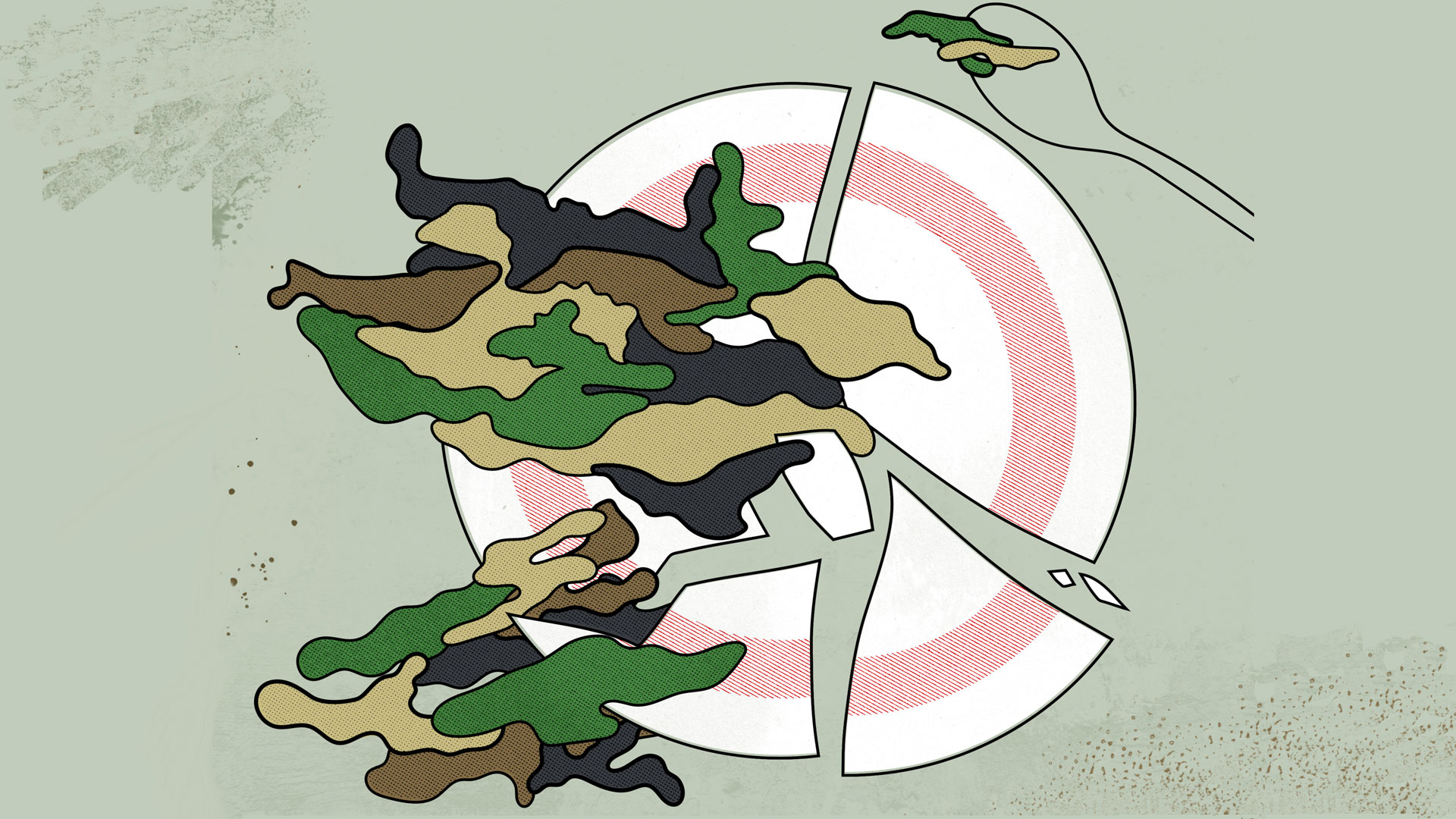
Illustration: Mitch Blunt 

Advertising helps fund Big Issue’s mission to end poverty

Do you know how Big Issue 'really' works?

Watch this simple explanation.

Recommended for you

View all
Lives are being 'tragically cut short' due to homelessness. These are the numbers you need to know
a close-up view of four lit pillar candles against a dark blue background
Homeless deaths

Lives are being 'tragically cut short' due to homelessness. These are the numbers you need to know

Meet the homeless people living in hotel rooms miles from their home towns: 'It took its toll'
Miracle who was homeless and lived out of area in temporary accommodation
Housing

Meet the homeless people living in hotel rooms miles from their home towns: 'It took its toll'

Break Clause: Why living with an ex because of the housing crisis is more common than you think
Break Clause

Break Clause: Why living with an ex because of the housing crisis is more common than you think

More than 1,700 people died while homeless in 2025. It’s a ‘national scandal’
Homeless deaths tribute
Homelessness

More than 1,700 people died while homeless in 2025. It’s a ‘national scandal’