Read more:
In 1919, shortly before Bessie Coleman left Chicago to go to France, the Red Summer bloodied the entire US. Seventeen-year-old Eugene Williams was on a raft in Lake Michigan and accidentally floated into the whites-only bathing area. He was stoned to death by whites who threw so many rocks from the shore that Williams and the raft sank to the bottom of the lake. Tulsa was burned to the ground and as the ruins smouldered, post-emancipation Jim Crow laws forced millions of southern Blacks, including Coleman’s own parents, into sharecropping, poverty and illiteracy.
The only flight instructors in the world who would teach a Black woman to fly in 1920 were French and German aviators who had survived the twin atrocities of war and plague. Tens of thousands of primitive biplanes swarmed the skies above northern Europe during the war in what became known as dogfights. These first combat pilots taught Coleman what they had learned; lethal ways to force nimble, squirrely wings to gain advantage over an opponent and then shoot a rival out of the air like skeet.
Keep reading the journalism that powers our mission
Register free to continue and learn more about the stories, campaigns and the support we provide, helping people facing poverty across the UK.
Coleman then took those death-defying manoeuvres and looped and spun the teachings into a breathtaking airshow. Strapping on knee-high boots and performing in a uniform that she designed for herself, she was the embodiment of a swashbuckling daredevil who created stunts that left her audience of thousands gobstruck.
Coleman’s desire to fly launched her into an epic David-and-Goliath sized battle. She was a first in a world of men, using a technology that had been burnished in the horrors of war. Danger was a constant companion in these primitive contraptions, yet Coleman covered herself, draping her wings with purpose, soaring upon the honour and valour that gave reason to a soldier’s sacrifice.
She envisioned the future, then carved a path where there was none, smashing through social roadblocks and hovering above scarcity, racial discrimination and sexism; she appeared to me to be superhuman.
I had always wanted to fly a plane, yet I had never found Bessie Coleman in any textbook in college, nor graduate school. American Airlines captain Jenny Beatty gave me a coffee mug with Coleman’s picture on it before I quit my corporate job to go to flight school. Once I learned that Coleman used her skill to barnstorm this country, spreading her own gospel of flight from coast to coast in the 1920s, I was convinced that I too could fly.
I believe that Coleman’s agency, her ownership of her true desire, as well as her urgent dedication to pursue that one true thing, is what gave laser-like definition to her life’s work.
Coleman defined herself on an international stage, becoming the personification of what she wanted people to see. Before she uttered a word or took off into the blue, her skill and bravado kept audiences talking.
More than anyone I have ever come across, Bessie Coleman truly earned a pair of wings.
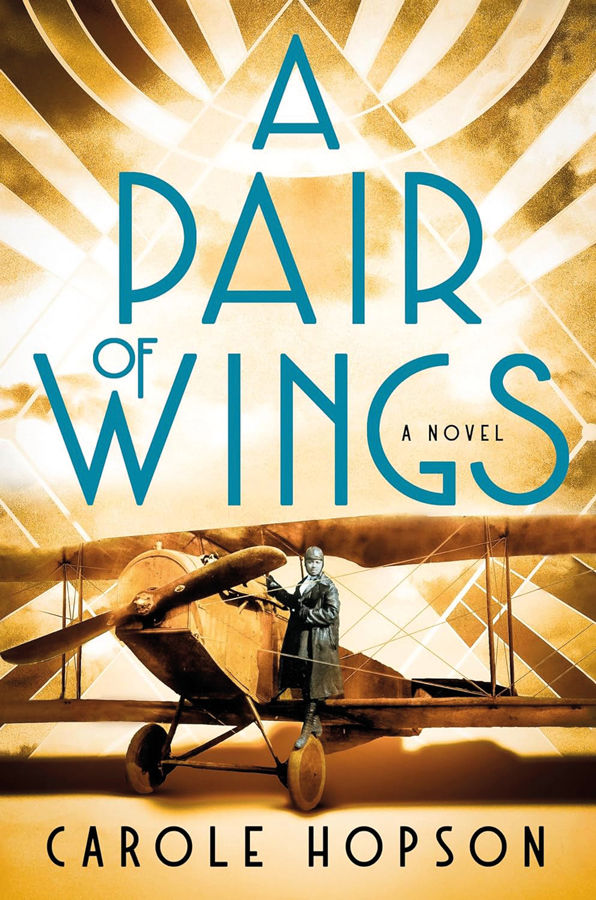
A Pair of Wings by Carole Hopson is out 22 September (Henry Holt, £16.99).
You can buy it from the Big Issue shop on bookshop.org, which helps to support Big Issue and independent bookshops.
Do you have a story to tell or opinions to share about this? Get in touch and tell us more.
It’s helping people with disabilities.
It’s creating safer living conditions for renters.
It’s getting answers for the most vulnerable.
Big Issue brings you trustworthy journalism that drives real change.
If this article gave you something to think about, help us keep doing this work from £5 a month.