Williams remembered how nervous she was, and how Wilson noticed and was very kind and sympathetic. After the event he offered her a lift home. A party worker, George Caunt, who was later to be Wilson’s election agent, wrote that this was the night Wilson and Williams began their affair.
Within months Williams had become Wilson’s right-hand woman, and she never left his side until the day he died. In their first eight years working together Williams transformed Wilson from a talented shadow chancellor into leader of the Labour Party, and in 1964 to Britain’s first Labour prime minister in 13 years. But it was then that Williams’s reputation began to suffer.
She and Wilson believed that the PM had a dual role in 10 Downing Street. The civil servants were there to help and advise the government. Wilson and Williams wanted an addition, a second department run by her to deal with the prime minister’s role as leader of his political party, his MPs and their constituents.
Keep reading the journalism that powers our mission
Register free to continue and learn more about the stories, campaigns and the support we provide, helping people facing poverty across the UK.
The civil servants disagreed. They hated Williams’s constant interventions and did everything they could to get rid of her. But the PM and his sidekick refused to budge, and the many special advisers who work in Downing Street today should give their thanks to Williams, who was the very first.
When work finished for the day in No 10, Williams began to realise how lonely she was. Wilson would always have a wife and family to go home to; she had no one, and began a passionate affair with the married political editor of the Daily Mail. In 1968 and again in 1969 while working full-time in Downing Street, Williams produced two sons just 10 months apart. For seven years she managed to keep them secret. It’s unlikely that workers in Downing Street failed to notice two full-term pregnancies, but they stayed absolutely silent.
Haines had arrived as head of press just before Labour lost the 1970 general election. He was horrified when the PM took him aside and told him about Williams’s illegitimate sons. From that day forward Haines took on the lead role in the “men against Marcia” campaign. Each time her reputation as a difficult woman began to fade he ramped it up with a new book or interview. He tried to persuade Wilson to dump her. He failed, then 25 years later he tried again.
In his book Glimmers of Twilight he refreshed the story of Marcia Williams’s influence over Wilson’s 1976 resignation honours list. The BBC turned it into a drama documentary, The Lavender List. Williams sued, and the BBC paid her £70,000 and promised never to show the programme again. Just a few months ago I interviewed Haines and he was still determined to see justice done. He said, “Marcia was a wicked woman who dominated a prime minister and ruined his legacy.” I didn’t believe him at all. Was Wilson really such a mouse?
In That Was the Week that Was, the must-watch TV programme in the early ’60s, a man stood holding a big box of soap powder. It was labelled WILSON. He shook it vigorously and shouted triumphantly “You don’t use Wilson, Wilson uses you!” That was more like it.
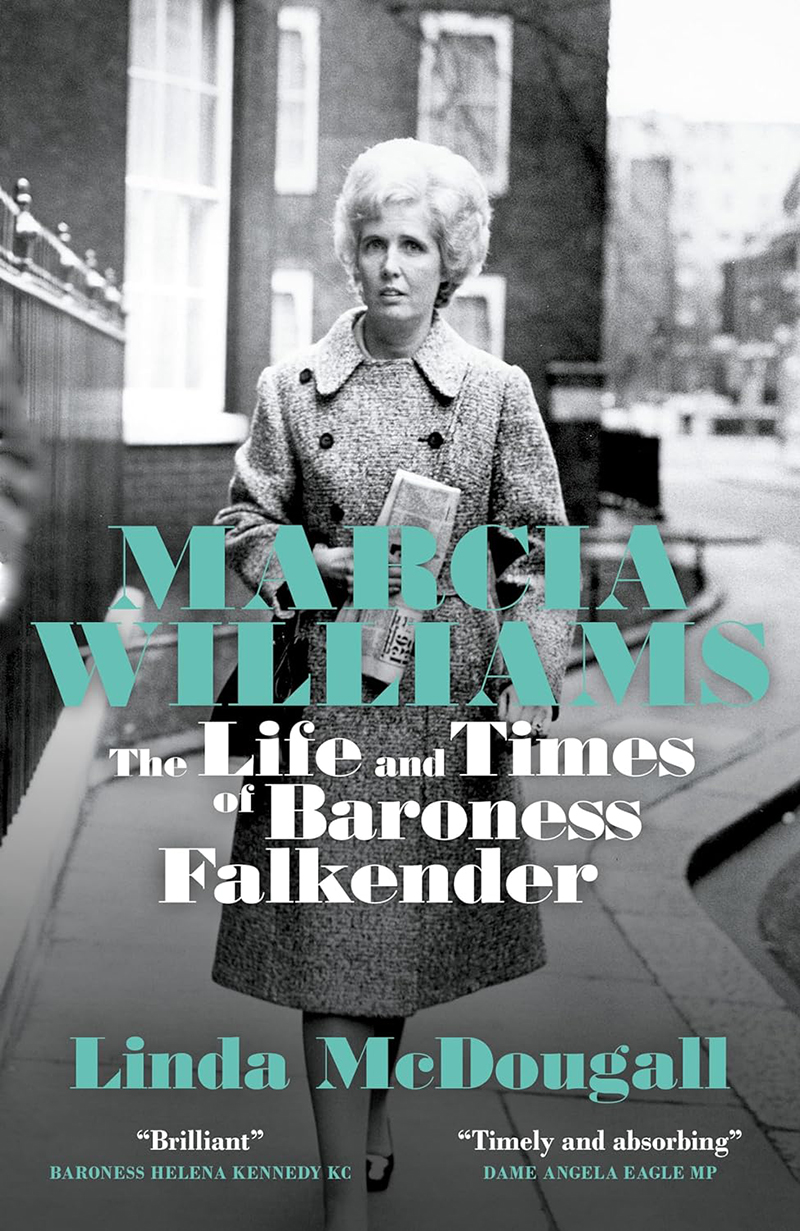
Marcia Williams: The Life and Times of Baroness Falkender by Linda McDougall is out now (Biteback, £25)
This article is taken from The Big Issue magazine, which exists to give homeless, long-term unemployed and marginalised people the opportunity to earn an income. To support our work buy a copy!
If you cannot reach your local vendor, you can still click HERE to subscribe to The Big Issue or give a gift subscription. You can also purchase one-off issues from The Big Issue Shop or The Big Issue app, available now from the App Store or Google Play